Business logo
Home
About
About UsTestimonials
Products
Compressed Air Driven Vacuum PumpsWater Ring Vacuum PumpsOil Lubricated High Vacuum PumpsDry Vacuum Pressure PumpsDry Vacuum PumpsView All
Latest News
Gallery
Photos
More
Water Ring Vacuum Pumps ManufacturersOil Lubricated High Vacuum Pumps ManufacturersOil Lubricated Vacuum Pressure Pumps ManufacturersSide Channel Blowers ManufacturersView All
FAQContact
08048034784
Home
About UsTestimonials
Compressed Air Driven Vacuum PumpsWater Ring Vacuum PumpsOil Lubricated High Vacuum PumpsDry Vacuum Pressure PumpsDry Vacuum PumpsView All
Latest News
Photos
Water Ring Vacuum Pumps ManufacturersOil Lubricated High Vacuum Pumps ManufacturersOil Lubricated Vacuum Pressure Pumps ManufacturersSide Channel Blowers ManufacturersView All
FAQContact
08048034784
  1. Home>
  2. Latest News

Latest updates

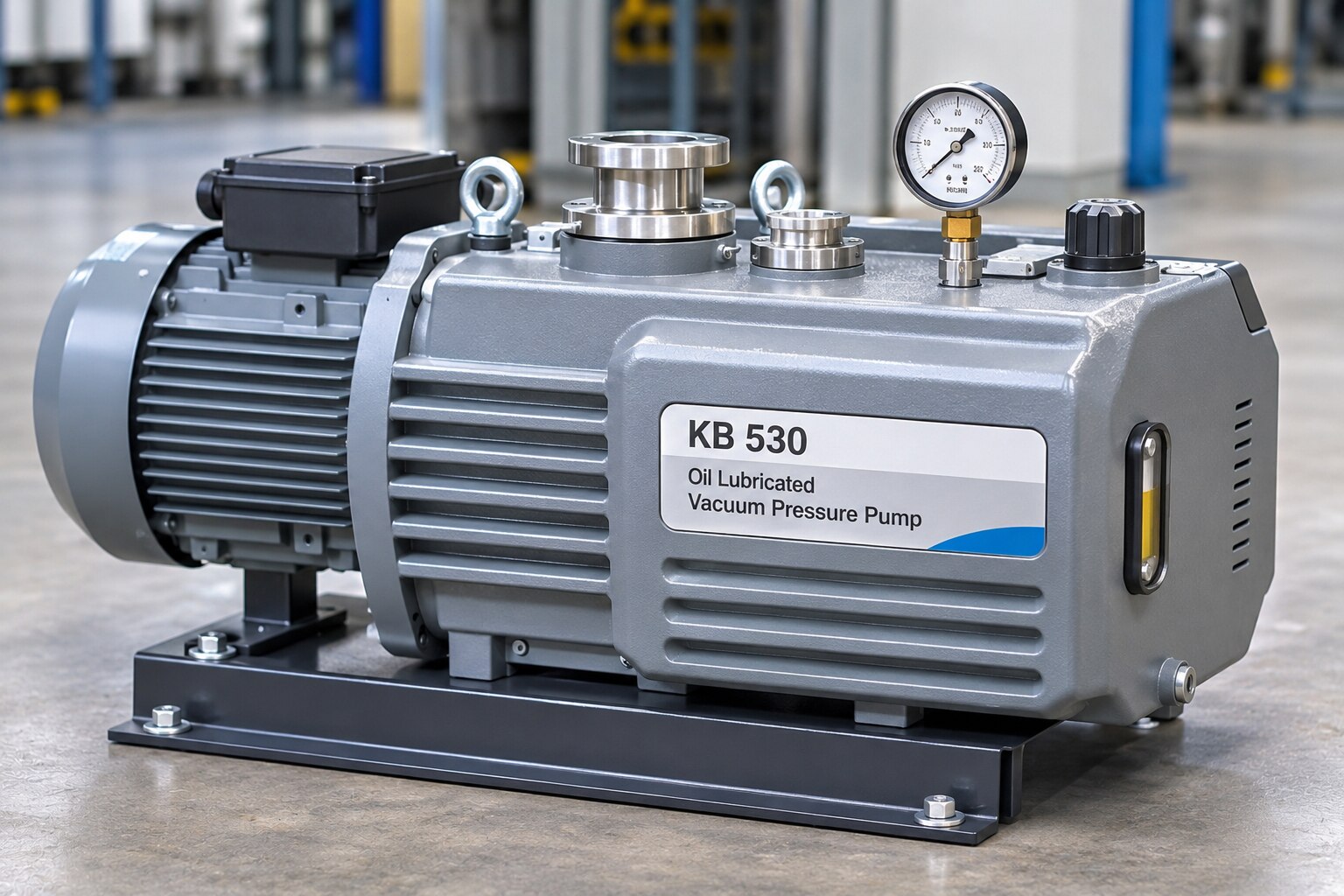
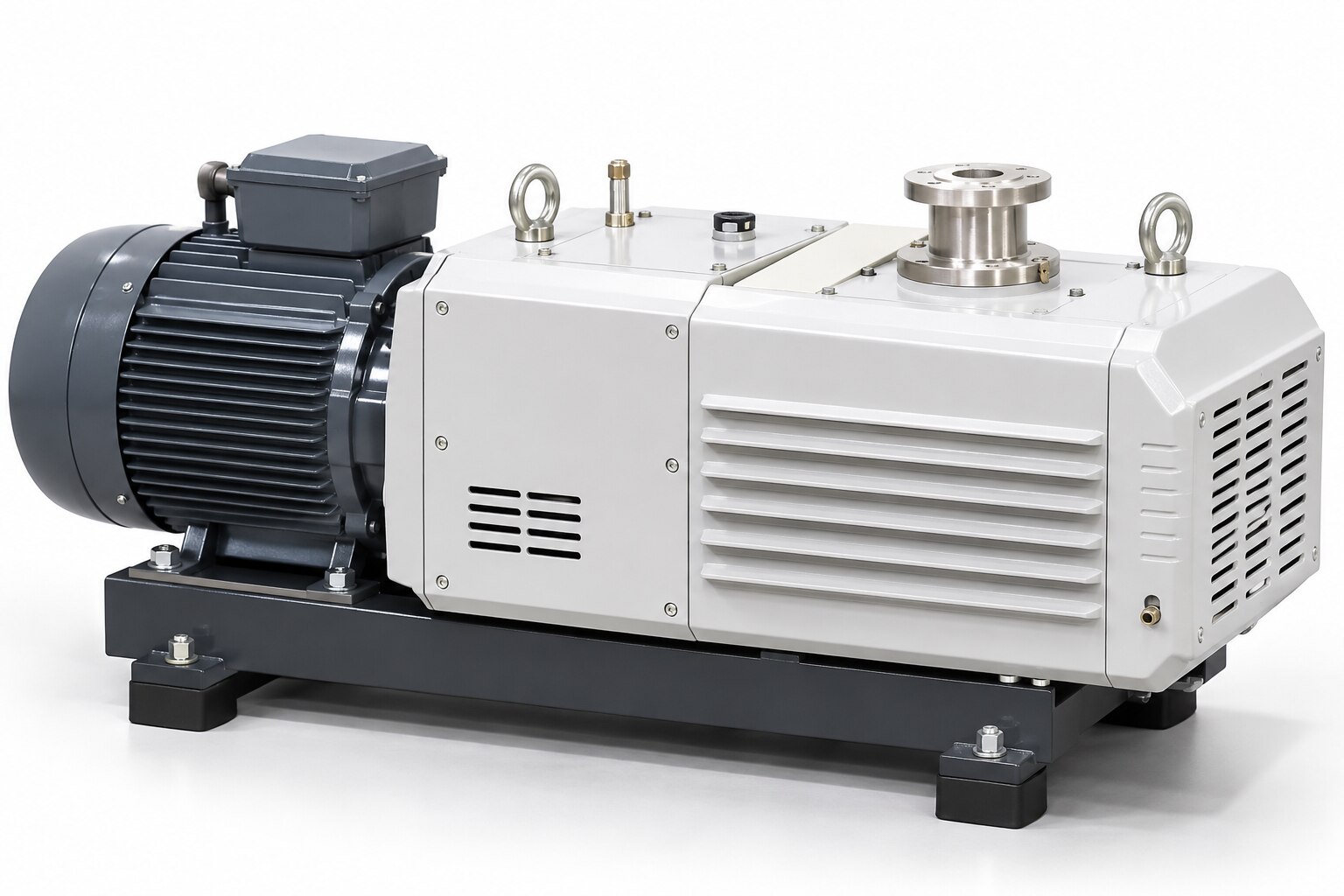
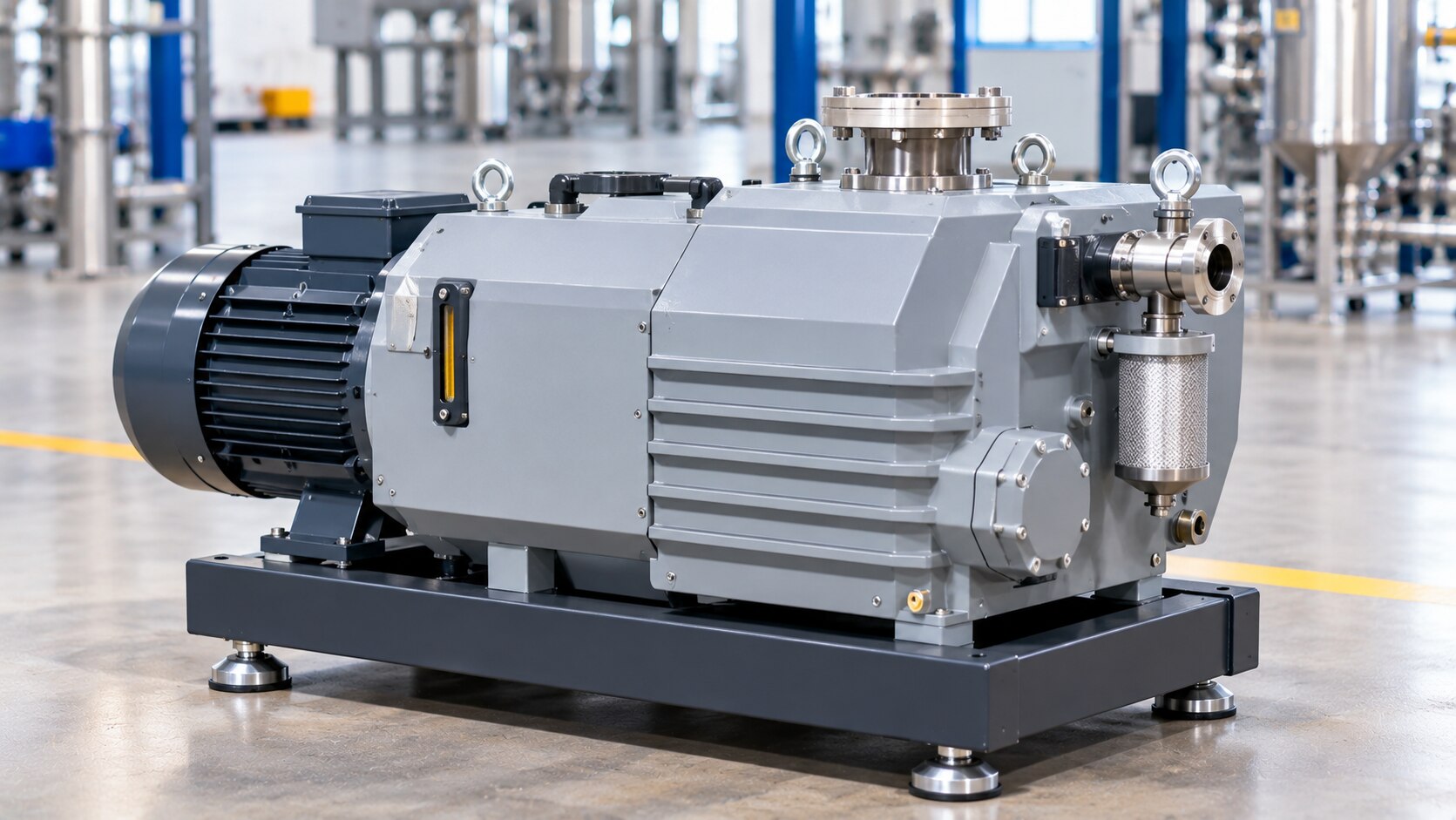
What Is a KB 530 Oil Lubricated Vacuum Pressure Pump

A KB 530 is identified by more than a model number: its useful performance depends on the test conditions, operating point, motor configuration and installation. By the end, you can explain how the pump works, interpret its vacuum, pressure and flow figures, match it to equipment, and prepare accurate export documentation.

Key takeaways

  • Use the KB 530 for vacuum and low-pressure air movement in sealed equipment.
  • Treat 30 m3/hr as rated displacement, not guaranteed flow at every pressure.
  • Confirm whether the 0.8 bar figure means gauge pressure, absolute pressure, or differential pressure.
  • Give exporters voltage, frequency, rotation, ports, duty cycle, and performance conditions.

How a KB 530 Creates Vacuum and Pressure

An oil-lubricated KB 530 is a rotary-vane vacuum pressure pump: one rotating assembly handles two operating modes. The KB 530 vacuum pressure pump uses oil to seal the spaces between sliding vanes and the casing, reducing internal leakage while the rotor turns.

On the vacuum side, the inlet connects to the vessel or process line. As each vane moves away from the inlet, its chamber expands and draws gas out; the chamber then contracts and carries that gas to the exhaust. The…
Read updateNov 28th, 2026 12:01 PM

Are Dry Vacuum Pressure Pumps Suitable for Faridabad Chemical Plants

Suitability depends on more than achieving a low vacuum: you must match suction pressure, flow, gas composition, vapour load, discharge pressure, temperature and duty cycle. By the end, you can screen a dry pump against process hazards, compare alternatives and prepare a specification that accounts for Faridabad site conditions.

Key takeaways

  • Map vapour load, pressure, temperature and discharge conditions before selecting a pump.
  • Dry pumps need condensate control for solvents, acids and other vapours.
  • Compare dry, oil-lubricated, water-ring and ejector technologies against the full process duty.
  • Resolve ventilation, corrosion, utilities and hazardous-area requirements before commissioning.

Start with the Process Envelope, Not the Pump Catalogue

Suitability is determined by the process envelope, not by the pump’s advertised ultimate vacuum. For dry vacuum pressure pumps for chemical plants in faridabad, collect operating data from the vessel, piping and discharge system before comparing models.

  1. Record the required suction pressure, ultimate vacuum, gas flow in m³/h, gas composition and non-condensable fraction.
  2. State the vapour load, including solvents, acids, alkalis, chlorine-containing…
Read updateNov 26th, 2026 1:30 PM

Dry Vacuum Pumps Struggling with Dust in Faridabad Workshops

Dust can enter through open fixtures, grinding stations, powder handling, sweeping, compressed-air blow-off and leaks on the suction line. You will be able to identify whether the restriction is in the pump or the vacuum system, choose a protective filtration layout, and set maintenance checks around dust load and measured performance.

Key takeaways

  • Seal suction-line leaks before dust reaches the pump inlet.
  • Use staged filtration matched to the workshop’s dust load.
  • Clean filters and pump components without forcing debris deeper inside.
  • Schedule maintenance using dust exposure and measured vacuum performance.

How Workshop Dust Reaches a Dry Pump—and What It Damages

“Dry” describes the compression chamber, not immunity to contamination. In a Faridabad workshop, open fixtures and leaks in the suction line let ordinary airborne dust enter the pump. The problem described as dust in dry vacuum pump in faridabad workshops becomes serious through these routes:

  1. Grinding and abrasive machining add ferrous and mineral particles. They score rotors and stators, damage coatings, and lodge in internal clearances.
  2. Welding produces hot debris and spatter. These particles can obstruct passages or strike…
Read updateNov 24th, 2026 1:30 PM

What Are Side Channel Blowers and Where Are They Used

A side channel blower moves gas by repeatedly accelerating it through a circular side channel, allowing one machine to provide pressure or vacuum without contact between the impeller and housing. By the end, you will be able to match its operating principle to real factory duties, distinguish it from other equipment, and specify a unit from its actual duty point rather than a catalogue maximum.

Key takeaways

  • Use side channel blowers for continuous, oil-free air or vacuum duty.
  • Check pressure, airflow, gas temperature and system losses before selection.
  • Choose a fan for high airflow at low pressure.
  • Confirm motor rating, noise, filtration and service access before buying.

How a Side Channel Blower Creates Pressure or Vacuum

A side channel blower is a regenerative-turbine machine that moves air or another gas by accelerating it repeatedly through an annular side channel around a rapidly rotating impeller. The impeller runs with a small clearance from the housing, so the gas path contains no rubbing vanes, oil, or screw clearances.

  • Gas enters through the inlet and reaches the impeller.
  • The impeller throws the gas outward into the side channel, where its velocity becomes pressure.
  • The gas circul…
Read updateNov 20th, 2026 5:30 PM

Oil Lubricated High Vacuum or Dry Pump for Replacement

Choosing a replacement by pump type alone can leave you with the wrong pressure, contamination level, vapour tolerance, or connection size. By the end, you will be able to compare oil-sealed and dry technologies, identify the data missing from a quotation, and plan a replacement that can be tested against your existing system.

Key takeaways

  • Define target pressure in mbar or Pa absolute before comparing pumps.
  • Choose oil-sealed pumps for compatible clean loads and dry pumps for oil-sensitive processes.
  • Check vapour, dust, gas load, duty cycle, cooling, power, and exhaust requirements.
  • Prove performance with pump-down time, operating pressure, leak, and measurement-location checks.

First establish what “high vacuum” means for the replacement

A replacement is suitable only when it reaches the required absolute pressure at the required pumping speed, not when its catalogue label says “high vacuum.” Define the process target in mbar or Pa absolute, then record the existing pump’s normal operating pressure, required base pressure, pump-down time, gas load, and measurement location.

Do not treat a gauge reading of 0.8 bar vacuum as an ultimate-pressure specification. It is roughly 0.2 bar…

Read updateNov 18th, 2026 7:01 PM

Is the KB 530 Suitable for Industrial Vacuum Conveying in Faridabad

A pump’s catalogue airflow and vacuum figure do not prove that it will move your material through a real conveying line. You will be able to calculate the required operating point, identify the losses and contamination risks, and decide what evidence to request before approving a KB 530 installation.

Key takeaways

  • Compare airflow at conveying vacuum, not free-air capacity alone.
  • Treat 0.8 bar as a pressure limit, not a guaranteed conveying result.
  • Size the separator, filter, piping, and controls for your material and route.
  • Approve oil lubrication only after checking contamination and product-contact risks.

Does the KB 530 provide enough airflow for your conveying line?

A stated free-air capacity does not prove that the KB 530 can move your required solids rate. If the quoted figure is 30 m³/h, compare it with the air volume needed at the conveying vacuum, not with the material throughput alone.

Calculate the duty from solids rate, pipe diameter, conveying distance, pickup points and the air velocity required for that powder or granule. Then deduct the pressure losses through the pickup nozzle, hose, straight pipe, bends, receiver filter, separator and isolation valves.

A line that appears…

Read updateNov 16th, 2026 4:30 PM

Side Channel Blower Manufacturer in Faridabad for Urgent Factory Replacement

A failed side channel blower can stop conveying, clamping, drying, evacuation or trim collection, but replacing it by motor size or port diameter alone can create a second failure. By the end, you will know how to confirm the fault, define the operating duty, check mechanical and electrical fit, and request a dispatch-ready replacement without guessing.

Key takeaways

  • Prove the fault before removing the blower.
  • Send model, airflow, pressure, voltage and connection details.
  • Match airflow and pressure at the operating point, not motor horsepower.
  • Check rotation, mounting, ports, controls and relief protection before dispatch.

Confirm the blower has failed before removing it

Do not remove the blower until you prove the fault is inside the machine. A blocked filter, closed valve, crushed hose or failed relief valve can produce the same low-flow symptom and can damage the replacement.

1. Isolate and lock out the electrical supply. Inspect the inlet filter, pipework, silencers, valves and discharge line for blockage, then confirm that vacuum and pressure relief devices open at their set points.

2. Check the nameplate voltage, phase and frequency against the supply. Verify terminal links, overload…

Read updateNov 13th, 2026 4:30 PM

Water Ring Vacuum Pump Manufacturer in Faridabad for Industrial Replacement

A failed vacuum pump is not automatically a like-for-like replacement: the process duty, wet-gas load, seal-water conditions and mechanical dimensions all determine whether a water ring pump will work. By the end, you will have a practical replacement brief, a performance-matching method and a supplier-check list for obtaining a usable pump rather than a pump that merely matches the old nameplate.

Key takeaways

  • Use the performance curve and absolute pressure, not the old motor rating.
  • Calculate seal-water flow, temperature and discharge handling before ordering.
  • Check shaft height, flange sizes, materials and service access against the existing pump.
  • Compare suppliers using test data, package scope, spares and confirmed delivery dates.

Confirm that a water ring pump is the right replacement

A water ring pump replacement fits when the process sends wet gas, condensable vapour or liquid carryover into the vacuum system, and the required absolute pressure lies within the pump’s performance curve.

Confirm the duty in absolute pressure, not gauge vacuum: a stated 0.8 bar could mean 0.8 bar absolute or 0.8 bar below atmospheric pressure, which are different operating points.

Use this decision…

Read updateNov 11th, 2026 1:30 PM

Dry Vacuum Pump Choices for Faridabad Summer Operations

A pump that reaches its ultimate vacuum in a catalogue may lose delivered flow, trip on temperature, or suffer shortened bearing and motor life in a 45–47°C plant room. You will be able to specify the required capacity, cooling arrangement, protection features, filtration and summer-duty evidence before comparing models.

Key takeaways

  • Set 40°C ambient as the minimum summer design boundary.
  • Size the pump for ultimate pressure, flow, altitude and operating hours.
  • Specify motor, enclosure and cooling limits before ordering.
  • Use filtration, separators and ventilation to control dust and condensables.

Set the summer design boundary before comparing pumps

Set 40°C ambient as the design boundary for dry vacuum pump choices for summer operations in Faridabad unless the selected datasheet explicitly permits a higher temperature.

A pump rated for 5–40°C cannot be assumed to deliver catalog performance during a 45–47°C heatwave: motor protection, winding temperature and bearing life can become limiting factors before ultimate pressure does.

1. Specify a 24-hour duty at the maximum site ambient, altitude, inlet-gas temperature, humidity, dust level and voltage variation. Ask for delivered pumping…

Read updateNov 9th, 2026 11:30 AM

Compressed Air Vacuum Pump Options for Faridabad Distributors

A pneumatic ejector is not automatically the best substitute for a motor-driven vacuum pump: its performance depends on supply pressure, air consumption, leakage, piping and duty cycle. By comparing those factors with rotary, dry, oil-lubricated, water-ring and side-channel equipment, you can request a distributor quotation that fits the application rather than the nominal port size.

Key takeaways

  • Choose ejectors for instant intermittent vacuum and motor-driven pumps for continuous duty.
  • Size an ejector from leakage, evacuation time, target vacuum, and available pressure.
  • Request air consumption at your actual inlet pressure, not only the pump model.
  • Compare compressed-air cost with motor power before approving the quotation.

Which vacuum technology fits the application?

Choose a compressed-air ejector when you need instant, intermittent vacuum without an electrical motor at the tool; choose a motor-driven pump when vacuum runs continuously or demands deeper, managed performance.

Distributor quotations usually call a Venturi or pneumatic ejector a “compressed-air vacuum pump.” It has no rotating wear parts and suits pick-and-place, sheet handling, packaging, sealing, clamping and…

Read updateNov 6th, 2026 10:00 AM
Page 1 out of 6

Subscribe to our newsletter

Get in touch

jaspreet@kalbro.com08048034784India, Faridabad, 121001, India
OPEN NOW
Sun: Closed
Mon–Sat: 09:00 AM – 06:00 PM

Reach us on

Top products categories

  • Compressed Air Driven Vacuum Pumps
  • Dry Vacuum Pressure Pumps
  • Dry Vacuum Pumps
  • Oil Lubricated High Vacuum Pumps
  • Oil Lubricated Vacuum Pressure Pump

Recent keywords

  • best compressed air driven vacuum pumps
  • vacuum pumps
  • including side channel blowers
  • dry vacuum pumps
  • dry vacuum pressure pumps
  • oil lubricated vacuum pressure pumps

Quick Links

  • About
  • Updates
  • Gallery
  • Contact
  • Testimonials
KalbroVacumatics

© 2026 Kalbro Vacumatics • All Rights Reserved

Sitemap
HomeProducts
Business logo
    • About Us
    • Testimonials
  • Latest News
    • Photos
    • Water Ring Vacuum Pumps Manufacturers
    • Oil Lubricated High Vacuum Pumps Manufacturers
    • Oil Lubricated Vacuum Pressure Pumps Manufacturers
    • Side Channel Blowers Manufacturers
    • View All
  • FAQ
  • Contact
jaspreet@kalbro.com08048034784India Faridabad India 121001
Business logo