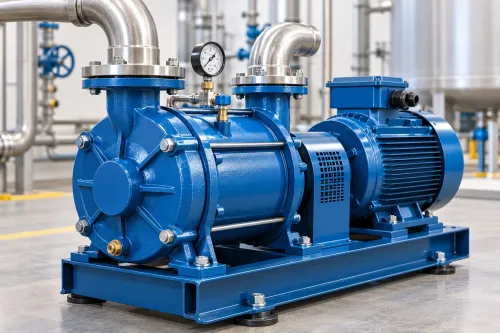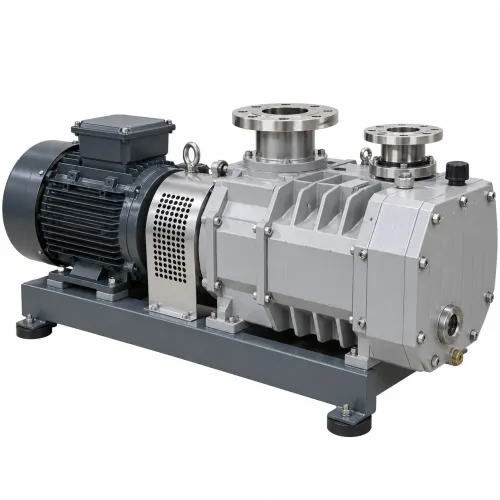
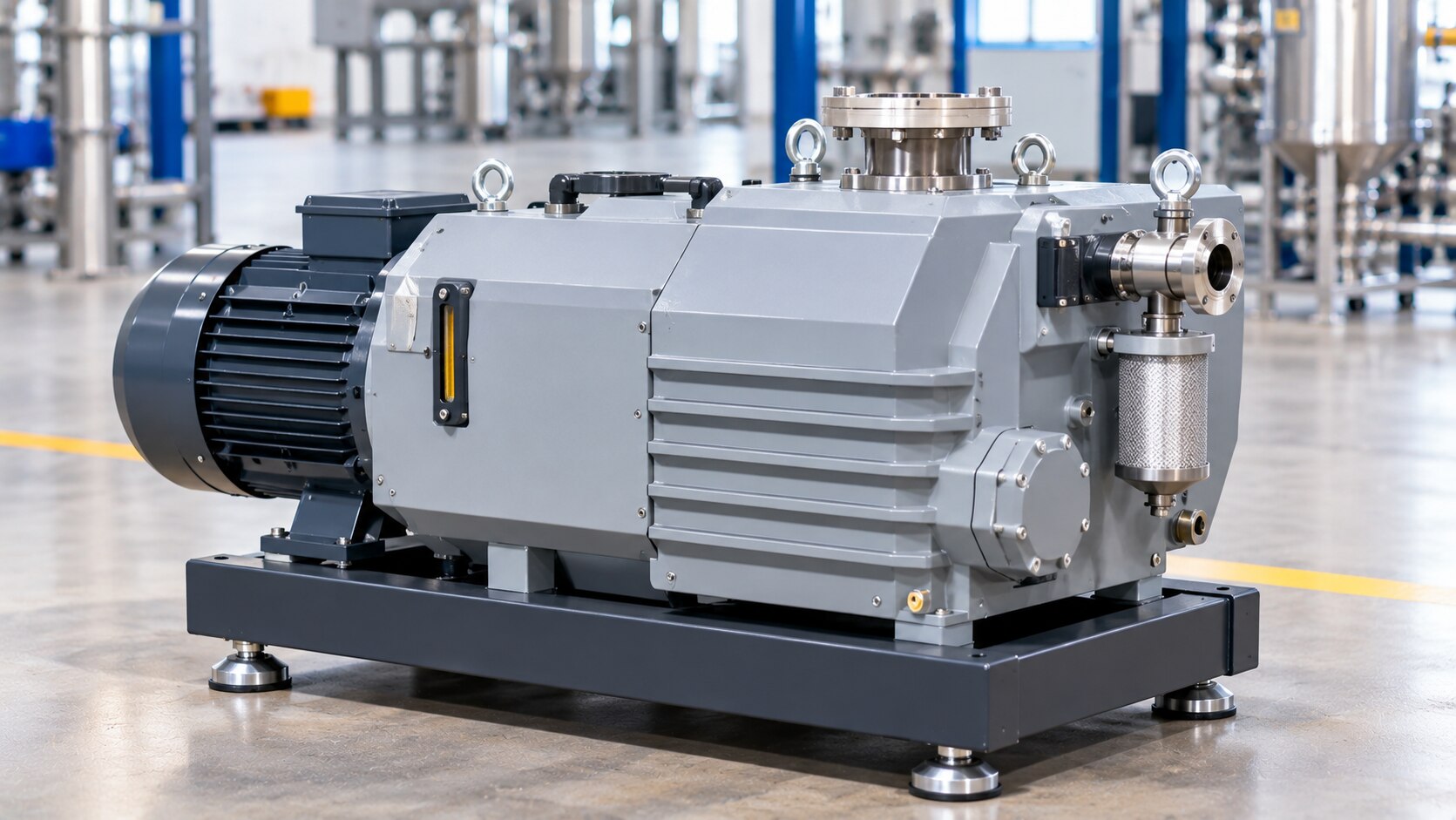
Dust can enter through open fixtures, grinding stations, powder handling, sweeping, compressed-air blow-off and leaks on the suction line. You will be able to identify whether the restriction is in the pump or the vacuum system, choose a protective filtration layout, and set maintenance checks around dust load and measured performance.
Key takeaways
- Seal suction-line leaks before dust reaches the pump inlet.
- Use staged filtration matched to the workshop’s dust load.
- Clean filters and pump components without forcing debris deeper inside.
- Schedule maintenance using dust exposure and measured vacuum performance.
How Workshop Dust Reaches a Dry Pump—and What It Damages
“Dry” describes the compression chamber, not immunity to contamination. In a Faridabad workshop, open fixtures and leaks in the suction line let ordinary airborne dust enter the pump. The problem described as dust in dry vacuum pump in faridabad workshops becomes serious through these routes:
- Grinding and abrasive machining add ferrous and mineral particles. They score rotors and stators, damage coatings, and lodge in internal clearances.
- Welding produces hot debris and spatter. These particles can obstruct passages or strike rotating parts, causing impact damage.
- Flour and other fine powders pass through poor collection points, loading inlet and exhaust filters. Sticky process dust coats vanes, seals and filter media.
- Sweeping and compressed-air blow-off resuspend settled dust, while oil mist and coolant aerosol from machining require a demister or coalescing stage, not only a dry particulate filter.
The phrase dry vacuum pump dust contamination describes a gradual failure mechanism: lost clearance raises ultimate pressure before the pump stops. Bearings, gears, shaft seals and motor-cooling paths remain exposed even when no oil enters the gas path. A pump may keep running while pumping speed falls, temperature rises, or filters block repeatedly.
Inspect the inlet route and separation stages before assuming immediate pump breakdown.
Symptoms That Separate Pump Wear from a Vacuum-System Fault
A falling vacuum level, longer evacuation time, rising motor current, abnormal noise, overheating, frequent inlet or exhaust filter blockage, visible dust at the exhaust, and repeated thermal or overload trips are the warning pattern in dry vacuum pump workshop problems. Diagnose in this order:
1. Check the vacuum gauge against a calibrated reference. A false gauge reading can send you toward pump repair when the instrument is at fault.
2. Record pump-down time from a defined starting pressure, such as 1000 mbar absolute, to the specified test pressure. A running motor and normal current do not prove acceptable pumping speed.
3. Inspect inlet-filter differential pressure. A loaded filter restricts flow, lengthens evacuation and can raise motor load and temperature.
4. Inspect the hose for cracks, loose clamps and soft sections that collapse under vacuum. Verify pipe diameter and length against the pump inlet, test the non-return valve for sticking or leakage, and empty the dust collector.
5. Check the chamber, door seals, fixtures and process connections for leaks or outgassing. Then perform a blank-off test with the pump isolated from the process.
6. If the isolated pump reaches its specified pressure but the connected system does not, investigate leakage, restriction, outgassing or inadequate filtration before opening the pump. If blank-off performance also fails, inspect for rotor scoring, bearing damage, blocked clearances and seal wear.
Build a Dust-Protection Train Before the Pump Inlet
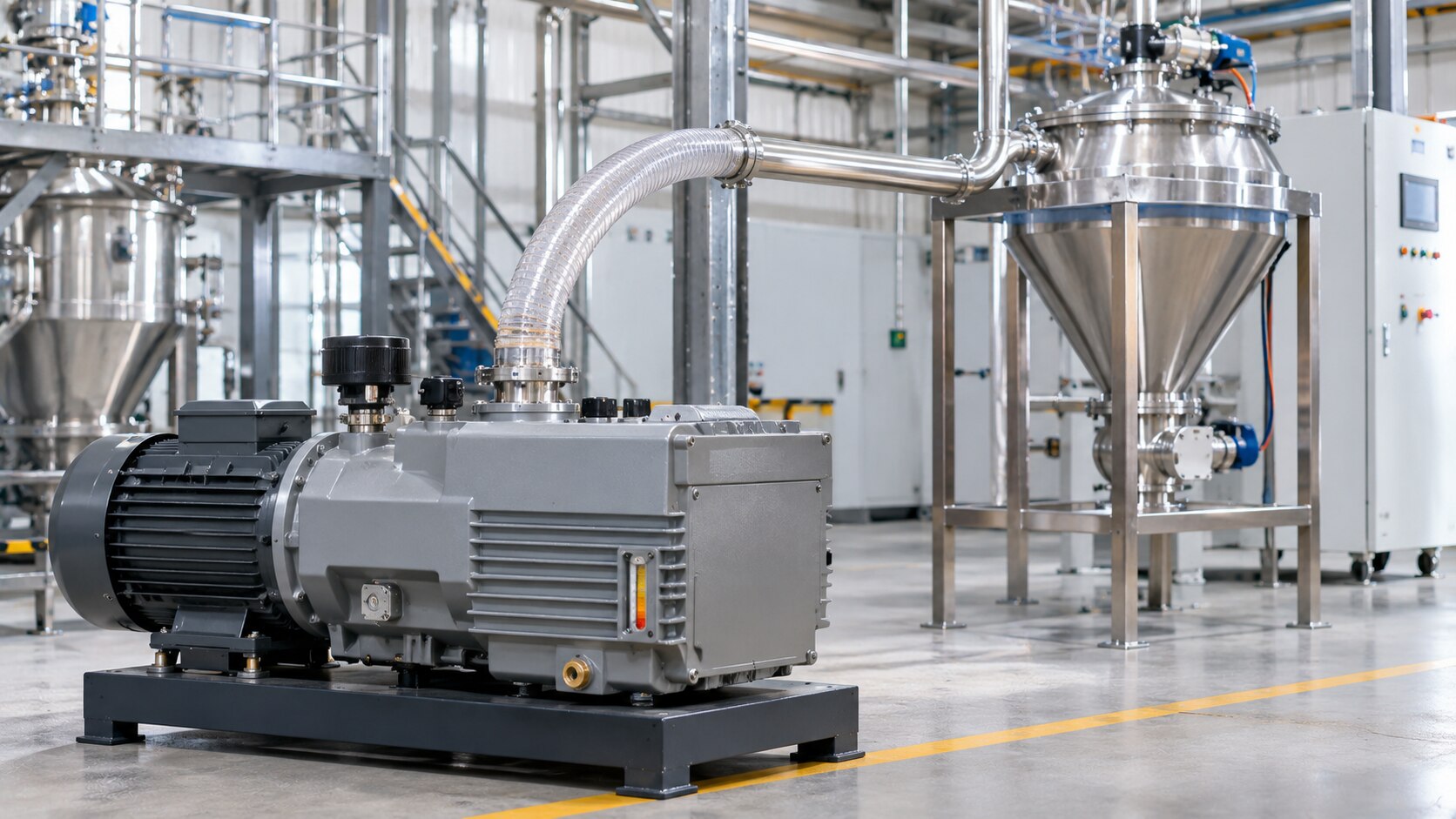
For a dry vacuum pump for dust problems in faridabad workshops, build protection in stages: place a knock-out pot, coarse pre-separator or cyclone close to heavy chips and grinding debris, then put a fine vacuum-rated filter immediately upstream of the pump.
The first stage cuts dust mass; the second catches particles that would score clearances and raise ultimate pressure.
1. Add point-of-generation extraction when chamber, product or control-valve cleanliness matters. A pump-inlet filter protects the pump, but it cannot stop dust travelling through the suction line first.
2. Specify the fine filter by particle-retention efficiency, airflow at the intended absolute pressure, housing collapse resistance, seal and adhesive compatibility, operating temperature and allowable differential pressure. Do not choose by nominal micron rating alone: efficiency changes with particle size, dust loading and test method.
3. Size the housing for the pump’s actual volumetric flow at operating pressure, not just its catalogue inlet diameter. A small element can look clean while narrow passages create excessive pressure drop, reduce chamber pumping speed and increase motor heat.
4. Fit differential-pressure measurement across the filter, provide a safe drain or collection point for the separator, and set cleaning or replacement before the manufacturer’s maximum pressure drop.
Sticky dust can blind ordinary media and needs a washable or sacrificial separation stage. Oil mist and coolant aerosol need a demister or coalescing filter; wet powder needs moisture-tolerant separation, and a different pump technology may be safer. Record these limits to control dry vacuum pump dust contamination.
Clean the Pump Without Driving Dust Deeper Inside
A dust-contaminated dry pump in a Faridabad workshop must be cleaned as an energy-isolation and exposure-control job, not with a quick air blast. Silica-containing dust requires the site’s respiratory protection, local extraction and housekeeping controls; do not sweep it casually.
1. Stop the pump, isolate electrical and vacuum energy, and apply lockout/tagout. Close the isolation valve, vent the system to a safe location, and confirm zero pressure before removing any connection.
2. Wear controls matched to the material. Use an industrial vacuum rated for the collected dust, then clean the pump exterior, filter housing, separator and cooling-air passages before opening the pump. Never use compressed air to drive particles into the chamber, bearings, shaft seals or ventilation openings.
3. Remove the inlet element only by following the pump procedure. Bag or cap contaminated parts, and record the collected material’s type and quantity. Dispose of metal fines, welding debris, flour dust and chemical powder under the site’s waste and exposure controls.
4. Inspect rotors, vanes, stators, scrolls, internal clearances, shaft seals, bearings, exhaust filters and motor fan paths. Look for scoring, caked deposits, heat discoloration and looseness. Replace filter media if cleaning would damage its seal or retention performance.
After reassembly, run a blank-off test. Check ultimate pressure, pump-down time, current, noise and temperature against the pump’s documented acceptance range. Reconnect the process only when those readings return to range; a failed result indicates contamination, restriction or damage still needs attention.
Set Maintenance Around Dust Load and Measured Performance
At every shift, inspect visible dust around the suction line, separator collection level, filter differential pressure, exhaust discharge, cooling-air openings and abnormal noise. Empty the separator before material reaches its marked collection limit.
| Service condition | Starting interval | Performance record |
|---|---|---|
| Heavy grinding or powder service | Every 40–80 operating hours | Vacuum level, pump-down time from a defined starting pressure, motor current and casing temperature |
| Lighter dust service | Every 160 operating hours | The same four measurements, validated against the site baseline |
Shorten the heavy-duty interval when dust loading rises quickly or differential pressure approaches the filter maker’s limit. Clean or replace the inlet element at its specified pressure-drop limit; do not wait for a trip.
Carry out a blank-off test at least monthly in high-dust duty and after any ingestion event. Compare isolated-pump pressure with the manufacturer’s stated ultimate pressure and compare pump-down time with the site baseline. A sudden change needs investigation, not a reset.
Escalate for internal inspection when blank-off pressure worsens, current or temperature rises, noise changes, or the pump fails its acceptance test. This is the practical response to dry vacuum pump workshop problems.
Before buying a dry vacuum pump for dust problems in faridabad workshops, request written limits for:
- Maximum particle load
- Inlet-filter arrangement and differential-pressure limit
- Service interval and warranty exclusions
Kalbro Vacumatics is worth comparing only when it supplies those limits and assesses filtration, installation and maintenance against your workshop’s actual dust.
Related product
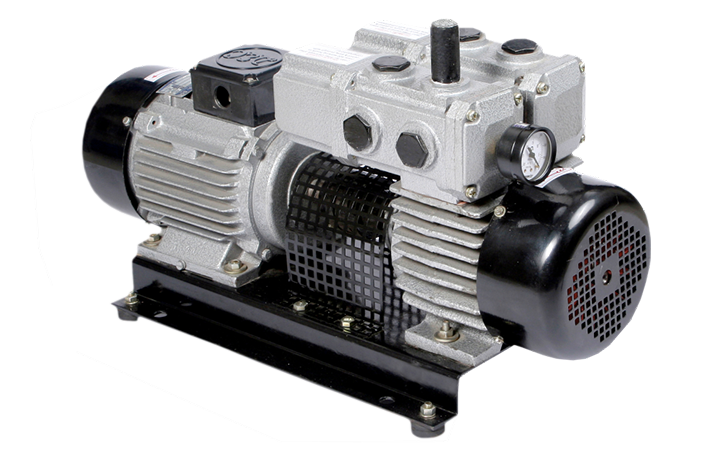 | Dry Vacuum Pumps Kalbro Manufacturing Co. has gained a distinctive position in the market as appreciable Dry Vacuum Pumps manufacturers, suppliers & exporters based... View product → |
Frequently asked questions
How does workshop dust reach a dry vacuum pump?
Dust enters through open fixtures, leaks in the suction line, and inadequate inlet protection before the pump.
How can you tell pump wear from a vacuum-system fault?
Compare vacuum readings, inspect symptoms, and check the suction line, seals, filters, and pump condition separately.
What protection should you install before the pump inlet?
Build a dust-protection train with suitable inlet filtration and stages matched to the workshop’s dust load.
How should you clean a dry vacuum pump contaminated with dust?
Isolate the pump, remove trapped dust carefully, and clean without driving contamination deeper into internal components.
How do you set maintenance intervals for dusty workshops?
Use measured vacuum performance, filter condition, operating hours, and the workshop’s dust load to set inspection intervals.
Keywords