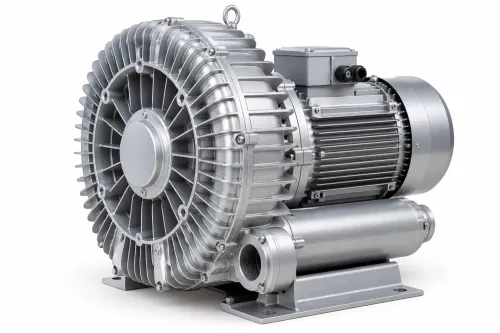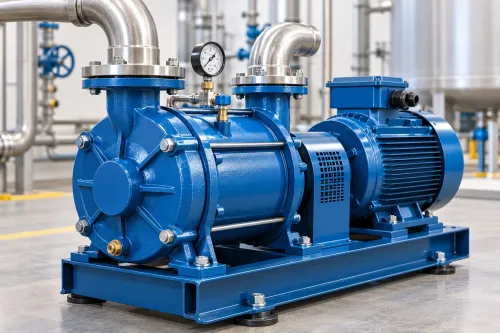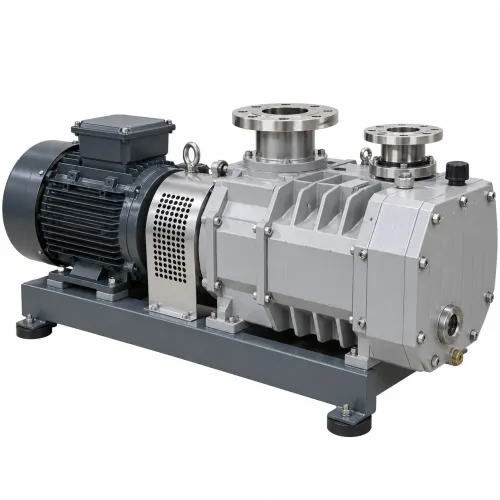
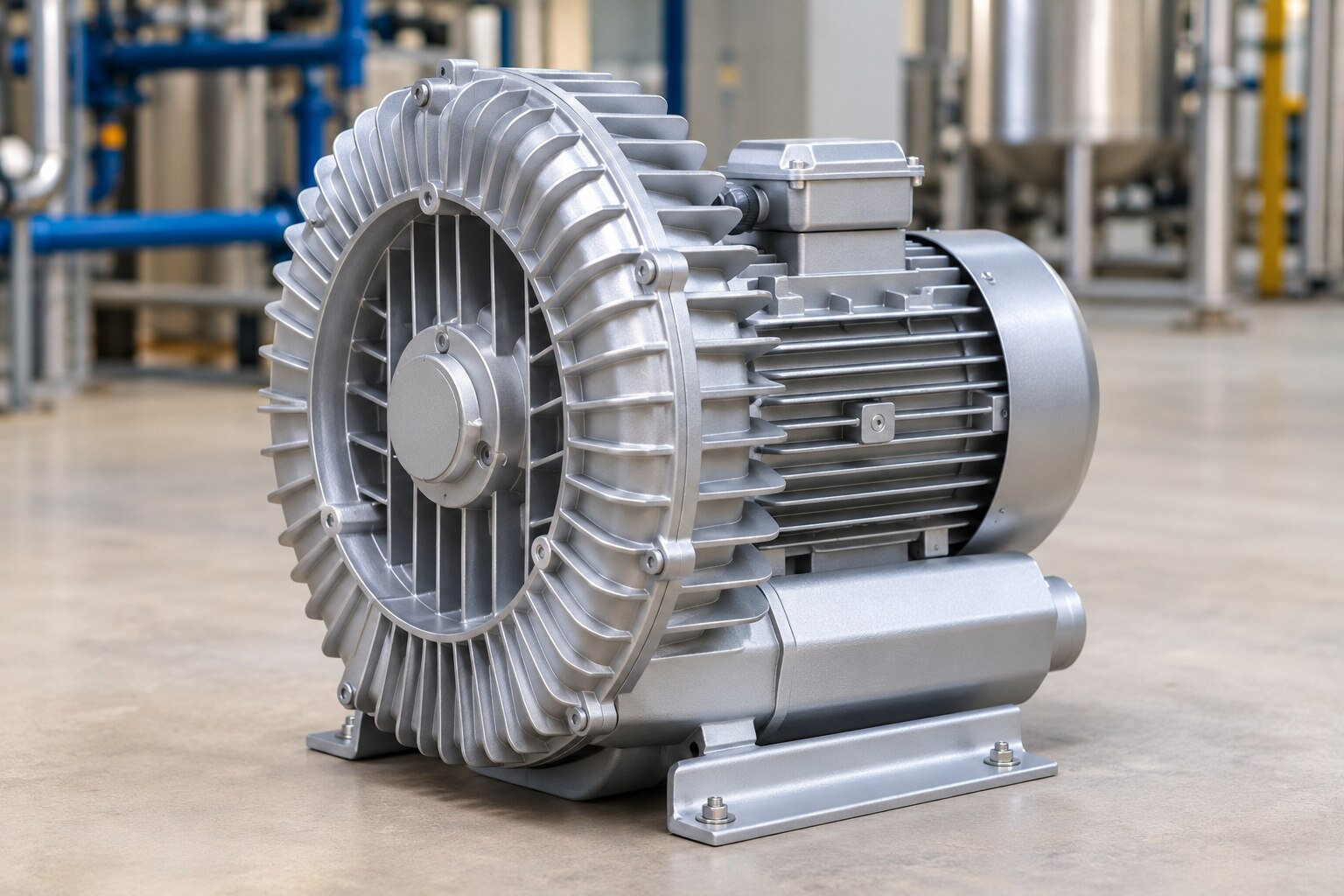
A side channel blower moves gas by repeatedly accelerating it through a circular side channel, allowing one machine to provide pressure or vacuum without contact between the impeller and housing. By the end, you will be able to match its operating principle to real factory duties, distinguish it from other equipment, and specify a unit from its actual duty point rather than a catalogue maximum.
Key takeaways
- Use side channel blowers for continuous, oil-free air or vacuum duty.
- Check pressure, airflow, gas temperature and system losses before selection.
- Choose a fan for high airflow at low pressure.
- Confirm motor rating, noise, filtration and service access before buying.
How a Side Channel Blower Creates Pressure or Vacuum
A side channel blower is a regenerative-turbine machine that moves air or another gas by accelerating it repeatedly through an annular side channel around a rapidly rotating impeller. The impeller runs with a small clearance from the housing, so the gas path contains no rubbing vanes, oil, or screw clearances.
- Gas enters through the inlet and reaches the impeller.
- The impeller throws the gas outward into the side channel, where its velocity becomes pressure.
- The gas circulates through the channel several times before leaving through the outlet at higher pressure.
The same basic machine can produce positive pressure or vacuum. Connect the process to the discharge side for blowing and to the suction side for vacuum service, but use the manufacturer’s separate pressure and vacuum limits; a pressure rating does not automatically permit the same differential duty in vacuum.
Select the unit from its pressure/flow or vacuum/flow curve at the actual operating frequency, not from maximum free-air flow, motor kW, or inlet size. Pipe resistance, filters, valves, and process equipment reduce delivered flow.
A side channel blower is not a free-air fan: blocking its inlet or outlet can cause compression heating, high motor load, and shortened motor or bearing life. Install the specified relief valve, vacuum breaker, bypass, or process control to prevent operation at an unsafe differential.
How It Compares With Fans, Roots Blowers and Vacuum Pumps
A side channel blower sits between a free-air fan and a high-duty positive-displacement blower: it produces more pressure or vacuum than a fan, but less flow and differential pressure than a Roots blower. Select it from the pressure/flow or vacuum/flow curve at the operating frequency, not from motor kW or catalogue free-air flow.
| Equipment | Main duty | Practical difference |
|---|---|---|
| Side channel blower | Moderate pressure or vacuum at relatively low flow | Best for clean, continuous gas service; closing the inlet or outlet can cause overheating and high motor load |
| Fan | Large airflow at low pressure | Suitable for ventilation and extraction; it loses performance quickly as system resistance rises |
| Roots blower | High, steady displacement flow at higher pressure | Suits demanding conveying and aeration duties; it brings more noise, pulsation and power demand |
| Dedicated vacuum pump | Vacuum service, including deeper vacuum ranges | Choose it when the required vacuum exceeds the blower’s published limit or the gas contains liquid or contamination |
The same side channel machine can provide pressure or vacuum after changing the connection arrangement. Do not assume its pressure rating equals its vacuum rating; check both limits in the manufacturer’s data.
A side channel blower is not a free-air fan. Include a correctly sized relief or bypass arrangement, because blocked pipework can shorten winding and bearing life. Its installed noise also depends on silencers, pipework, mounting and flexible connectors.
Where Side Channel Blowers Are Used in Industrial Equipment
Factories use side channel blowers for continuous, relatively clean, oil-free air movement at moderate pressure or vacuum. In Faridabad, the same equipment serves packaging, printing, engineering, textile, paper and wastewater plants; location does not change the process duty.
The question “what are side channel blowers used for in faridabad” is best answered by the required flow, pressure or vacuum, gas, duty cycle and installation environment.
Common duties include:
- Vacuum lifting and workholding for sheets, cartons, glass, components and CNC fixtures
- Pneumatic conveying of powders, granules and light parts through correctly sized pipework
- Vacuum pick-up on packaging and printing machinery, including sheet separation and web handling
- Aeration of wastewater tanks and biological treatment basins
- Drying, fume extraction and air movement around textile or paper-processing equipment
| Process | Blower role | Check before specifying |
|---|---|---|
| Packaging | Vacuum pick-up, bag opening or product handling | Confirm leakage, cycle time and vacuum level |
| Printing and paper | Sheet separation and web control | Account for porous stock and continuous duty |
| Component handling | Vacuum lifting or fixture workholding | Size for the smallest seal area and worst leakage |
| Wastewater | Low-pressure aeration | Check gas temperature, moisture and corrosion exposure |
These side channel blower applications in faridabad suit plants with clean intake air and controlled resistance. They do not suit heavy liquid carryover, abrasive solids, very high pressure ratios or explosive atmospheres without a certified complete assembly.
A relief valve, vacuum breaker, bypass or process control also prevents a blocked line from causing overheating and motor damage.
How to Match the Blower to the Process Duty
A blower rated for 500 m³/h at zero pressure can deliver far less after air passes through a filter, hose, valve, and process line. Size it from the required duty point, not the catalogue’s maximum airflow or motor kW.
1. State the required flow at the process, in m³/h or m³/min, and the pressure or vacuum required at that flow, in mbar or kPa. Include allowable leakage and whether operation is continuous or cyclical.
2. Identify the gas, inlet temperature, humidity, dust or vapour content, and any corrosive or combustible ingredients. Add altitude, ambient temperature, duty cycle, motor voltage, and operating frequency.
3. Calculate resistance through every pipe, bend, filter, silencer, valve, nozzle, and lifting tool. Provide pipe lengths and diameters; an undersized line can consume the pressure available to the process.
4. Read the manufacturer’s pressure/flow or vacuum/flow curve for the actual frequency and gas conditions. The operating point is where the blower curve meets the system-resistance curve. Do not estimate performance from motor rating or inlet size.
5. Check the permitted operating range and specify protection against blockage. A relief valve, vacuum breaker, bypass valve, or process control prevents a closed inlet or outlet from causing compression heat, motor overload, and shortened bearing or winding life.
What Distributors and Buyers Should Check Before Selection
A quotation built around motor rating or inlet size can leave the buyer with an underperforming machine. Base it on the duty point, then show exactly what the price includes.
- State required flow at the operating pressure or vacuum, not catalogue free-air flow. Include gas temperature, altitude, duty cycle, allowable leakage, and the operating frequency used for the pressure/vacuum curve.
- Identify the blower’s separate pressure and vacuum limits. A pressure-rated model is not automatically suitable for the same differential duty in vacuum service.
- List the motor voltage, phase, frequency, enclosure, control method, and hazardous-area certification where the site requires it.
- Itemise the intake filter, discharge or intake silencer, non-return valve, relief valve, vacuum breaker, gauges, flexible connectors, mounting base, and correctly sized pipework.
These details make side channel blower uses for distributors easier to quote without hiding installation losses. Kalbro Vacumatics can help a buyer check whether accessories and controls match the stated duty rather than treating the blower as a standalone catalogue item.
Reject the equipment when the process involves very high pressure ratios, large compressed-air demand, heavy liquid carryover, abrasive solids entering the impeller, or an explosive atmosphere without complete assembly certification. Choose another technology if the process needs oil-free air at a pressure beyond the curve, liquid-handling capability, or high-efficiency continuous compression.
For side channel blower industrial equipment in Faridabad, specify the actual gas and environment—not the location label—before selection.
Related product
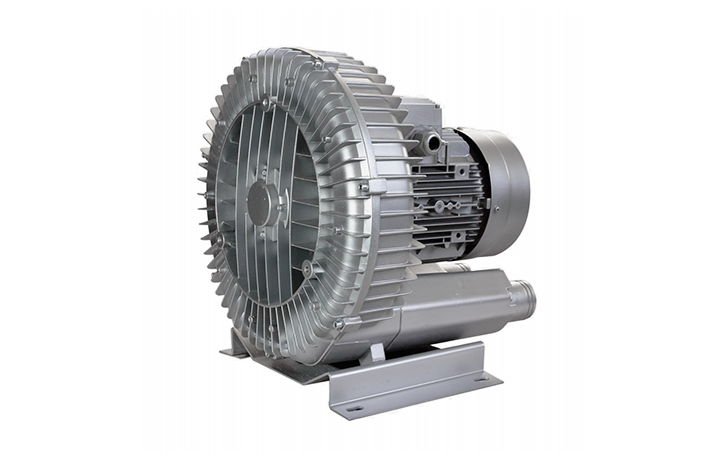 | Side Channel Blowers Kalbro Manufacturing Co. is a remarkable Side Channel Blowers manufacturers, suppliers & exporters based in India. View product → |
Frequently asked questions
How does a side channel blower create pressure or vacuum?
A rotating impeller accelerates gas through an annular side channel, recirculating it repeatedly to build pressure or vacuum without rubbing vanes or oil.
How does a side channel blower compare with a fan?
A side channel blower produces higher pressure or vacuum than a typical fan, while a fan usually delivers more airflow at lower pressure.
Where are side channel blowers used in industrial equipment?
Common applications include pneumatic conveying, packaging machines, wastewater aeration, vacuum lifting, paper handling, air knives and industrial drying.
How do you match a side channel blower to process duty?
Specify required airflow, operating pressure or vacuum, gas temperature, altitude, duty cycle, filtration and system resistance before selecting the blower.
What should distributors and buyers check before selection?
Check the performance curve, motor voltage, sound level, inlet filtration, relief protection, cooling requirements, documentation, spare parts and service support.
Keywords