Choosing a replacement by pump type alone can leave you with the wrong pressure, contamination level, vapour tolerance, or connection size. By the end, you will be able to compare oil-sealed and dry technologies, identify the data missing from a quotation, and plan a replacement that can be tested against your existing system.
Key takeaways
- Define target pressure in mbar or Pa absolute before comparing pumps.
- Choose oil-sealed pumps for compatible clean loads and dry pumps for oil-sensitive processes.
- Check vapour, dust, gas load, duty cycle, cooling, power, and exhaust requirements.
- Prove performance with pump-down time, operating pressure, leak, and measurement-location checks.
First establish what “high vacuum” means for the replacement
A replacement is suitable only when it reaches the required absolute pressure at the required pumping speed, not when its catalogue label says “high vacuum.” Define the process target in mbar or Pa absolute, then record the existing pump’s normal operating pressure, required base pressure, pump-down time, gas load, and measurement location.
Do not treat a gauge reading of 0.8 bar vacuum as an ultimate-pressure specification. It is roughly 0.2 bar absolute at atmospheric conditions, far above high-vacuum service. Confirm whether every figure is absolute or gauge pressure, and ask how the pressure was measured.
Use this evidence before comparing pumps:
- Read the existing vacuum gauge during a normal cycle, at the chamber and at the pump inlet if both points are available.
- Run a blank-off test with the inlet isolated, then record the pressure, gas ballast setting, oil temperature, and test duration.
- Request the proposed pump’s ultimate pressure and pumping speed at the actual working pressure, with the gas type, inlet condition, oil temperature, and measurement method stated.
- Check whether the existing unit is a rotary-vane backing pump for a turbo, diffusion, or cryogenic pump; it may not be the high-vacuum pump itself.
An oil lubricated high vacuum pump comparison is meaningless if one figure is a blanked-off ultimate pressure and another is operating pressure under gas load. Vacuum pump replacement options include a like-for-like backing pump, dry pump, or a backed high-vacuum arrangement; choose only after matching the measured pressure range and throughput.
Compare oil-sealed and dry pumps by process risk, not ultimate pressure alone
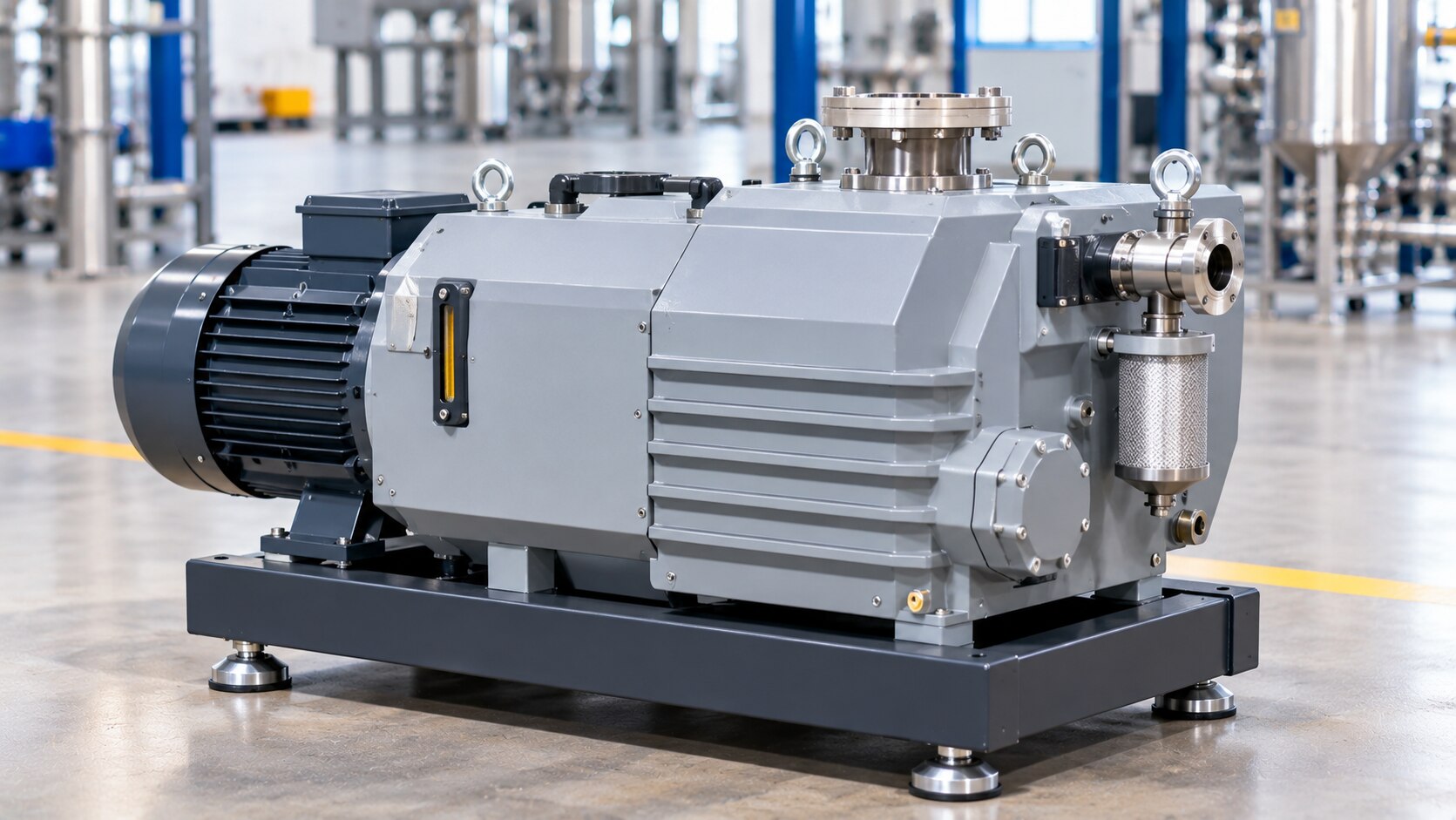
A sound oil lubricated high vacuum pump comparison starts with process risk, not the smallest catalogue pressure. An oil-sealed rotary-vane pump can deliver a low base pressure at modest cost, but oil backstreaming can contaminate the chamber and vapour can degrade the oil.
A dry pump removes that oil source but may impose higher purchase cost, seal replacement, heat load, or particulate controls.
Compare ultimate pressure only when the test conditions match: gas ballast on or off, inlet blanked or connected to a test dome, gas type, oil temperature, and measurement method. Gas ballast protects an oil pump from water and solvent condensation, but it raises ultimate pressure and reduces low-pressure performance.
| Option | Main process difference | Replacement risk to check |
|---|---|---|
| Oil-sealed rotary vane | Low cost and strong backing performance; oil lubricates the mechanism | Backstreaming, oil mist, vapour dilution, and regular oil/filter service |
| Dry scroll | Oil-free and relatively quiet for clean, intermittent duty | Tip-seal wear; condensable vapour and dust can shorten service life |
| Dry screw or claw | Better suited to industrial vapour and particulate loads with suitable filtration | Higher heat, noise, controls, cooling, and lifecycle cost |
A dry pump is not automatically a high-vacuum pump. Turbomolecular, diffusion, and cryogenic pumps still need a backing pump, often an oil-sealed vane, dry screw, or dry claw unit. Judge the replacement by contamination tolerance, pumping speed at working pressure, duty cycle, utilities, and maintenance access—not ultimate pressure alone.
Match the pump to vapour, dust, gas, duty cycle, and utilities
An oil-sealed pump is the wrong replacement when solvent vapour, water vapour, corrosive gas, or oxygen-rich gas will degrade the oil, cause backstreaming, or create a safety hazard.
A dry pump is the wrong replacement when the process needs very low ultimate pressure, handles heavy particulate, or cannot provide the purge gas, cooling, and exhaust control that the pump requires.
| Option | Main risk | Reject it when |
|---|---|---|
| Oil-lubricated rotary vane | Oil backstreaming, contaminated oil, frequent changes | The chamber must remain oil-free or receives continuous vapour |
| Dry scroll | Tip-seal wear and limited vapour or dust tolerance | The process is dirty, continuous, or loaded with condensable vapour |
| Dry screw or claw | Higher purchase cost, purge and cooling demands | Utilities, filtration, or exhaust handling are unavailable |
| Oil pump with trap or Roots booster | Added restrictions, maintenance, and system complexity | The trap will saturate or the booster cannot handle the gas load |
Do not choose from ultimate pressure alone. A pump that reaches its catalogue figure with the inlet blanked, gas ballast off, and warm oil can perform poorly against a wet chamber or solvent load. Pumping speed at the working pressure controls cycle time, not the headline displacement.
Use this procedure before approving a dry pump replacement:
- Identify every gas, vapour, powder, and cleaning chemical entering the inlet.
- Record continuous and intermittent duty, inlet temperature, ambient temperature, and cooling availability.
- Confirm voltage, frequency, exhaust-pressure limit, purge-gas quality, filtration, noise, and footprint.
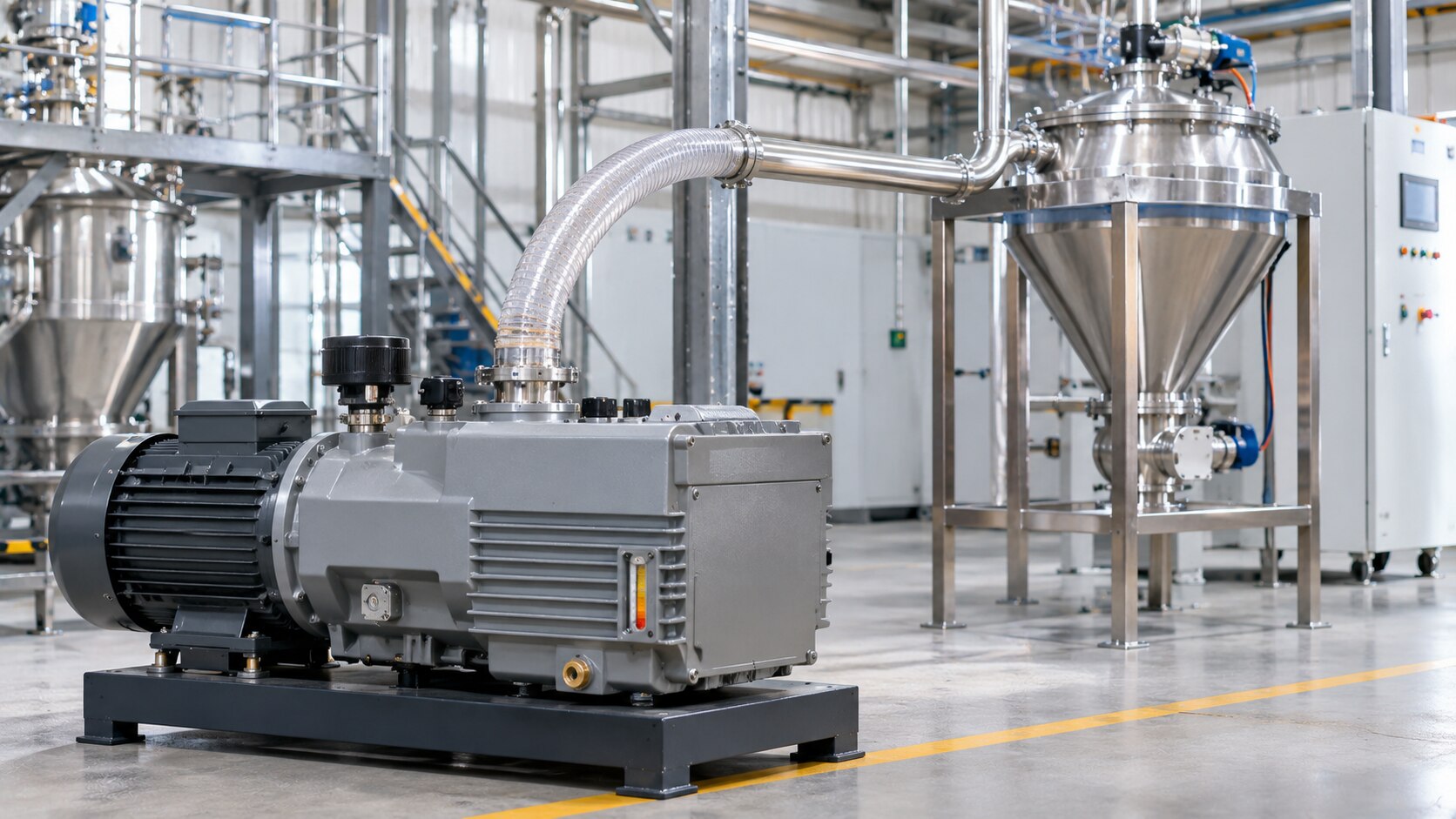
- Add an inlet trap, separator, Roots booster, or separate backing pump when the process load requires it; a rotary-vane pump alone does not serve a turbomolecular or diffusion pump’s foreline.
Use a replacement checklist before ordering in Faridabad
A replacement that fits the pipe can still fail if its speed, motor, controls, or cooling do not match the system. Record these details before requesting a dry pump replacement:
1. Measure the available footprint, pump height, inlet and exhaust flange standards, port orientation, shaft alignment where relevant, service clearance, and lifting access. Confirm the replacement’s weight will not strain the vacuum line.
2. Write down required base pressure, normal operating pressure, pumping speed at that pressure, gas composition, vapour and particulate load, inlet temperature, duty cycle, and ambient temperature. Include whether the process runs continuously or in batches.
3. Match the nameplate to your supply: phase, voltage, frequency, full-load current, motor rating, starter or VFD requirements, overload setting, and earthing arrangement. A motor designed for 415 V, three-phase power cannot be treated as a single-phase substitute.
4. Specify control needs, including start permissives, emergency stop, thermal trips, low-water or low-purge interlocks, rotation monitoring, pressure switches, and remote run or fault signals. Check whether the existing PLC expects dry contacts, 24 V signals, or a fieldbus connection.
5. Verify air cooling or cooling-water flow, purge-gas quality and pressure, exhaust pressure limit, oil mist filtration, condensate drainage, vibration isolation, and allowable noise. Humid or dusty Faridabad service makes enclosure and filtration details important.
6. Ask Kalbro Vacumatics to confirm every value against test conditions, including gas ballast position, oil temperature, measurement method, and blanked or connected inlet. That prevents an oil lubricated high vacuum or dry pump in Faridabad from being selected on an incomparable catalogue figure.
Related products
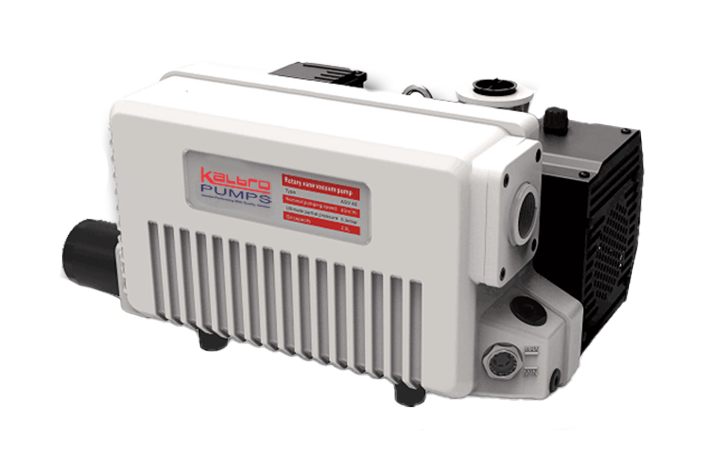 | Oil Lubricated High Vacuum Pumps Oil Lubricated High Vacuum Pumps Kalbro Manufacturing Co. has emerged as prominent Oil Lubricated High Vacuum Pumps manufacturers, suppliers & exporters. View product → |
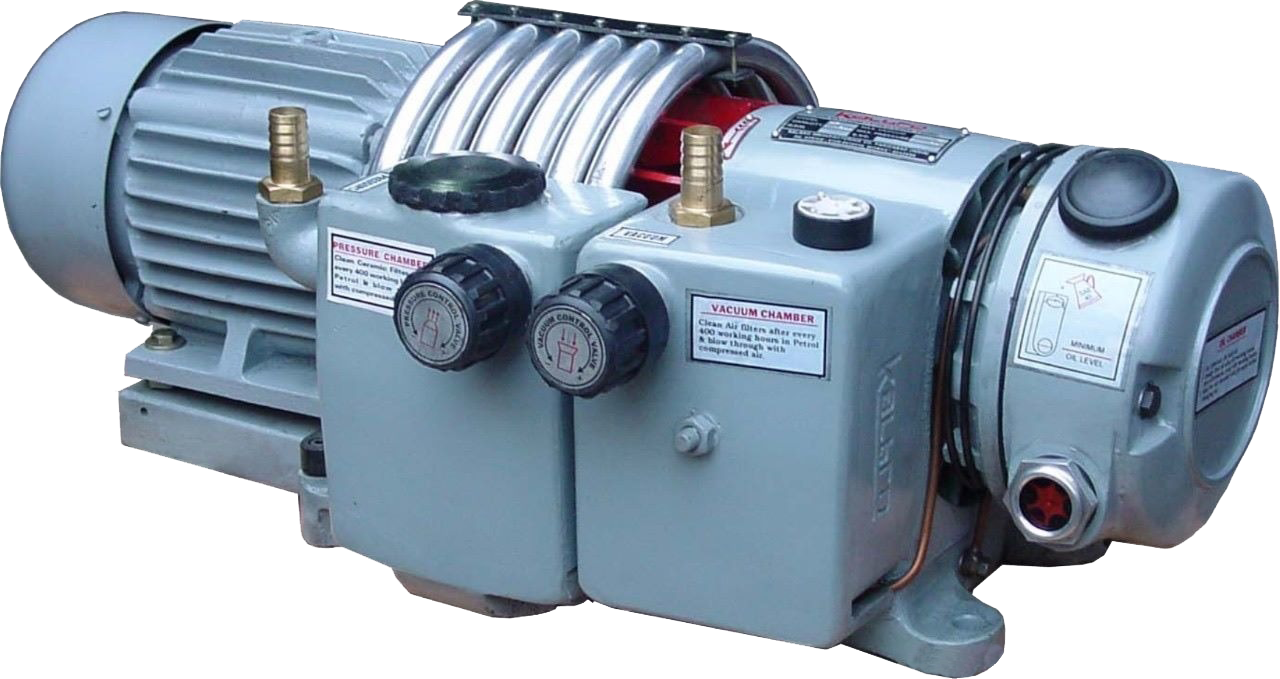 | Oil Lubricated Vacuum Pressure Pump ₹38500 Oil Lubricated vacuum pressure pump Flow : 30 m3/hr Vacuum : 0.8 Bar Pressure : 0.8 Bar Power : 2 hp/ 1.5 kW View product → |
Commission the replacement with measurements that prove performance
Install the replacement with the inlet clean, the correct flange gasket, an unobstructed exhaust, and the specified cooling, purge, and electrical services. A high vacuum pump replacement in Faridabad is not accepted because the motor runs; accept it against measured performance at the process connection.
- Record the existing system’s pressure, pumping time, gas load, and production conditions before removal.
- Verify rotation, oil level and grade, belt or coupling alignment, exhaust pressure, cooling flow, and vibration after installation.
- Calibrate or cross-check the vacuum gauge against a reference gauge at the measuring point.
- If a turbomolecular, diffusion, or cryogenic pump is installed, test its backing pump and foreline separately; a rotary-vane pump alone is not the high-vacuum stage.
Isolate the vessel and perform a blank-off test with the inlet sealed by a rated blank flange. Record pressure against time, gas type, oil temperature, gas-ballast position, and gauge location.
Compare the result with the pump’s specified ultimate pressure using the same measurement method; an inlet-connected test dome, open gas ballast, cold oil, or a different gas invalidates a catalogue comparison.
Then leak-test the installed system, measure pump-down time to the operating pressure, and repeat the test under normal vapour and gas load. A failed blank-off test points to the pump, oil, or exhaust restriction; a good blank-off test followed by slow system pump-down points to leaks, outgassing, contamination, or inadequate conductance.
Document these readings before accepting an oil lubricated high vacuum or dry pump in Faridabad.
Frequently asked questions
What does high vacuum mean when replacing a vacuum pump?
Define it using the required absolute pressure in mbar or Pa, then confirm pumping speed, base pressure, pump-down time, gas load, and measurement location.
How do oil-lubricated and dry pumps differ for replacement?
Compare process risk rather than ultimate pressure alone: oil-sealed pumps can introduce oil contamination, while dry pumps avoid oil in the pumping path but require careful control of vapour, dust, heat, and exhaust.
Which process conditions must match a replacement pump?
Match the pump to vapour, dust, corrosive or reactive gases, gas load, duty cycle, cooling method, electrical supply, exhaust arrangement, and available utilities.
What should you check before ordering a pump replacement in Faridabad?
Record the existing pump model, connection size, pressure range, pumping speed, motor rating, oil type or dry-pump technology, dimensions, service clearances, controls, and site utilities.
How do you prove a replacement pump performs correctly?
Measure pump-down time, normal operating pressure, base pressure, pressure at the process connection, gas ballast or purge settings, and leak performance under the same defined test conditions.
Keywords