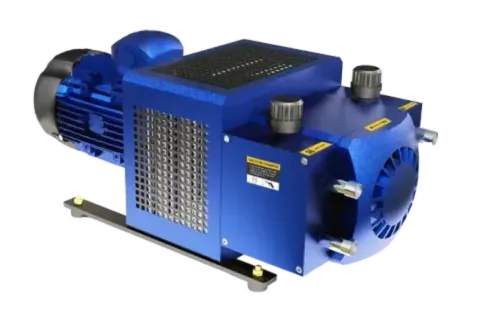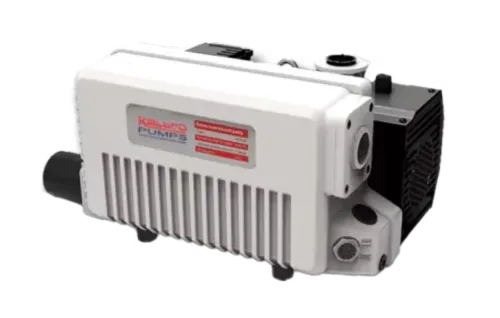
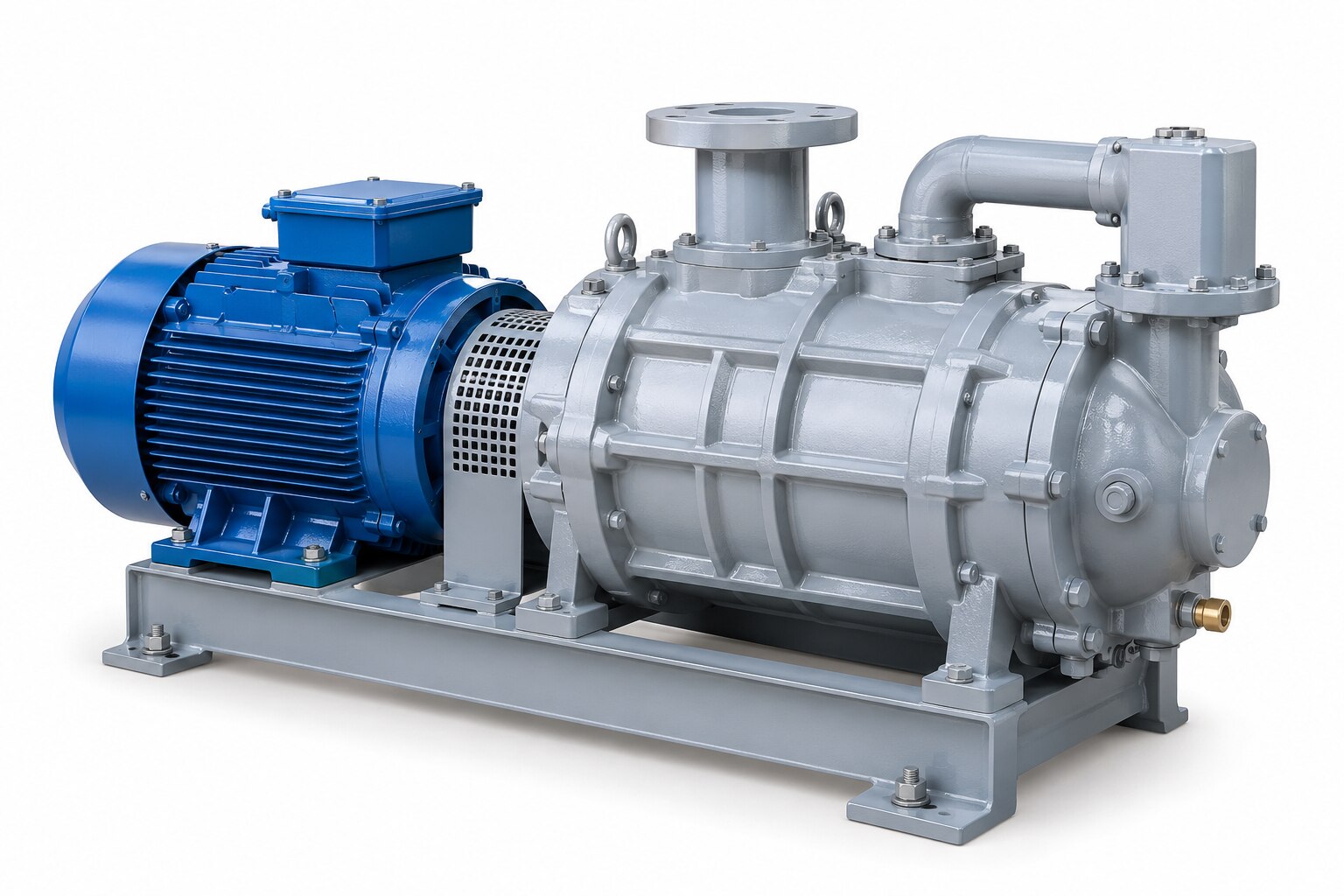
A pneumatic ejector is not automatically the best substitute for a motor-driven vacuum pump: its performance depends on supply pressure, air consumption, leakage, piping and duty cycle. By comparing those factors with rotary, dry, oil-lubricated, water-ring and side-channel equipment, you can request a distributor quotation that fits the application rather than the nominal port size.
Key takeaways
- Choose ejectors for instant intermittent vacuum and motor-driven pumps for continuous duty.
- Size an ejector from leakage, evacuation time, target vacuum, and available pressure.
- Request air consumption at your actual inlet pressure, not only the pump model.
- Compare compressed-air cost with motor power before approving the quotation.
Which vacuum technology fits the application?
Choose a compressed-air ejector when you need instant, intermittent vacuum without an electrical motor at the tool; choose a motor-driven pump when vacuum runs continuously or demands deeper, managed performance.
Distributor quotations usually call a Venturi or pneumatic ejector a “compressed-air vacuum pump.” It has no rotating wear parts and suits pick-and-place, sheet handling, packaging, sealing, clamping and evacuation.
| Option | Main characteristic | Best fit |
|---|---|---|
| Pneumatic ejector | Instant start; no rotating parts; consumes compressed air | Intermittent handling, sealing and clamping |
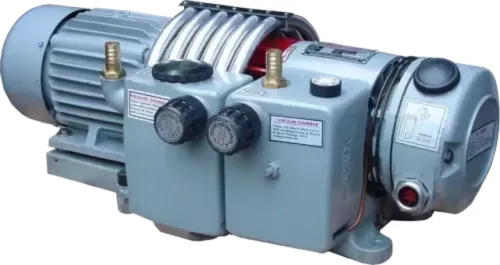
| Rotary pump | Established continuous vacuum duty | Production lines with steady demand |
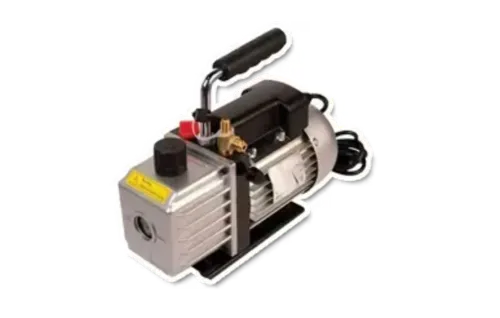
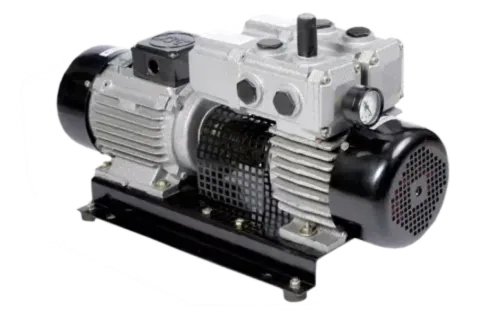
| Dry pump | No process-side oil | Oil-sensitive products; exhaust cleanliness still needs checking |
| Oil-lubricated pump | Deeper vacuum with established oil maintenance | Duties that justify oil changes and filtration |
| Water-ring pump | Tolerates wet operation and liquid carryover | Liquid handling and humid processes |
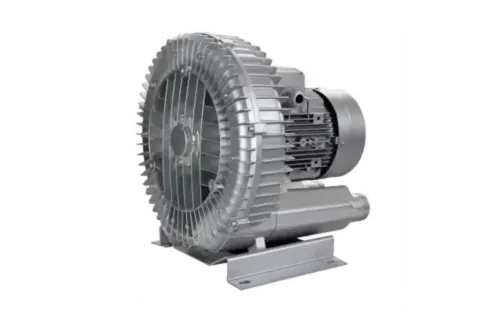
| Side-channel blower | High air movement at lower vacuum | Leaky loads and conveying |
The trade-off is direct: an ejector removes the electrical motor from the point of use, but consumes compressed air continuously during evacuation or hold. For continuous service, that air can cost more than electricity for a dry-running pump.
A multistage ejector deserves comparison when you need stronger suction flow or better air efficiency at a comparable vacuum; a single-stage unit suits moderate vacuum and lower initial cost.
When comparing compressed air vacuum pump options for distributors in Faridabad, compare vacuum flow and ultimate vacuum at the actual supply pressure—not the maximum vacuum figure alone.
How do you size an ejector for the load?
For gripping, size holding force from pressure differential × effective cup area, then allow for acceleration, side loading, friction and a safety margin. Nominal cup diameter is not load capacity: leaks, deformation and the usable contact area determine the result.
| Load type | Prioritise | Model inputs |
|---|---|---|
| Sealed, rigid workpiece | Vacuum level and response time | Target vacuum, cup area and cycle time |
| Porous, warped, dusty or textured product | Suction flow | Leakage through the product and cup contact |
| Evacuation | Evacuation rate | Receiver or tooling volume, target absolute pressure, allowable time and leakage rate |
Measure leakage through seals, vacuum cups, valves and joints. Long pipe runs and narrow tubing add flow loss and slow response, so specify tube internal diameter, length, fittings and generator location with the ejector.
Give the distributor these operating details:
- Duty cycle, cycle rate, number of simultaneous cups, ambient temperature and contamination exposure.
- Whether the load must remain held during a short compressed-air failure.
- Supply pressure at the generator and the required vacuum-flow curve, not ultimate vacuum alone.
A vacuum reservoir, non-return valve and vacuum switch may be needed, along with separately engineered fail-safe support. A check valve alone does not guarantee retention when a cup or workpiece leaks.
Install the generator near the cups when fast response matters; a remote ejector on narrow tubing can respond slower than a smaller unit mounted at the tool.
What compressed-air supply will the pump actually need?
A quoted ejector is viable only if the plant can maintain its inlet pressure at the machine during simultaneous demand. The compressor-room set pressure proves little after losses through the dryer, filters, ring main, flexible hose, quick couplers and local regulator.
Ask the distributor to document:
- Inlet pressure at the ejector during peak operation, the manufacturer’s operating range, expected pressure drop, and air consumption in Nm³/h or SCFM.
- Compressor flow available during peak use after distribution losses, plus the connection size, port standard and required tube internal diameter.
- A point-of-use filter, regulator and drain matched to the required ISO 8573-1 compressed-air purity class. Liquid water, compressor oil, rust and pipe scale can block ejector nozzles and foul silencers.
- Exhaust direction, silencer pressure drop and replacement availability. Use a remote exhaust or suitable silencer where noise, dust disturbance or operator exposure matters; a clogged silencer reduces vacuum performance.
- Tube and fitting standards, including whether BSP, NPT or metric adapters are included. State the tube length, fittings and local regulator rather than assuming a larger ejector port will overcome a narrow hose or restricted fitting.
For compressed air vacuum pump distributor supply in faridabad, require an acceptance test at the tool that records supply pressure, vacuum level, evacuation time and air consumption. Install the generator near suction cups when long, narrow tubing would slow response or restrict suction flow.
Ensure the quotation specifies pressure and performance curves at the actual supply pressure, not only maximum vacuum.
When does compressed air cost more than electricity?
An ejector’s low purchase price can conceal the electricity used to generate its compressed air. The gap becomes significant during continuous evacuation or vacuum hold.
| Option | Main operating cost | Usually favoured when |
|---|---|---|
| Pneumatic ejector | Compressed air during evacuation and hold | Intermittent pick-and-place |
| Electric dry pump | Motor electricity, cooling and wear parts | Continuous vacuum service |
Calculate annual ejector air cost as measured consumption in Nm³/h × operating hours × site cost per Nm³ of compressed air. If that cost is unknown, use measured compressor input power in kW × compressor run hours × electricity tariff, then divide by delivered air volume; include dryer, filter and distribution losses.
Compare that figure with the electric pump’s measured kW × operating hours × local electricity tariff. Use the real duty cycle, not 8,760 hours by default: intermittent pick-and-place often favours an ejector, while continuous service can favour a dry-running pump.
Include maintenance, cooling, noise, oil-contamination risk, exhaust filtration and downtime in the comparison. A dry pump keeps oil away from the process but still has finite vane, diaphragm, claw or filter life; process-side cleanliness is different from pump-exhaust cleanliness.
Ask industrial vacuum pump distributors in Faridabad for performance curves showing air consumption and suction flow at the actual supply pressure. Raising pressure above the optimum can increase noise and air use without a proportional gain in useful vacuum.
Record the ejector’s measured consumption during the actual evacuation and hold cycle, not just its catalogue rating.
What should a Faridabad distributor quotation prove?
A quotation is comparable only when it identifies the exact model and shows performance at your operating conditions, not merely a maximum vacuum claim.
- Request vacuum and flow curves, compressed-air pressure range, air-consumption curve, inlet and exhaust arrangements, cycle rate, supplied accessories, warranty terms and commissioning support.
- Specify vacuum units, port standard and size, tube and fitting standard, electrical interface for a vacuum switch, ambient temperature, duty cycle, ingress protection, and tolerance for dust or moisture.
- Require replacement nozzle or cartridge availability and state the tube internal diameter, length, fittings, check valves and exhaust silencer. Mixing BSP, NPT and metric connections without an adapter plan creates leaks and delays commissioning.
| Claim | Proof to request | What failure reveals |
|---|---|---|
| Delivery | Dispatch date and model-specific availability | A promised unit may not be ready |
| Performance | Curves at the quoted supply pressure | The maximum vacuum may not meet your cycle |
| Support | Stock location and replenishment time for spares | The installed pump can remain idle |
Run an acceptance test under the actual connected load. Record supply pressure at the tool, vacuum level, evacuation time and air consumption; a compressor-room pressure reading proves little after dryers, filters, hoses and regulators reduce pressure.
Separate delivery from service. Ask whether filters, silencers, seals, cups, nozzles or cartridges, vacuum switches and solenoid valves are stocked locally. This distinction matters when a compressed air vacuum pump supplier in Haryana cannot restore a nominally available unit without distant wear-item replenishment.
Include Kalbro Vacumatics only when its quotation documents these figures and support terms.
Related products
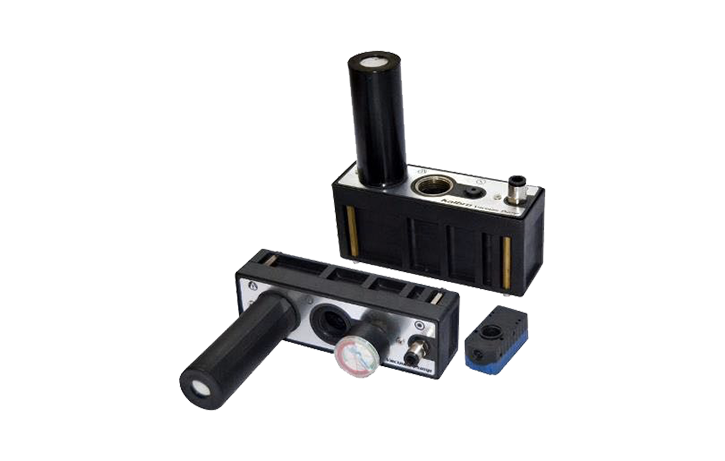 | Compressed Air Driven Vacuum Pumps Compressed Air Driven Vacuum Pumps Kalbro Manufacturing Co. is a trusted Compressed Air Driven Vacuum Pumps manufacturers, suppliers & exporters. View product → |
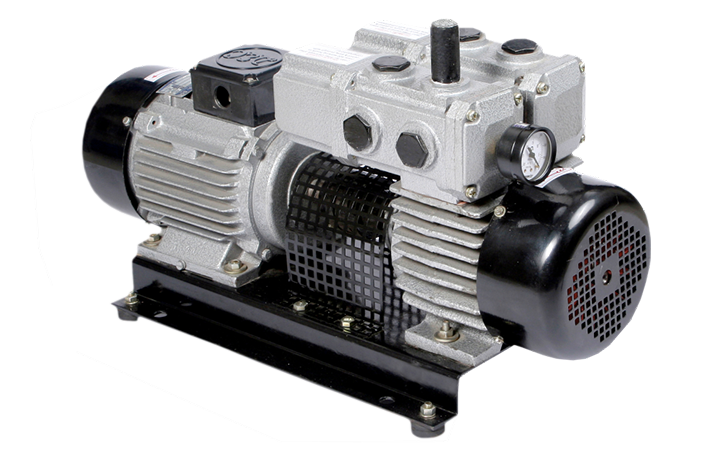 | Dry Vacuum Pumps Kalbro Manufacturing Co. has gained a distinctive position in the market as appreciable Dry Vacuum Pumps manufacturers, suppliers & exporters based... View product → |
Frequently asked questions
Which vacuum technology fits the application?
Use a compressed-air ejector for instant, intermittent vacuum where electrical power at the tool is unsuitable. Choose a motor-driven vacuum pump for continuous operation, deeper vacuum, or controlled performance.
How do you size an ejector for the load?
Specify the leakage rate, evacuation volume, target vacuum, required evacuation time, and available compressed-air pressure. Use those values to compare an ejector’s suction capacity and air consumption at the operating point.
What compressed-air supply will the pump actually need?
Ask for free-air consumption at the stated inlet pressure, along with minimum pressure, connection size, filtration requirements, and duty cycle. Check that the compressor and piping can maintain that pressure during peak demand.
When does compressed air cost more than electricity?
Compressed air becomes costly when an ejector runs for long periods or consumes high free-air volume. Compare its hourly air requirement and compressor energy with the motor power of a continuous-duty vacuum pump.
What should a Faridabad distributor quotation prove?
The quotation should state target vacuum, suction capacity, air consumption, inlet pressure, evacuation time, materials, controls, warranty, spares, and test conditions. Request performance data at your operating point rather than a catalogue maximum.
Related products
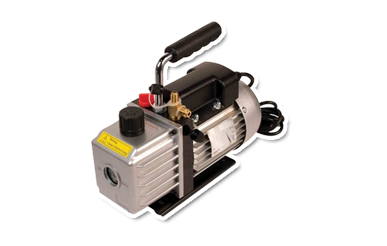 | Vacuum Pumps We are instrumental in bringing to esteemed clients a wide range of high-quality Vacuum Pumps. View product → |
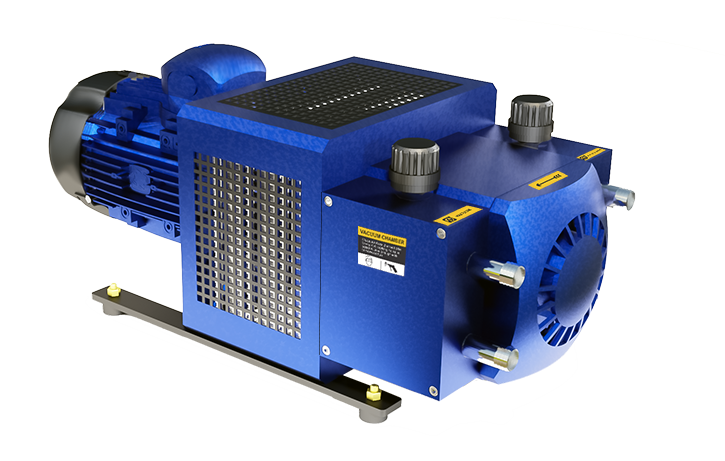 | Dry Vacuum Pressure Pumps Kalbro Manufacturing Co. has been appreciated in the international market as leading Dry Vacuum Pressure Pumps manufacturers, suppliers & exporters. View product → |
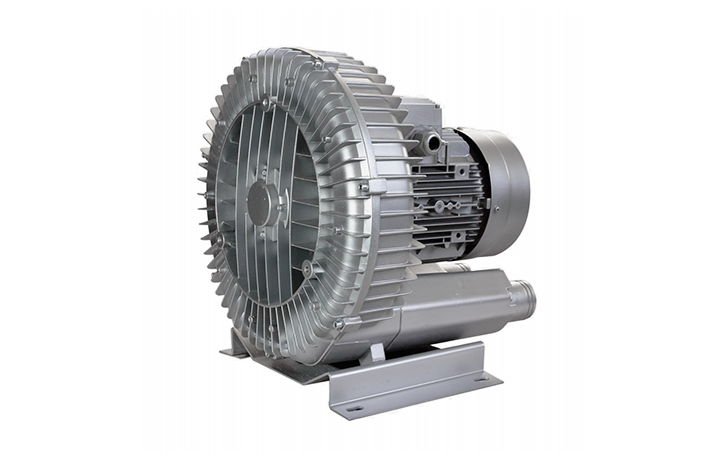 | Side Channel Blowers Kalbro Manufacturing Co. is a remarkable Side Channel Blowers manufacturers, suppliers & exporters based in India. View product → |
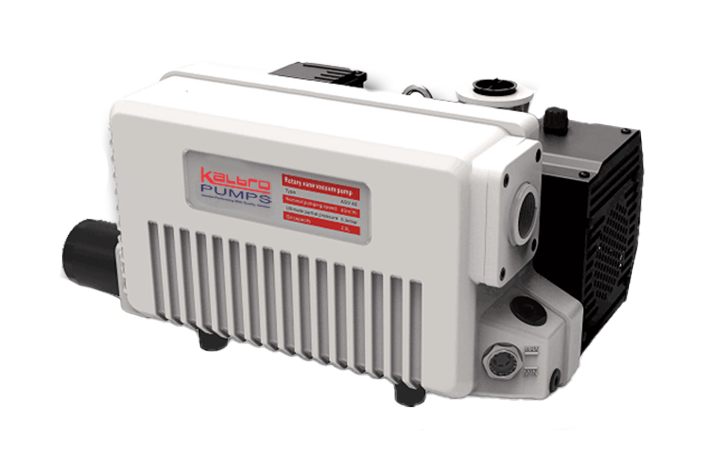 | Oil Lubricated High Vacuum Pumps Oil Lubricated High Vacuum Pumps Kalbro Manufacturing Co. has emerged as prominent Oil Lubricated High Vacuum Pumps manufacturers, suppliers & exporters. View product → |
Keywords