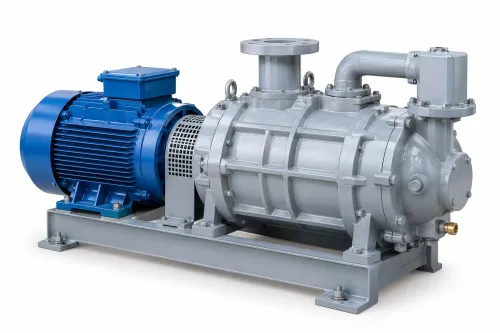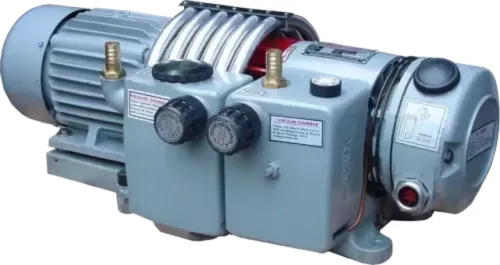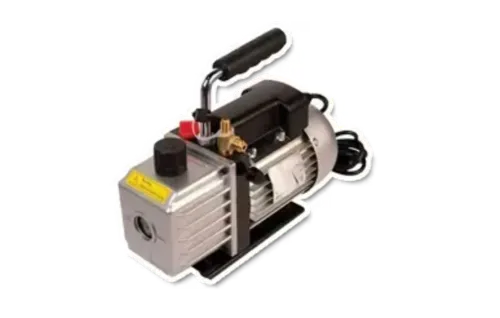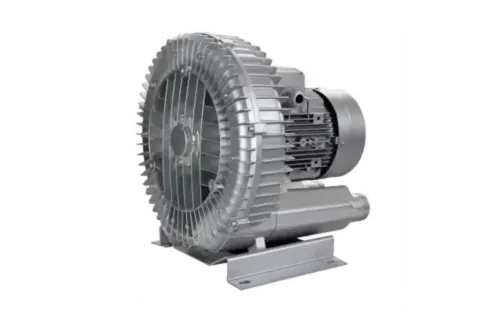
Monsoon moisture reaches a pump through more than rain: humid process air, condensate in pipework, roof leaks, floor water and cooling equipment during shutdowns all create different risks. You will be able to inspect the installation, separate vapour from liquid carryover, protect electrical and mechanical parts, and specify a pump using production conditions rather than a catalogue vacuum figure.
Key takeaways
- Treat water vapour as pump load, not just a humidity reading.
- Install a separator, drain and demister before wet gas reaches the pump.
- Inspect drains, filters, belts, seals and motor insulation before monsoon start-up.
- Accept the pump against vacuum, pressure, moisture-handling and electrical test results.
How Faridabad monsoon humidity changes pump loading
At 30 °C, saturated water vapour has a partial pressure of about 4.24 kPa; at 35 °C, it rises to about 5.63 kPa. That vapour becomes part of the pump’s load, so dry vacuum pressure pumps for monsoon production in Faridabad must be selected from more than a relative-humidity figure.
Relative humidity alone is not a design input. Calculate the moisture load from air temperature, humidity, suction volume flow, operating pressure and whether the process gas is already saturated. A 100 m³/h stream of saturated air at 30 °C carries approximately 3 kg/h of water vapour before condensation.
1. Separate humid air from liquid water. Rainwater entering an outdoor suction line, roof leak or low point can reach the pump as liquid and damage bearings, seals, electrical parts or compression surfaces. A separator and reliable drain address liquid carryover; they do not remove water vapour from saturated air.
2. Expect condensation during cooling and shutdown. Water forms on pump bodies, pipe walls, terminal boxes and control cabinets when those surfaces fall below the local dew point. Keep the machine sheltered and inspect these surfaces after humid shutdowns.
3. Treat “dry” as a compression description, not a moisture-proof rating. Dry compression surfaces do not protect every bearing, gearbox, seal, electrical part or enclosure from water.
During wet-chamber evacuation, water-vapour partial pressure can dominate residual pressure. Once it reaches the chamber’s temperature-dependent limit, a larger pump cannot overcome it; reduce the moisture source instead. That is the central issue in vacuum pressure pump humidity in Faridabad.
Where to stop liquid water before it reaches the pump
For dry vacuum pressure pump use in the rainy season in Faridabad, place protection in this order: process vessel → inlet filter, where solids need removal → liquid knock-out pot or moisture separator → isolation valve → pump.
Fit the separator drain at its lowest point; close the isolation valve before maintenance so drained liquid cannot return to the pump.
Use a high-level alarm or automatic drain when a liquid slug could damage compression surfaces, bearings, seals or electrical parts. The separator removes rainwater slugs and condensate, not water vapour in humid air. Inspect outdoor suction piping for low points and downward-facing openings, which can collect rain and send it toward the pump.
| Component | What it protects against | What it does not do |
|---|---|---|
| Exhaust silencer | Discharge noise | It is not a moisture trap |
| Discharge separator | Liquid carryover at the outlet | It does not dry saturated suction gas |
| Non-return valve | Reverse flow during shutdown | It does not remove condensate |
| Receiver | Flow and pressure volume | It does not dry saturated gas |
Gas ballast or a clean, dry purge belongs in the arrangement only when the pump manual permits it. Ballast or purge increases gas load, power consumption and exhaust flow, and often reduces attainable vacuum. Wet plant air defeats the purge.
The Faridabad monsoon start-up and shutdown checklist
A dry vacuum pressure pump rainy season in Faridabad needs a water check before an electrical check. Rain ingress, blocked drainage and condensate can damage equipment even when the pump itself has not been sprayed.
1. Before starting, inspect the roof, canopy, floor drains and splash paths. Remove standing water around the base, guard, motor, terminal box, VFD cabinet and local isolator. Open the separator, receiver, exhaust silencer and accessible low-point drains; check for condensate, rust streaks, blocked drains and wet filters.
Turn or inspect the pump only by the manufacturer’s permitted method.
2. During operation, record vacuum, pressure, motor current, discharge temperature, overload trips, unusual noise and separator level. A rising temperature, changing current or increasing separator level is a stop-and-investigate signal, not a reason to increase the setpoint.
3. After a humid shutdown, protect the pump from rain while allowing heat to escape. Use an anti-condensation heater only for stopped equipment as designed, and interlock it with motor status.
Before a post-rain restart, isolate and lock out the electrical supply, drain liquid, inspect cable glands and terminal-box seals, and verify motor insulation with a megohmmeter against the manufacturer’s or site maintenance standard. Do not use one universal resistance value; temperature, motor voltage, winding condition and test duration affect interpretation.
4. For an industrial pump monsoon conditions in Haryana, request a drain, filter-cleaning and inspection schedule tied to operating hours and actual wet duty. Record defects and corrective actions after each heavy-rain event.
Electrical, enclosure and corrosion controls for wet plant rooms
IP55 is not a licence to leave equipment outdoors. Under IEC 60529, it means dust protection and protection against water jets; it does not cover unrestricted exposure or temporary immersion.
1. Check each item separately: motor, terminal box, VFD cabinet, local isolator, instruments and cable glands. Seal every cable entry correctly, keep glands facing away from splash paths, and provide a sound earth connection. One IP55 component does not upgrade an unsealed adjoining component.
2. Control condensation after shutdown. Provide suitable cabinet ventilation, drainage and an anti-condensation heater designed for stopped equipment, with heater operation interlocked to motor status as specified by the equipment design. Do not wrap a running motor tightly enough to block cooling air; trapped heat damages insulation and increases trips.
3. Treat temperature as a separate selection issue. A motor rated for 40 °C ambient can require derating or a different selection when the pump room or enclosure exceeds 40 °C. Humidity alone does not justify oversizing, but restricted cooling and hot gas can.
4. For industrial pump monsoon conditions in Haryana, specify compatible corrosion protection for fasteners, shafts, guards, base frames and pipework. Remove rust before coating, eliminate water traps and inspect coating damage after storms.
5. Stop operation for investigation when you find rust at joints, discoloured deposits, pitted shafts, damp electrical insulation, repeated overload trips, altered noise or rising discharge temperature. These are warning signs of wet operation, not cosmetic defects.
For vacuum pressure pump humidity in Faridabad, keep rainwater away while allowing heat to escape.
How to select and accept a pump for monsoon production
For dry vacuum pressure pumps for monsoon production in Faridabad, approve the unit only after the supplier states its limits in writing. A generic “dry” description does not tell you whether condensate, rainwater carryover or wet process gas will damage the pump.
| Check separately | Evidence to demand | Acceptance condition |
|---|---|---|
| Vacuum inlet | Allowable condensate, inlet liquid-carryover limit, gas-ballast or purge arrangement, continuous-duty and intermittent-duty limits | Matches wet and dry production cases |
| Pressure outlet | Maximum pressure, relief-valve setting, pressure ratio, discharge temperature, continuous-duty and intermittent-duty limits | Does not exceed the line’s pressure or temperature limits |
| Combined operation | Vacuum and pressure curves at the specified speed | Do not assume maximum vacuum and maximum pressure are simultaneous |
Specify the motor ambient-temperature rating, enclosure and cable-entry details, anti-condensation provisions, drain access, and filter and separator service instructions. For industrial pump monsoon conditions in Haryana, require a maintenance schedule tied to operating hours and humidity-heavy duty.
Run acceptance testing at the intended frequency, inlet restriction, gas-ballast or purge setting, gas temperature, and wet-versus-dry condition. Compare those test methods before comparing ultimate-vacuum figures; different ballast, test gas or gauges can make the figures misleading.
Record baseline vacuum, pressure, current, discharge temperature and leak performance. Kalbro Vacumatics can be included in procurement discussions when these operating limits and monsoon safeguards must appear in the quotation and test record.
Related products
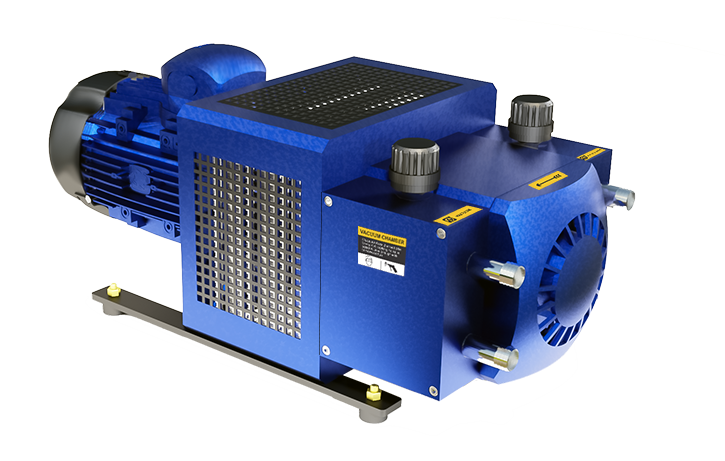 | Dry Vacuum Pressure Pumps Kalbro Manufacturing Co. has been appreciated in the international market as leading Dry Vacuum Pressure Pumps manufacturers, suppliers & exporters. View product → |
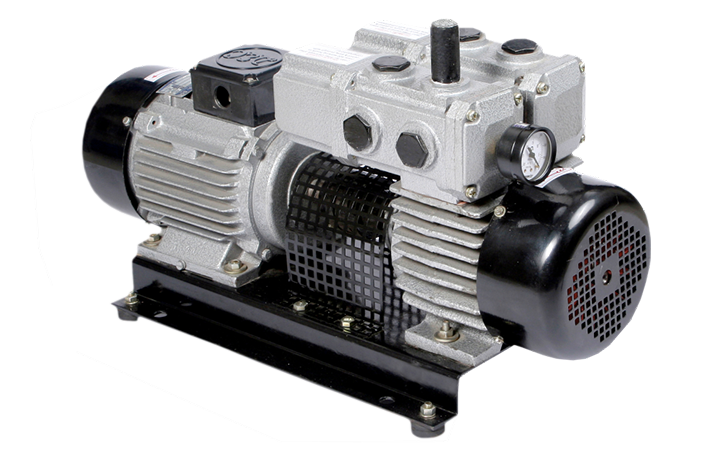 | Dry Vacuum Pumps Kalbro Manufacturing Co. has gained a distinctive position in the market as appreciable Dry Vacuum Pumps manufacturers, suppliers & exporters based... View product → |
Frequently asked questions
How does Faridabad monsoon humidity change vacuum pump loading?
At 30 °C, saturated water vapour contributes about 4.24 kPa partial pressure; at 35 °C, it contributes about 5.63 kPa. Size the pump for vapour load as well as process gas.
Where should you stop liquid water before it reaches a dry vacuum pump?
Place a knock-out pot or moisture separator upstream, fit an automatic or manual drain at its low point, and add a demister when fine droplets can carry over.
What should you check when starting and shutting down a pump during Faridabad monsoon?
Check separator drains, inlet filters, piping low points, belt or coupling condition, oil-free chamber cleanliness and motor insulation before starting. Isolate the wet process, keep the pump running long enough to clear vapour, then close the inlet and stop it according to the supplier’s procedure.
How should you select and accept a pump for monsoon production?
Compare the required vacuum, pressure, flow, vapour load, duty cycle and ambient temperature with the pump curve. Require documented performance tests, motor and enclosure details, moisture protection, drain arrangements and commissioning checks before acceptance.
Keywords