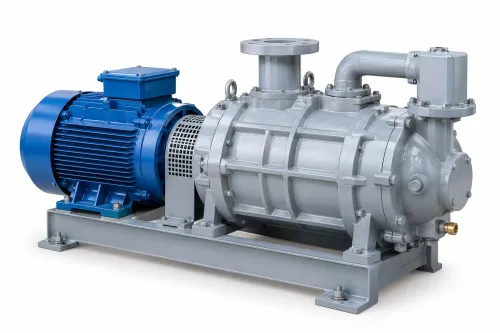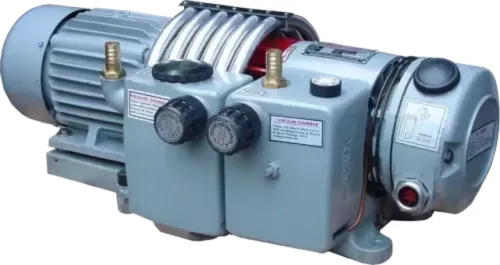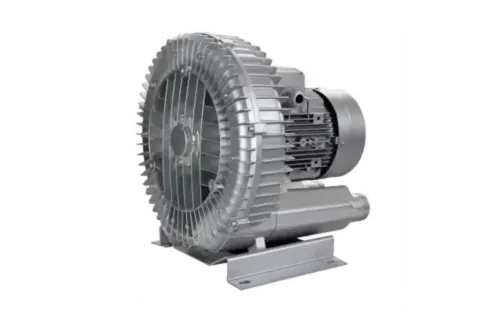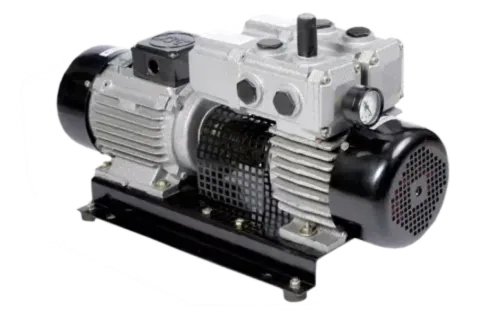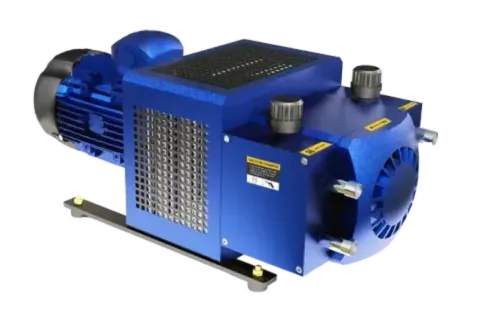
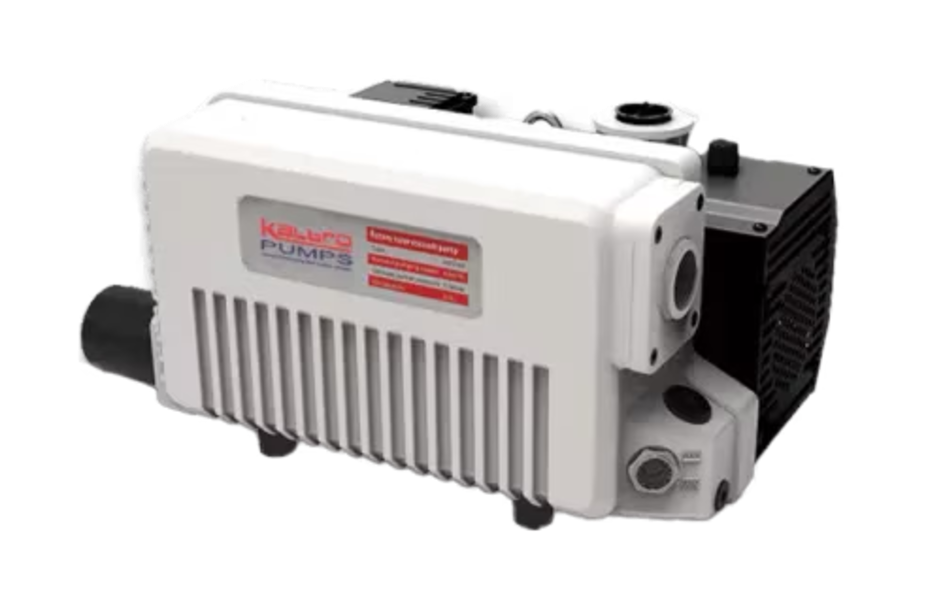
The purchase price is only one part of an oil lubricated pump’s value. You need to compare usable vacuum, contamination risk, electricity, oil, filters, repairs, downtime and local service against a dry pump before deciding whether a Faridabad purchase is economical.
Key takeaways
- Confirm the pump reaches your required vacuum under real process conditions.
- Calculate electricity, oil, filters, seals and downtime before comparing purchase prices.
- Reject an oil-sealed pump when vapour or oil contamination can spoil the product.
- Buy from Faridabad when service response, spares and testing reduce total ownership cost.
First confirm that an oil-sealed pump matches the vacuum and process
An oil-sealed rotary-vane pump is worth buying only when its measured vacuum, pumping speed and contamination controls match your process. A two-stage unit commonly reaches about 10⁻³ to 10⁻⁴ mbar under blank-off conditions, but it is normally a backing or roughing pump.
For cleaner vacuum below that range, add a diffusion, turbomolecular or comparable high-vacuum stage.
1. Define the process target at the inlet, not just the ultimate pressure. Record required operating pressure, gas load, chamber volume, evacuation time and throughput. A pump that reaches the target on a blank-off test can still evacuate your chamber too slowly.
2. Check whether oil vapour is acceptable. Backstreaming and oil mist can coat chambers, sensors and products, so specify an inlet trap or isolation valve, anti-suckback protection and a correctly sized exhaust mist filter. Choose a dry pump when contamination, frequent cycling or cleanroom compatibility controls the decision.
3. Require an acceptance test with stated instruments and conditions. Ask for blank-off ultimate pressure, pumping speed at a defined inlet pressure, motor current, power, oil temperature, leak condition, noise or vibration, and performance at the specified gas-ballast setting.
4. Treat oil lubricated vacuum pump value as the result of process fit, not purchase price. Claims about oil lubricated high vacuum for pump benefits in faridabad matter only when the supplier proves throughput, cleanliness controls and repeatable test conditions.
Build the annual operating cost before comparing purchase prices
Use a 12-month cost model, not the invoice price, to calculate the high vacuum pump operating cost in faridabad. Annual cost = motor input kW × annual running hours × electricity tariff, plus consumables, service, cooling or ventilation, calibration, oil disposal and production downtime.
1. Record the pump’s measured motor input, not only its nameplate rating. Multiply it by actual annual hours and your Faridabad electricity rate; include demand charges if your tariff applies them.
2. Price consumption from the maintenance schedule: vacuum oil, exhaust-mist filter elements, inlet filters, seals, vanes and other wear kits. Use replacement intervals shortened by abrasive dust, liquid condensate, leakage or high gas load.
3. Add site-support costs. Include technician labour, calibration, freight, emergency service and the value of batches lost while the pump is unavailable. A low purchase price loses its advantage when imported seals, motors or compatible oil delay a repair.
4. Add the cooling burden. High summer ambient temperature, blocked airflow or a dusty oil cooler raises oil temperature and motor load; price fans, enclosure ventilation and the shorter oil interval that follows.
5. Run the calculation for each supplier using identical hours, tariff, vacuum duty and downtime assumptions. Check the result against the supplier’s written oil grade, service interval, spare-part availability and response time, then compare five-year cost rather than purchase price alone.
Price the maintenance, oil and contamination burden
A low purchase price does not make oil lubricated vacuum pump ownership inexpensive. Add vacuum oil, oil-mist filters, seals, vanes, technician time, electricity, used-oil disposal and production downtime to the quotation.
- Record the process load before setting an oil-change schedule. Water vapour, solvents, dust and corrosive gases degrade oil faster than clean, dry air; check viscosity, acidity, colour and loss of ultimate pressure.
- Price contamination controls. Oil backstreaming can foul chambers, coatings, sensors and products, so include an inlet trap or isolation valve, an anti-suckback device and a correctly sized exhaust mist filter.
- Inspect the pump at defined intervals. A blocked exhaust filter raises motor load and can discharge oil; degraded or incorrect-viscosity oil causes wear, poor ultimate pressure and vane or cylinder damage.
- Include shutdown and cleaning work. Prevent oil migration into the chamber, drain condensate before it reaches the pump, and keep abrasive dust away from the inlet. A single failure can contaminate a batch or extend recovery time.
Treat the quoted ultimate pressure as a test result, not your operating pressure. It usually assumes a warm pump, clean oil, closed gas ballast and a blanked inlet; leaks, outgassing, gas load and inlet conductance push the process pressure higher.
A two-stage rotary-vane pump reaching 10⁻³ to 10⁻⁴ mbar may still need a diffusion or turbomolecular stage for cleaner, lower-pressure work.
When does buying from Faridabad create measurable value?
Oil lubricated high vacuum for pump benefits in Faridabad depend on response time, not simply the shorter freight route. Require a named service contact, a written site-visit commitment, and stocked oil, seals, vanes, filters, motors and controllers. If these parts still arrive from overseas, local purchase has not removed the main delay.
Ask the supplier to include:
- Commissioning at your site, including rotation check, oil fill, leak inspection, gas-ballast setting and connection to the actual inlet line.
- A signed acceptance report recording blank-off ultimate pressure, pumping speed or throughput at a stated inlet pressure, motor current, input power, oil temperature, noise or vibration, leak condition and gas-ballast performance.
- A response time for breakdowns, a spare-parts list with prices, and a stated availability period for seal and vane kits.
- Training on oil changes, exhaust-mist filter replacement, anti-suckback protection and contamination control.
| Commitment | Measurable local value | Warning sign |
|---|---|---|
| Site service | Faster diagnosis and less production downtime | “Service available” without hours or contact |
| Commissioning | Performance checked on your installation | Test limited to the workshop |
| Spares and oil | No wait for routine consumables | Imported parts with no stock commitment |
| Acceptance test | Comparable proof of delivered performance | “High vacuum” without test conditions |
That is where oil lubricated vacuum pump value becomes measurable. Kalbro Vacumatics is worth comparing when its quotation states these commitments rather than relying on a lower equipment price alone.
Related product
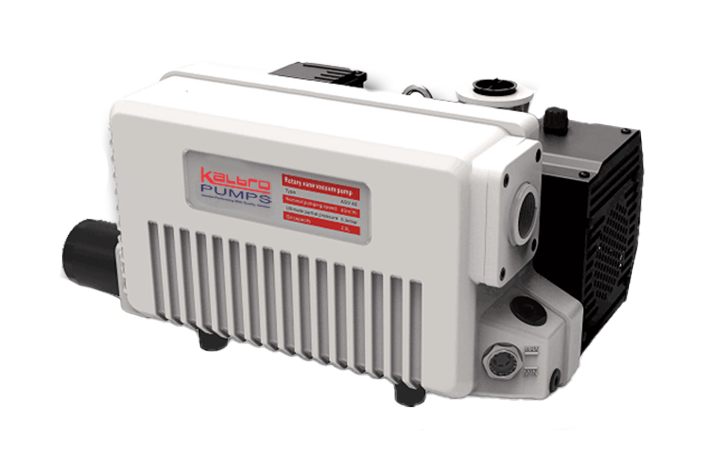 | Oil Lubricated High Vacuum Pumps Oil Lubricated High Vacuum Pumps Kalbro Manufacturing Co. has emerged as prominent Oil Lubricated High Vacuum Pumps manufacturers, suppliers & exporters. View product → |
Use a go-or-no-go test for the final buying decision
Choose an oil lubricated pump when its lower purchase price, required vacuum, throughput and planned service fit a process that tolerates oil vapour. It is usually the go decision for intermittent duty, provided you budget oil, mist filters, wear parts, disposal and downtime in oil lubricated vacuum pump ownership.
| Option | Value advantage | Main trade-off |
|---|---|---|
| Oil lubricated pump | Lower entry cost, strong performance and good intermittent-duty tolerance | Oil backstreaming, mist control, oil changes and contamination risk |
| Dry pump | Cleaner chamber, fewer oil consumables and better cleanroom compatibility | Higher purchase price, different wear parts and potentially higher service cost |
| Oil lubricated pump | Often quieter and suitable for established maintenance routines | Liquid condensate, dust or blocked exhaust filtration can rapidly reduce vacuum |
| Dry pump | Better for frequent cycling and contamination-sensitive products | Confirm achievable vacuum, gas-load tolerance, noise and service life before buying |
Use this go-or-no-go check:
- Go oil lubricated if the chamber and product accept oil-control hardware, annual running hours are moderate, and the calculated high vacuum pump operating cost in Faridabad remains below the dry-pump alternative.
- Go dry if one contamination event can ruin coating, sensors, pharmaceuticals or a cleanroom batch.
- Go dry if frequent starts, stops and unattended cycling make oil migration, degradation and service interruptions expensive.
- Reject either option if its acceptance test does not state blank-off pressure, pumping speed at a defined inlet pressure, power, leak condition and gas-ballast setting.
- Compare total cost over the expected service period, including electricity, filters, oil, labour, downtime and disposal—not purchase price alone.
Frequently asked questions
How do you confirm that an oil-sealed pump matches the vacuum and process?
Compare the pump’s blank-off pressure and pumping speed with your process pressure, gas load, vapour load and contamination limits. A two-stage rotary-vane pump reaching about 10⁻³ to 10⁻⁴ mbar under blank-off conditions is normally a backing or roughing pump, not a complete high-vacuum system.
What belongs in the annual operating cost of an oil-lubricated high-vacuum pump?
Include electricity, oil changes, oil-mist filters, inlet filters, exhaust filters, seals, planned servicing, spare parts, labour and production downtime. Compare that annual total rather than purchase price alone.
When is an oil-sealed pump the wrong choice?
Choose another technology when oil backstreaming, oil vapour, frequent solvent exposure or product contamination creates unacceptable risk. Add traps, isolation valves and filtration only when their cost and maintenance fit the process.
When does buying an oil-lubricated high-vacuum pump from Faridabad create measurable value?
Buying locally creates value when commissioning, service visits, spare-parts availability, delivery time and technical support reduce downtime or logistics costs. Ask for documented performance testing and a clear service and spares plan.
What go-or-no-go test should you use before buying?
Go only when measured vacuum and speed meet the process requirement, contamination controls are acceptable, the annual ownership cost fits the budget and local support has a defined response time. Choose no-go when any critical requirement remains unverified.
Keywords