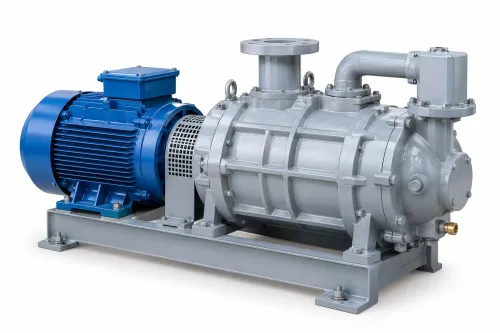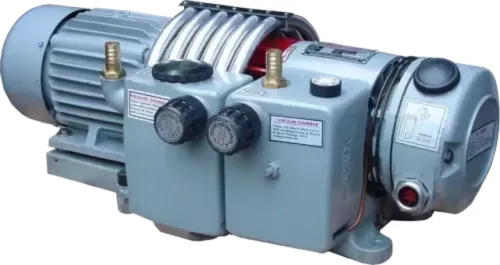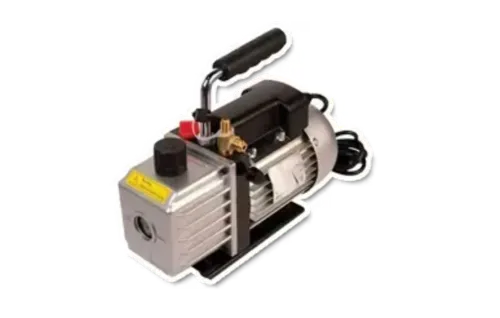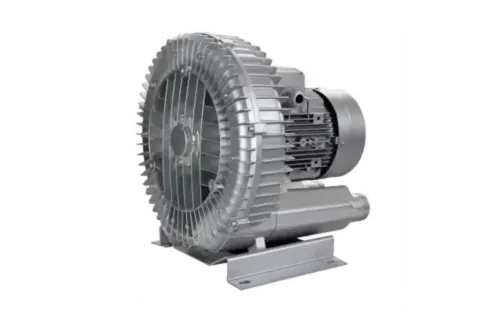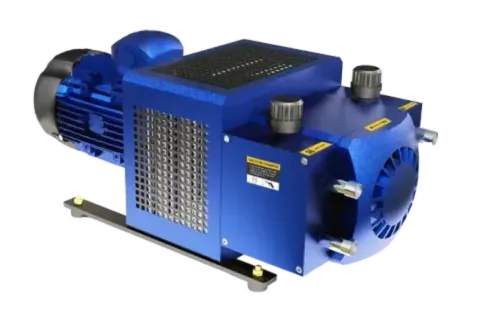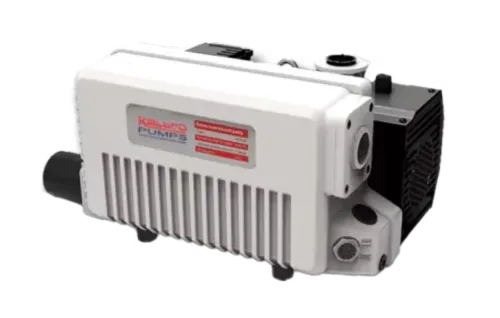
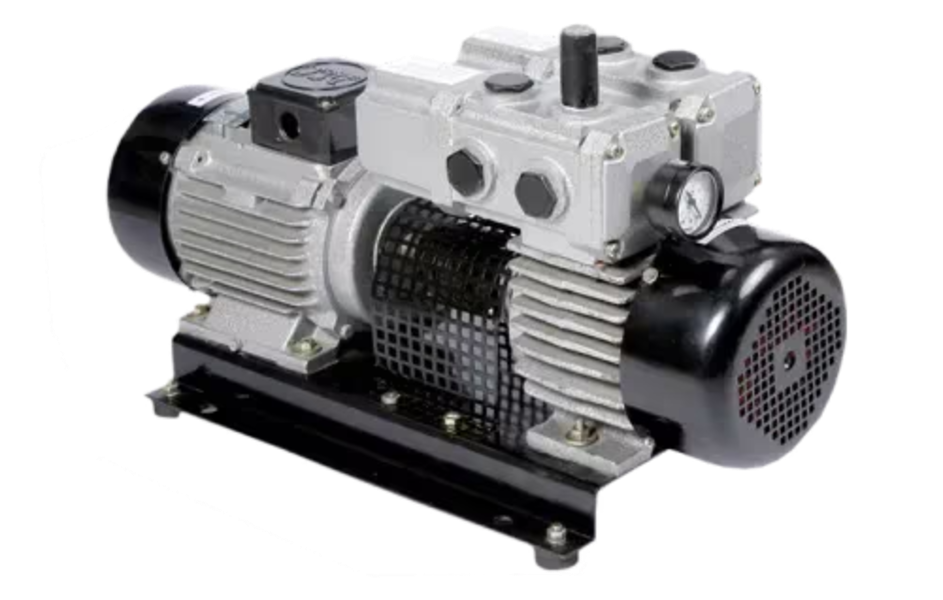
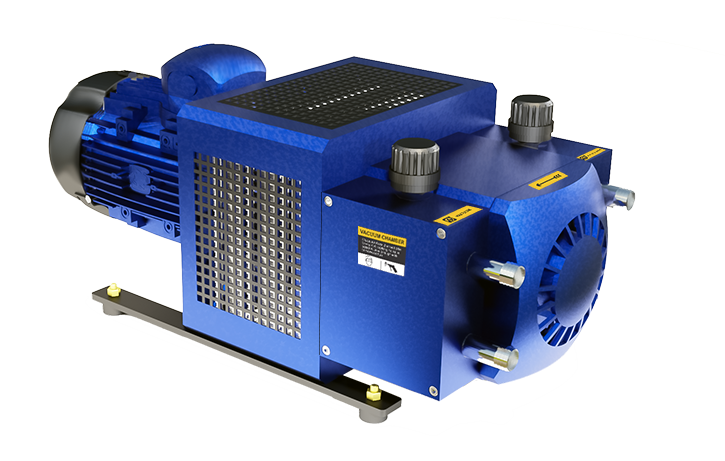
A “dry vacuum pump package” can mean a pump and motor, or a complete skid with filtration, valves, gauges, controls and documentation. By checking each included part, matching the specifications to your process and separating standard items from options, you can compare quotations without paying for missing installation equipment.
Key takeaways
- Ask whether the quote covers a bare pump, motor assembly, or complete skid.
- Require flow rate, ultimate vacuum, motor rating, inlet size, and operating temperature.
- Size for chamber volume, leak rate, conductance, vapour load, and pump-down time.
- Check for filters, non-return valves, controls, guards, and condensate protection.
What a dry vacuum pump package normally contains
The phrase dry vacuum pump for package in faridabad does not define a fixed bill of materials. Treat the quotation as incomplete until it states whether you are buying a bare pump, a pump-and-motor assembly, or a complete skid.
Ask the supplier to mark each item as included, optional, or buyer-supplied:
- Pump body, drive motor, coupling or motor adapter, base frame, mounting hardware, and guards
- Inlet filter, flexible connector, isolation valve, non-return valve, vacuum gauge, and inlet piping
- Exhaust silencer or separator, flexible exhaust connector, and pressure gauge where the process requires one
- Starter panel, variable-frequency drive, control panel, overload protection, cables, and the motor’s wiring arrangement
- Air-cooling equipment, or water-cooling connections with flow rate, inlet-temperature limit, pressure range, connection size, and water-quality requirements
A motor is not the same as a complete electrical supply. Confirm three-phase voltage, 50 Hz frequency, motor efficiency class, IP rating, starting current, rotation direction, and whether the motor suits direct-on-line, star-delta, or inverter operation. The dry vacuum pump included parts in faridabad should be identified line by line, not inferred from “package.”
Require the quotation to attach a general-arrangement drawing, connection sizes and orientation, base loads, wiring diagram, operating manual, test record, warranty terms, recommended spares, and commissioning scope. Price model-specific filter elements, seals, gaskets, shaft seals, lubricants, and a first-service kit before issuing the purchase order.
Which dry vacuum pump specifications must be written on the quote
A fair quote gives pumping speed and ultimate pressure together with the conditions behind each figure. Require pumping speed in m³/h or L/min, pressure in absolute mbar or Pa, and the inlet pressure at which capacity is measured. A catalogue displacement figure is swept volume, not delivered speed at your operating pressure.
| Figure | Required comparison condition |
|---|---|
| Pumping speed | Inlet pressure, gas type, gas temperature, and inlet-pipe size and length |
| Ultimate pressure | Blank-off test, with a clean, dry pump, stated in absolute units |
| Motor | Rated power in kW or hp, voltage, frequency, phase, and rotational speed |
| Cooling | Air or water; for water, flow, inlet-temperature limit, pressure range, connection size, and water quality |
| Duty | Continuous or intermittent operation, allowable inlet temperature, and maximum operating hours |
| Connections | Inlet and outlet size, flange standard, and orientation |
| Acoustics and size | Noise level in dB(A), measured distance, dimensions, and weight |
Ask for a performance curve, not only one headline flow value. The curve shows whether the pump still reaches your required pressure after pipe losses; two pumps with identical displacement can deliver different capacity.
The quote should also identify the gas used for testing and whether the result comes from the pump inlet or a connected line. State what is included for maintenance: inlet and exhaust filter elements, seals, gaskets, shaft seals, lubricant, and a commissioning kit.
Without those details, “low maintenance” does not make the dry vacuum pump specifications comparable.
How to size the pump for your chamber and process line
A 1 m³ chamber evacuated from atmospheric pressure to 100 mbar in 10 minutes needs about 13.8 m³/h of ideal pumping speed before allowing for leaks, pipe losses and gas released by the product. Motor horsepower alone cannot size the pump.
1. Set the duty point. Record chamber volume, starting pressure, required end pressure and evacuation time. For a simple estimate, use S = (V ÷ t) × ln(P1 ÷ P2), with V in m³, t in hours, and absolute pressures in mbar or Pa.
2. Add the leakage load. Measure pressure rise after isolating the chamber, then calculate leak rate as Qleak = V × ΔP ÷ Δt. Add this gas load to the required pumping load; otherwise the pump may reach the target on an empty chamber but fail during production.
3. Account for pipework. Long, narrow or sharply bent suction lines reduce conductance, especially near the required end pressure. Use the largest practical inlet diameter, minimise elbows and valves, and place the pump close to the chamber. A pump’s quoted displacement is not its delivered speed through restrictive piping.
4. Check the operating curve, not only catalogue capacity. Compare dry vacuum pump specifications using pumping speed in m³/h or L/min at the stated inlet pressure, plus ultimate pressure in absolute mbar or Pa. Select capacity at your required pressure, after allowing for leakage and process gas.
5. Validate the result with a site test. If the chamber contains moisture, solvent vapour or porous material, include its gas release and confirm that the quoted pump tolerates the load. A clean blank-off pressure will not predict process-line performance.
What dry operation covers—and what protection the package still needs
Dry operation means the compression chamber has no lubricating oil; it does not mean the process gas must contain no vapour, powder or liquid. A dry pump can handle clean air, solvent vapour, dust or intermittent moisture only within its material, temperature and condensation limits.
Unprotected slugs can contaminate rotors, seize clearances or multiply service costs.
| Pump type | Best fit | Check before selection |
|---|---|---|
| Dry screw | Dusty, chemical and vapour-heavy duty | Rotor coating, purge requirement, condensate tolerance and cleaning access |
| Dry claw | Intermittent evacuation, packaging and conveying | Particle size, inlet temperature and liquid-slug protection |
| Dry scroll | Clean laboratory or light industrial gas | Limited tolerance for dust, condensate and continuous heavy loading |
| Roots booster | High speed at low pressure with a backing pump | Interstage pressure limit, bypass protection and matched backing capacity |
Specify an inlet filter or cyclone separator for chips, powder and foundry dust, plus a demister or condensate separator where vapour can cool in the pipe. A filter that is too small causes pressure loss; one that is too coarse passes damaging particles. Confirm element replacement access and differential-pressure indication.
Treat cooling as a supply boundary, not an assumption. For air cooling, check ambient-temperature and ventilation limits. For water cooling, request flow rate, inlet-temperature limit, pressure range, connection size and water-quality requirements; the water supply is normally your utility.
The dry vacuum pump included parts in Faridabad should be compared line by line, especially protection devices, silencers and separators. Ask whether the pump suits continuous duty, the gas temperature, the required end pressure and the actual process contamination.
How to compare a complete Faridabad supply rather than a bare pump
A dry vacuum pump supply in faridabad is complete only when the quotation defines every boundary: pump-only, pump-and-motor assembly, or wired skid. A request for a dry vacuum pump for package in faridabad still leaves room for missing filters, valves and controls unless each item appears with its status.
| Item | Verify before purchase order | Responsibility to state |
|---|---|---|
| Pump and installation | General-arrangement drawing, dimensions, connection sizes and orientation, base-frame loads, mounting hardware and foundation details | Supplier supplies drawings; buyer confirms site fit |
| Drive and controls | Motor kW, voltage, three-phase 50 Hz, IP rating, starting method, rotation direction, panel and VFD inclusion | Supplier states included or excluded electrical equipment |
| Process protection | Inlet dust filter, exhaust silencer or separator, non-return valve, gauge, flexible connectors and isolation valves | Supplier identifies standard items and priced options |
| Cooling | Air-cooled or water-cooled design; for water cooling, flow, inlet-temperature limit, pressure, connection size and water quality | Buyer provides utilities unless the order says otherwise |
| Documents and support | Wiring diagram, manual, test record, warranty, commissioning scope, response time and exclusions | Supplier delivers the documents and names the service contact |
Whether you compare Kalbro Vacumatics with another bidder, issue the same checklist and demand model-specific service pricing. Confirm these items before signing:
- Inlet and exhaust filter elements, seals, gaskets, shaft seals, bearing or gearbox lubricant, and a first-service kit
- Recommended two-year spares list, commissioning procedure and acceptance test
- Delivery, unloading, alignment, rotation check, operator training and first-service responsibilities
- The remedy for missed vacuum, excess noise, overheating or incorrect rotation during commissioning
Related products
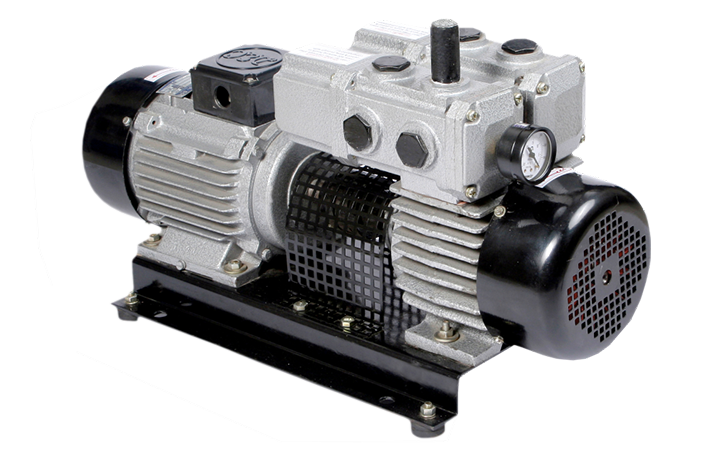 | Dry Vacuum Pumps Kalbro Manufacturing Co. has gained a distinctive position in the market as appreciable Dry Vacuum Pumps manufacturers, suppliers & exporters based... View product → |
 | Dry Vacuum Pressure Pumps Kalbro Manufacturing Co. has been appreciated in the international market as leading Dry Vacuum Pressure Pumps manufacturers, suppliers & exporters. View product → |
Frequently asked questions
What normally comes with a dry vacuum pump package?
A complete package can include the pump, motor, coupling or belt drive, base frame, inlet filter, non-return valve, exhaust silencer or filter, pressure gauge, guards, control panel, piping, and commissioning documents. Confirm each item on the quote because a bare pump includes none of these by default.
Which dry vacuum pump specifications must appear on the quote?
Require pumping speed with units and test conditions, ultimate vacuum, continuous operating pressure range, inlet and exhaust sizes, motor power and voltage, rotational speed, noise level, temperature limits, dimensions, weight, materials, service intervals, and warranty terms.
How do you size a dry vacuum pump for a chamber or process line?
Start with chamber volume, target pressure, required pump-down time, leak rate, outgassing, vapour load, and piping conductance. For a process line, include continuous gas inflow and pressure drop. Do not size from chamber volume alone.
What protection does a dry vacuum pump package still need?
Dry operation means the compression chamber does not use oil for sealing or lubrication; it does not make the system immune to dust, liquid, vapour, heat, or corrosive gases. Specify inlet filtration, condensate separation, exhaust treatment, non-return protection, temperature monitoring, overload protection, and a suitable purge when the process requires them.
How can you compare dry vacuum pump supplies from Faridabad manufacturers?
Compare the guaranteed performance point, included accessories, materials, motor and controls, testing documents, installation scope, commissioning, spare parts, service response, delivery terms, and warranty. Compare complete operating packages rather than bare-pump prices.
Keywords