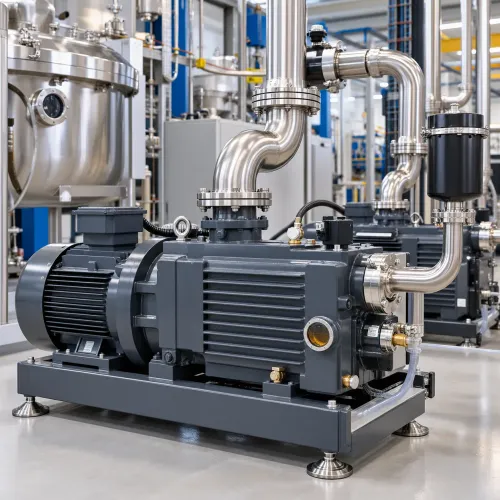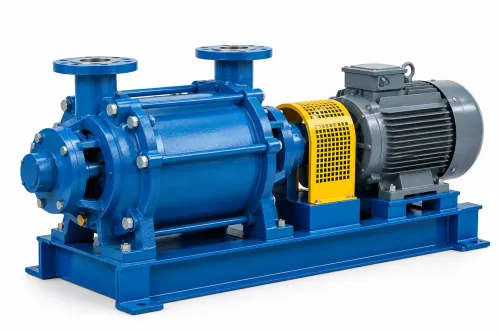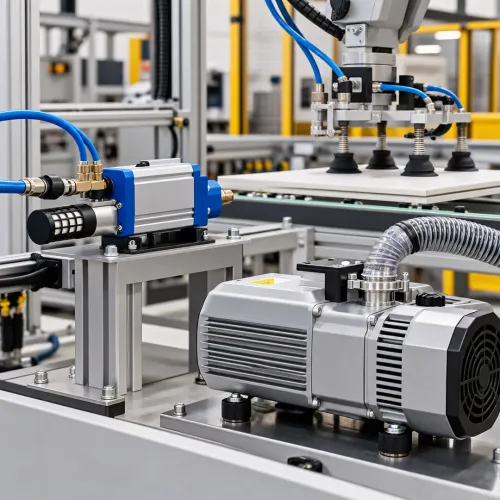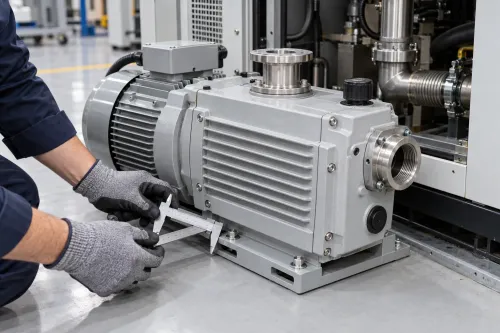
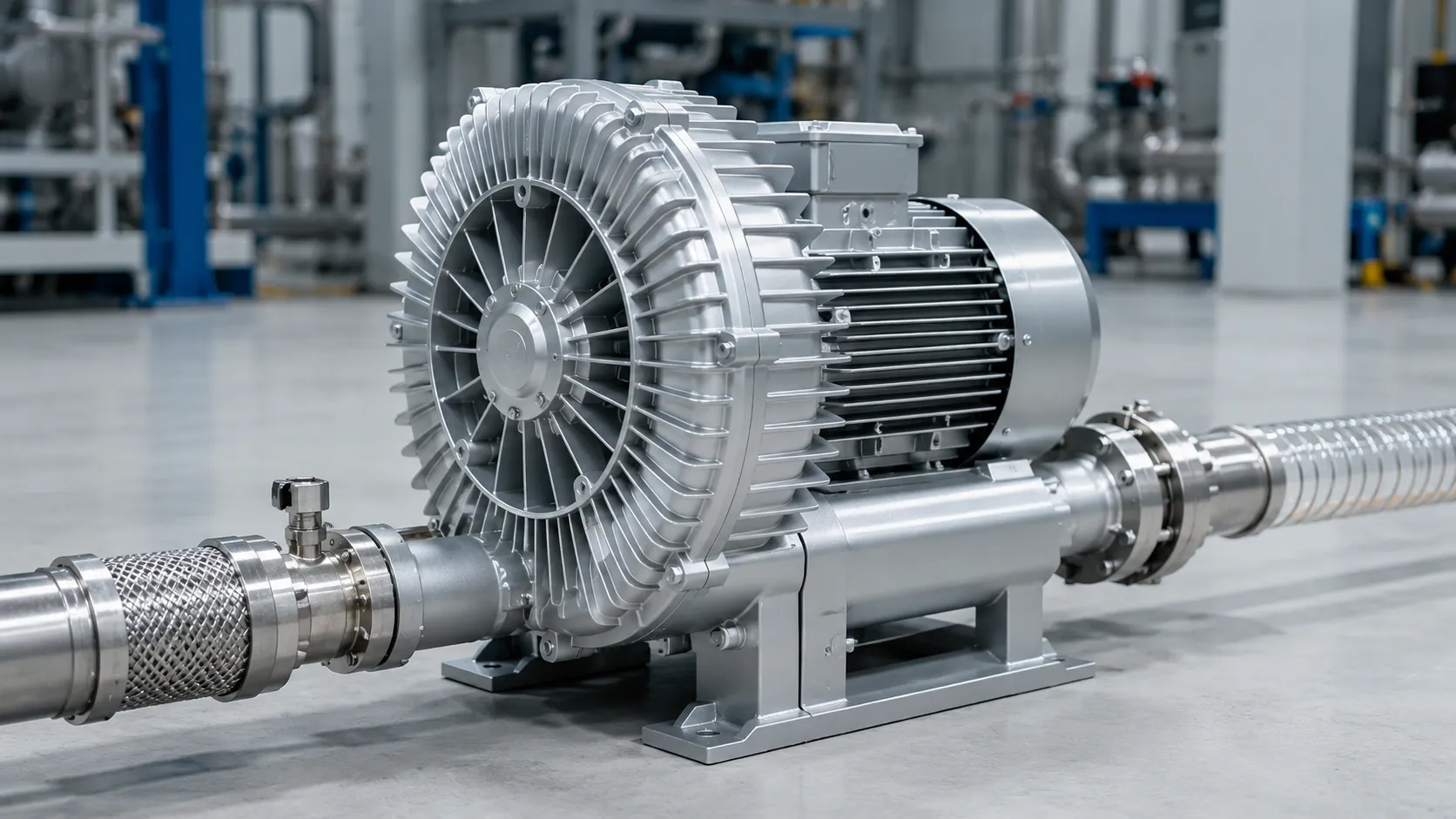
Not every process that needs suction or air movement requires a conventional vacuum pump. For applications involving relatively high airflow and moderate vacuum or pressure, side channel blowers may provide a practical solution.
The challenge for industrial buyers is knowing when a blower is appropriate and how to size it around the process rather than simply choosing the next larger motor.
What Does a Side Channel Blower Do?
A side channel blower uses a rotating impeller to move air and develop vacuum or positive pressure.
Its operating characteristics make it useful in applications where continuous airflow is important.
Depending on system requirements, side channel blowers may be considered for suction, blowing, aeration, conveying, drying, and other industrial functions.
They occupy a different performance range from many vacuum pump technologies, which is why the required operating point should be established before equipment is chosen.
Typical Industrial Applications
Side channel blowers can be found in areas such as:
- Pneumatic conveying
- Packaging machinery
- Printing equipment
- Drying systems
- Vacuum lifting
- Material handling
- Aeration
- Suction tables
- Industrial cleaning equipment
- OEM machinery
Each application creates a different combination of airflow and pressure.
Start With Airflow
How much air must the process move?
This can be influenced by the number of suction points, leakage, pipe diameter, product porosity, or process dimensions.
A vacuum table holding porous material, for example, may need substantial airflow because air continuously enters through the workpiece.
Choosing solely by vacuum level can therefore result in poor holding performance.
Then Define Pressure or Vacuum
Airflow cannot be evaluated independently from pressure.
As system resistance changes, the blower's operating point changes as well.
Provide both the desired flow and pressure or vacuum condition when discussing a requirement.
If existing equipment is being replaced, actual process measurements can be more useful than relying solely on the old motor rating.
Watch for Piping Losses
Side channel blower systems can be sensitive to restrictions.
Long pipe runs, undersized pipes, clogged filters, restrictive fittings, and excessive bends increase system resistance.
The result can be reduced process airflow and unnecessary equipment loading.
Good piping design should:
- Use suitable pipe diameters
- Minimise unnecessary restrictions
- Keep filters maintained
- Avoid excessive flexible hose where inappropriate
- Provide accessible inspection points
Avoid Oversizing as a Safety Margin
Selecting a much larger blower 'to be safe' can create new problems.
Oversized equipment may increase energy consumption and produce operating conditions that are unnecessary for the process.
A reasonable design margin can be useful, but it should be based on expected process variation rather than guesswork.
Consider Continuous Duty Requirements
Many blower applications run for extended periods.
For continuous operation, buyers should pay particular attention to:
- Operating point
- Ambient temperature
- Cooling
- Filter condition
- Installation ventilation
- Noise
- Energy consumption
An enclosure designed for acoustic reasons should not restrict the airflow needed for equipment cooling.
Think About Lifecycle Energy Cost
A blower running throughout a production shift can accumulate substantial operating hours.
Even modest differences in power consumption can therefore matter over the equipment's life.
Compare equipment at the required process condition rather than merely comparing purchase prices.
If production demand varies substantially, discuss whether the system design can accommodate that variation efficiently.
What Should Faridabad Buyers Provide to a Manufacturer?
Faridabad's industrial ecosystem includes machinery manufacturers, automotive suppliers, packaging businesses, fabrication units, and process plants. Side channel blowers may appear in both standalone installations and OEM machinery across these sectors.
Before requesting equipment, prepare:
- Required airflow
- Required vacuum or pressure
- Application description
- Daily operating hours
- Ambient conditions
- Pipe length and diameter
- Nature of incoming air
- Electrical supply
- Installation limitations
Kalbro Vacumatics manufactures industrial vacuum equipment for businesses evaluating solutions across different suction, vacuum, and airflow requirements.
For industrial buyers in Faridabad and elsewhere in Haryana, the most reliable buying process starts with the duty point.
A side channel blower should be selected because its airflow-pressure characteristics match the process not simply because it offers a convenient motor size or connection diameter.
Keywords