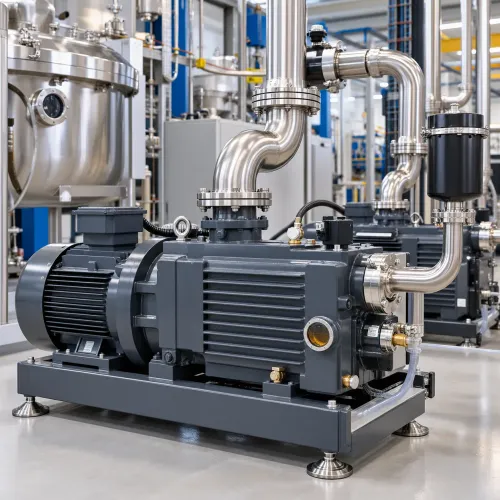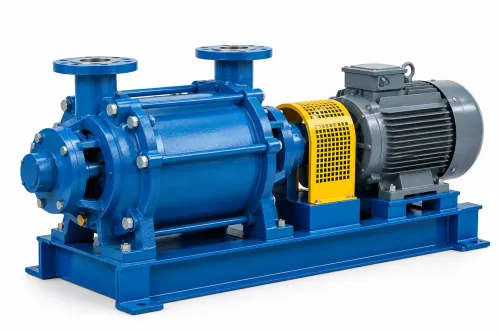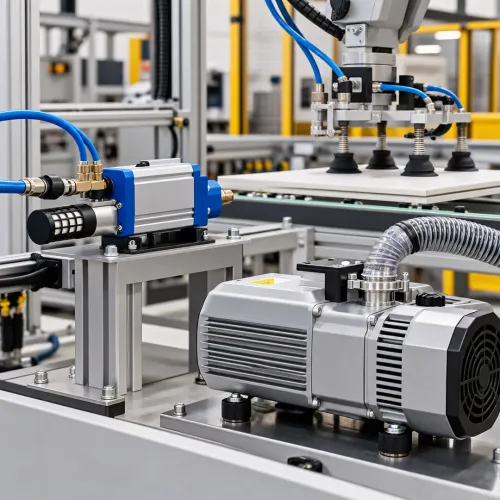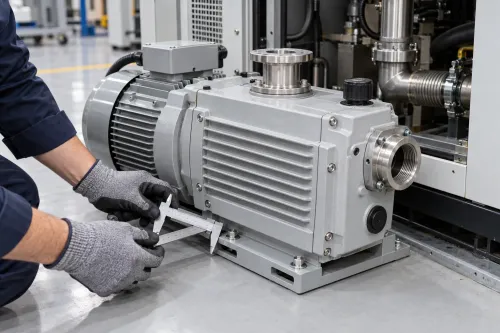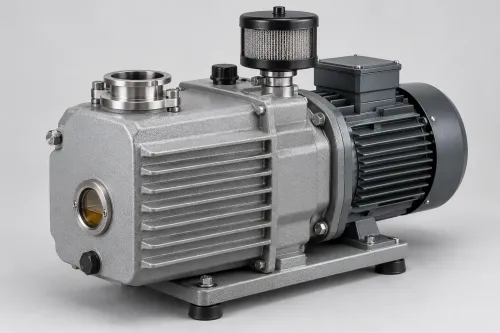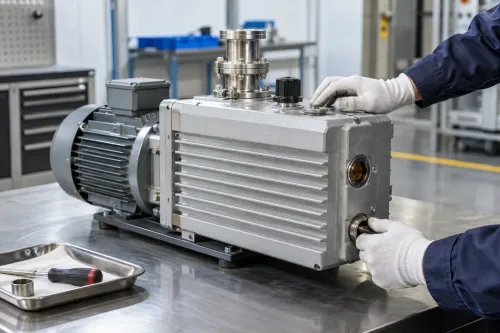
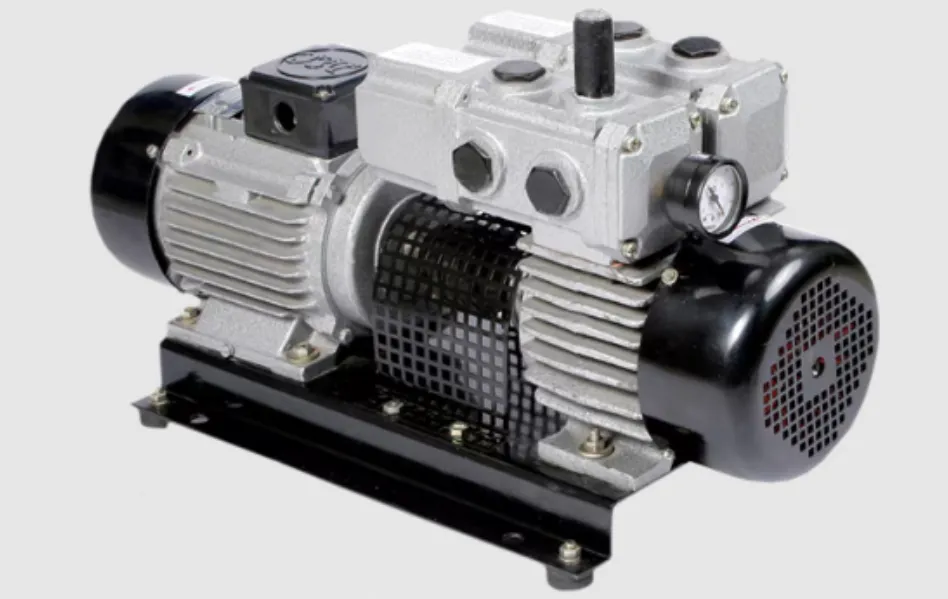
Dry vacuum pumps generate vacuum without using oil or another working fluid inside the compression chamber. This does not mean that every dry pump is completely maintenance-free, but it does reduce the possibility of process gas coming into direct contact with lubricating oil.
That distinction matters in industries where cleanliness, product protection, exhaust quality, and predictable maintenance are important. For manufacturers in Faridabad, dry vacuum technology can support automation, packaging, printing, electronics, medical equipment, and numerous OEM applications.
Why Oil-Free Compression Matters
In an oil-lubricated pump, oil may contribute to sealing, cooling, and lubrication. The arrangement provides valuable performance advantages in many duties, but it can be unsuitable when the process cannot tolerate oil vapour or when contamination control is a priority.
Dry vacuum pumps separate the pumping chamber from lubricants used elsewhere in the machine. Depending on their design, they may provide benefits such as:
- Cleaner process conditions
- Reduced risk of oil backstreaming
- No routine vacuum oil replacement
- Easier exhaust management in suitable applications
- Lower lubricant-related disposal requirements
- Consistent operation in repetitive machine cycles
These advantages should be assessed alongside initial cost, noise, temperature, filtration, and achievable vacuum.
Common Industrial Applications
Dry pumps are frequently used for pick-and-place systems, suction lifting, paper handling, printing machinery, vacuum clamping, packaging equipment, woodworking machines, and automated production lines.
They can also be integrated into OEM equipment where operators want to avoid regular oil monitoring. Machine builders may benefit from simpler user maintenance, particularly when equipment is supplied to factories in different regions.
The pump still has to match the application. A clean-air model should not be exposed to abrasive dust simply because it operates dry. Dust filters, separators, or process-specific protection may remain necessary.
Conditions That Need Careful Review
Moisture and fine particles can affect dry pump performance. If humid gas enters a hot pump and later condenses, internal corrosion or deposit formation may occur. Powder can obstruct filters, reduce clearances, and accelerate wear.
Before selection, engineers should determine:
- What enters the suction line during normal operation
- What may enter during a process upset
- Whether vapours can condense
- How often the pump starts and stops
- Whether the pump will run continuously
- What ambient temperature surrounds the equipment
This information helps identify whether a standard dry pump, protected configuration, or different pumping principle is appropriate.
Installation Has a Direct Effect on Results
Dry pumps require sufficient cooling airflow. Placing one inside a compact machinery cabinet without adequate ventilation can increase temperature and shorten component life. Exhaust air should also be routed safely, particularly if the process gas contains odour, vapour, or fine material.
An inlet filter protects the pump, but it must be sized correctly and inspected regularly. A heavily blocked filter may cause longer evacuation times even when the pump itself is in good condition.
Maintenance Is Reduced, Not Eliminated
The absence of vacuum oil does not remove every maintenance task. Depending on the pump design, operators may need to clean or replace filters, inspect vanes or other wear components, check drive parts, clear cooling passages, and monitor operating sound.
Useful condition checks include:
- Time required to reach operating vacuum
- Motor current
- Surface or discharge temperature
- Unusual vibration
- Changes in operating noise
- Filter differential pressure where available
Documenting these indicators helps maintenance teams recognise gradual deterioration before production stops.
Dry vacuum pumps provide their strongest value when their clean-running characteristics match the actual process. Industrial users across Faridabad and Haryana should therefore evaluate contamination sensitivity, vacuum level, capacity, operating hours, and environmental conditions together rather than treating “oil-free” as the only selection criterion.
Keywords