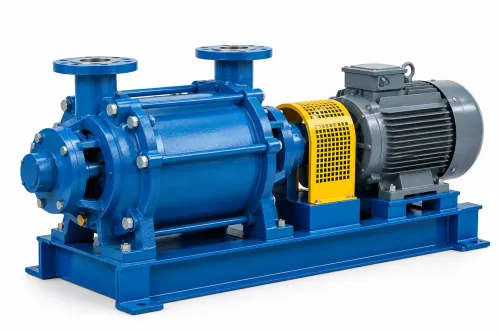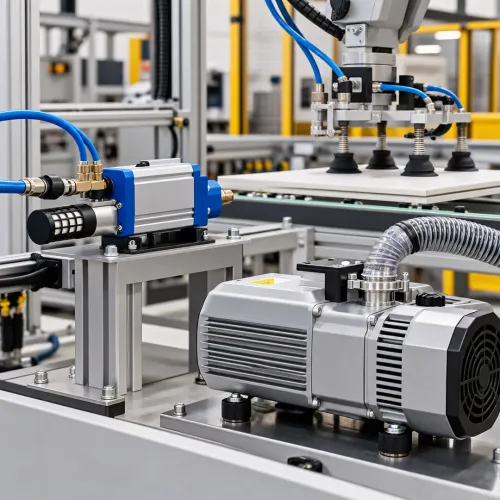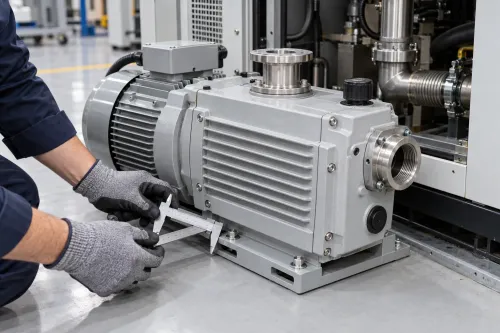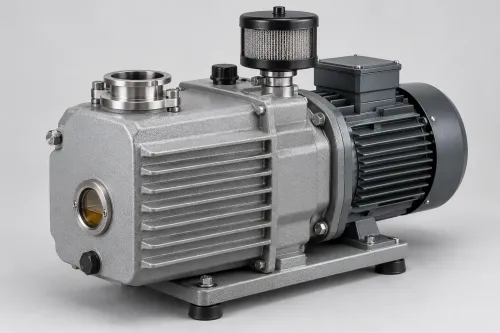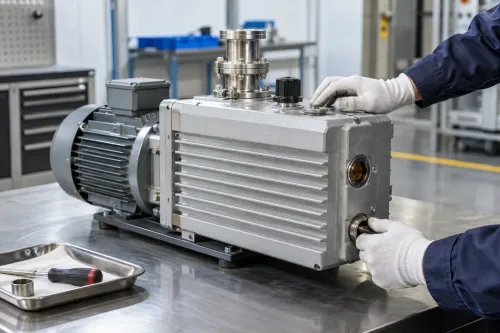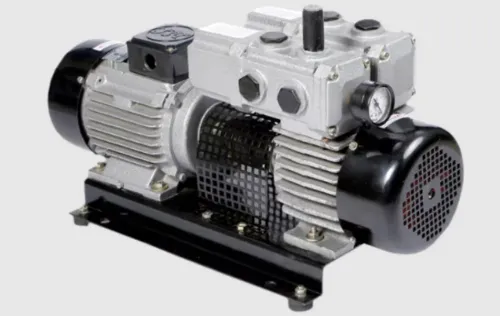
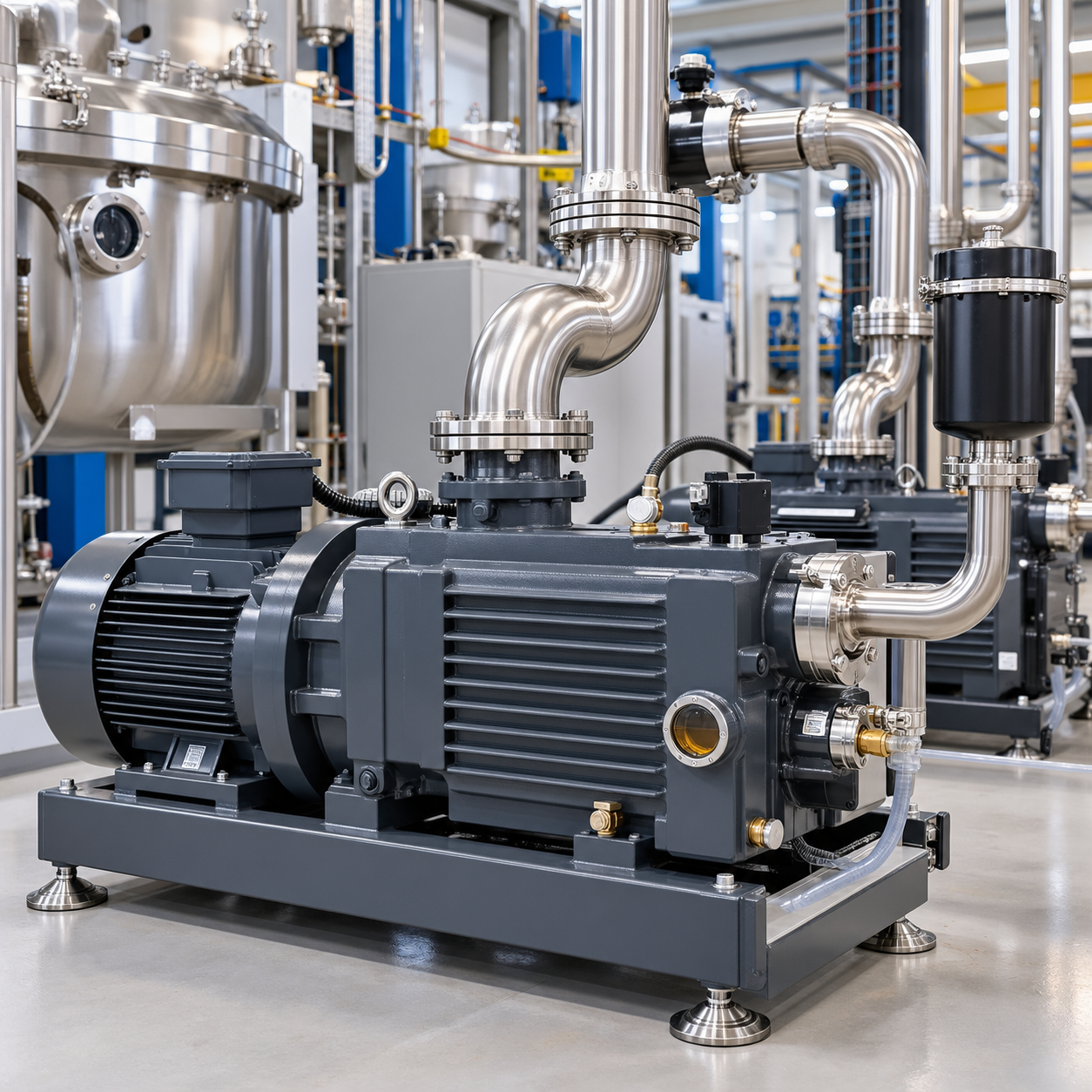
Oil lubricated high vacuum pumps are selected when a process requires pressure substantially below atmospheric conditions and needs stable evacuation performance. Applications may include vacuum chambers, coating support equipment, degassing, laboratory systems, specialised packaging, refrigeration servicing equipment, heat treatment support, and industrial testing.
The phrase “high vacuum” can be interpreted differently across industries. Buyers should therefore define the required pressure numerically instead of relying only on terminology.
Start With the Operating Pressure
The most important specification is not necessarily the lowest pressure shown in a catalogue. It is the pressure range in which the process will operate for most of its cycle.
For chamber evacuation, buyers should identify:
- Chamber volume
- Starting pressure
- Target pressure
- Required pump-down time
- Gas load during the process
- Leakage rate
- Frequency of operation
A pump may achieve a deep ultimate vacuum when tested with a blanked-off inlet, yet take too long to evacuate a large chamber. Capacity and ultimate pressure must be considered together.
Distinguish Pump-Down From Holding Duty
Pump-down duty removes the initial air volume from a chamber. Holding duty manages leakage, released vapours, and gas entering during production.
Some processes require high flow at the beginning but relatively little capacity once the desired pressure is reached. Others continually release vapour and need sustained pumping capacity.
Understanding this profile can influence pump size, control strategy, receiver requirements, and whether a staged vacuum system is needed.
Examine Vapour and Contamination Risks
Oil lubricated high vacuum pumps work best when the inlet conditions remain within their intended limits. Moisture, solvents, dust, and reactive vapours can contaminate the oil or create deposits.
Depending on the process, protection may include:
- Inlet filtration
- Condensate traps
- Knockout vessels
- Gas ballast operation
- Controlled warm-up and shutdown
- Appropriate exhaust treatment
- Process-compatible vacuum oil
Gas ballast can help certain pumps handle condensable vapours, although it may affect ultimate vacuum. Its use should follow the equipment manufacturer’s instructions.
Review Oil and Exhaust Management
Vacuum oil contributes to sealing, lubrication, and cooling. It must have the correct viscosity, vapour-pressure characteristics, and chemical suitability.
The exhaust system may require an oil-mist separator. A saturated or damaged separator can cause visible mist, pressure buildup, and increased oil consumption. Exhaust should be routed without excessive backpressure and in accordance with workplace requirements.
Consider the Installation Environment
Faridabad production sites can expose equipment to dust and high ambient temperature. The pump needs clean cooling airflow and adequate separation from heat-producing machinery.
Long or narrow suction lines can reduce conductance and extend pump-down time. For high-vacuum work, small leaks and unsuitable sealing materials become especially important. Pipe joints, valves, chamber seals, and instruments should match the intended pressure range.
Ask for a Documented Selection
A useful supplier proposal should identify the selected duty point, estimated evacuation time where calculable, motor details, connection sizes, recommended accessories, oil requirements, and installation conditions.
It should also clarify assumptions. If the gas load, leakage, or vapour content is unknown, performance cannot be predicted confidently.
When evaluating oil-lubricated high-vacuum pumps from a Faridabad manufacturer such as Kalbro Vacumatics, procurement teams should provide process data rather than requesting capacity alone. A properly documented selection reduces the likelihood of slow evacuation, contaminated oil, overheating, and avoidable production delays. The objective is not merely to reach a low pressure during a demonstration, but to maintain the required vacuum consistently under real factory conditions.
Keywords