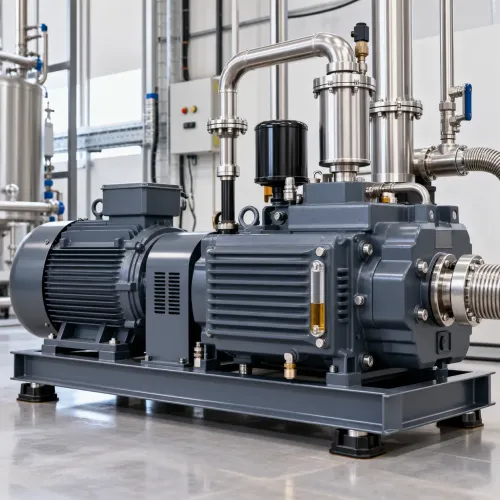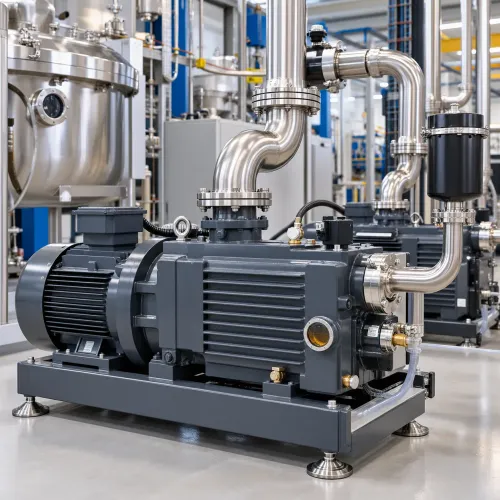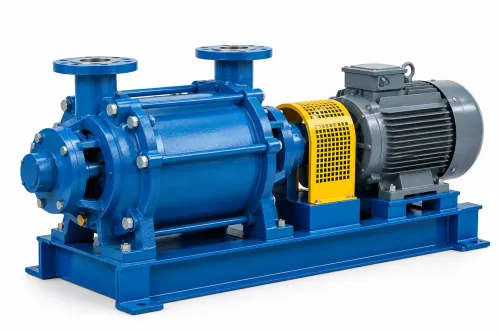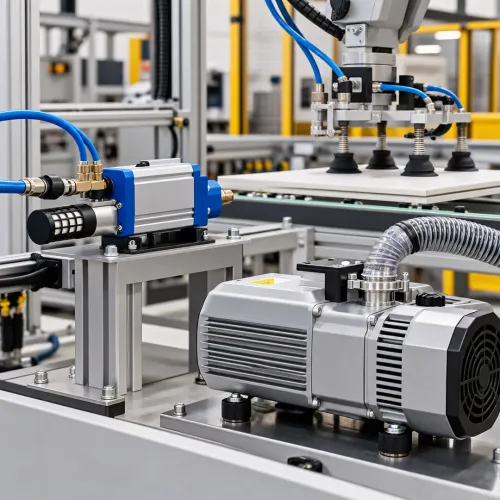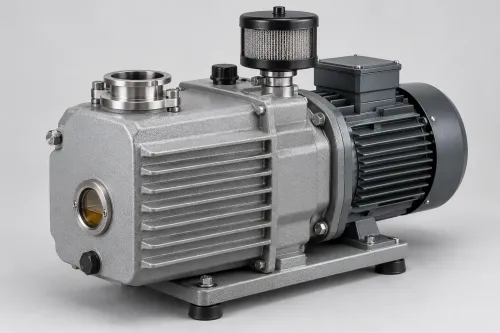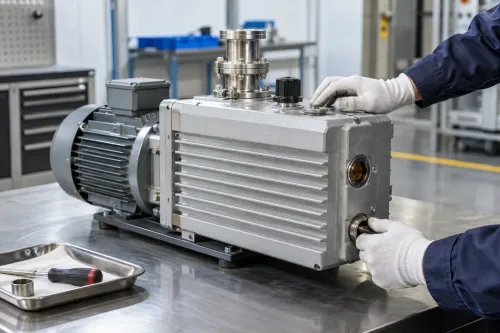
Replacing a Becker vacuum pump does not always mean installing a unit with the same motor power or a similar external appearance. A replacement must reproduce the process performance, operate safely within the existing machine, and fit the available installation conditions.
Industrial buyers in Faridabad may explore replacement options because an original unit has reached the end of its service life, spare parts are difficult to obtain, operating costs have increased, or production capacity has changed. A structured evaluation reduces the risk of selecting a pump that physically fits but performs poorly.
Record the Existing Pump Information
Begin with the complete nameplate and model details. Photograph the pump, motor plate, inlet and outlet connections, filters, accessories, electrical arrangement, and mounting position.
Useful information includes:
- Exact model number
- Nominal pumping capacity
- Ultimate vacuum or pressure rating
- Motor power, voltage, frequency, and phase
- Rotational direction
- Connection sizes
- Dry or oil-lubricated construction
- Current control method
- Approximate operating hours
If the plate is unreadable, machinery manuals or historical purchase records may help identify the original specification.
Measure What the Process Actually Needs
The original pump may no longer represent current demand. Production speeds may have increased, suction points may have been added, or piping may have changed since commissioning.
Measure the normal operating vacuum, evacuation time, cycle frequency, and simultaneous demand. Also note whether the pump runs continuously or starts repeatedly.
For vacuum holding systems, determine the leakage rate and required safety margin. In paper handling or printing equipment, assess how demand changes with sheet size, machine speed, and porosity.
Compare Performance Curves
Two pumps with the same nominal capacity may behave differently at the intended vacuum level. Buyers should compare pumping speed across the working pressure range rather than looking only at free-air capacity.
Other important comparisons include:
- Maximum continuous vacuum
- Pressure capability, where relevant
- Motor loading
- Operating temperature
- Noise level
- Exhaust characteristics
- Permitted inlet conditions
- Maintenance intervals
A technically suitable alternative should operate comfortably at the normal duty point instead of continually approaching its maximum limit.
Check Physical and Electrical Compatibility
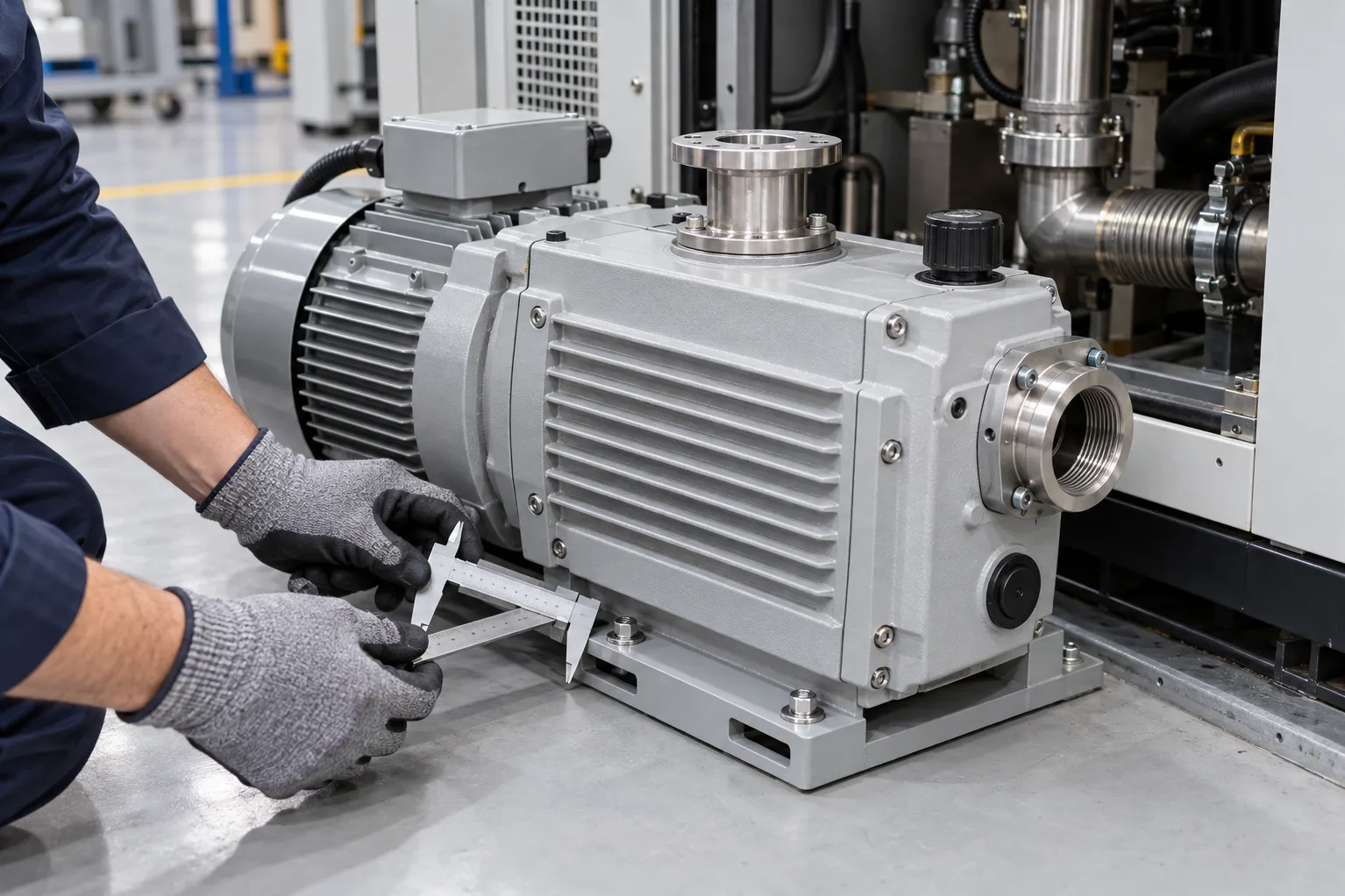
A replacement may require changes to the mounting frame, coupling, pipework, controls, or enclosure ventilation. Confirm dimensions and service clearances before ordering.
Electrical compatibility should cover supply voltage, phase, frequency, full-load current, starter capacity, overload protection, control signals, and motor efficiency. If the replacement motor has a different starting characteristic, existing protection equipment may need review.
Assess Process Contamination
Inspect the removed pump and filters. Their condition can reveal what the machine is actually drawing in.
Dust accumulation may indicate inadequate filtration. Corrosion can suggest moisture or aggressive vapours. Heavy oil contamination in the discharge system may point to separator or maintenance issues. Installing a new pump without addressing these causes can reproduce the same failure.
Consider Ownership Cost and Support
Replacement decisions should include the availability of filters, vanes, oil, seals, repair support, and technical documentation. Maintenance managers should understand which routine parts can be changed on-site and which repairs require a service facility.
Local support can be particularly valuable when production machinery cannot remain idle for extended periods. Kalbro Vacumatics can be considered during a Becker vacuum pump replacement study where buyers need an application-based assessment and a compatible industrial vacuum solution in Faridabad.
A responsible replacement proposal should state both compatibility and any required modifications. When performance, mechanical fit, electrical requirements, contamination protection, and service support are considered together, the result is more likely to restore machine productivity without creating new maintenance problems.
Keywords