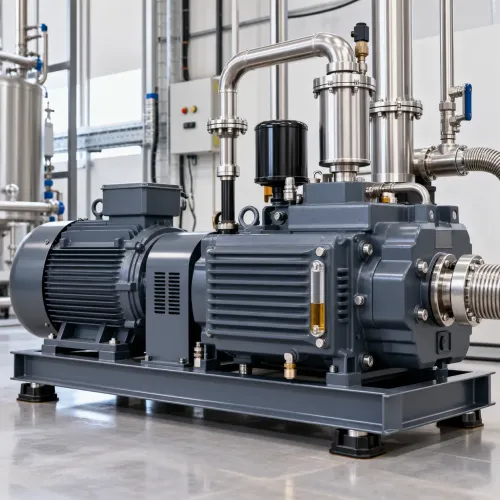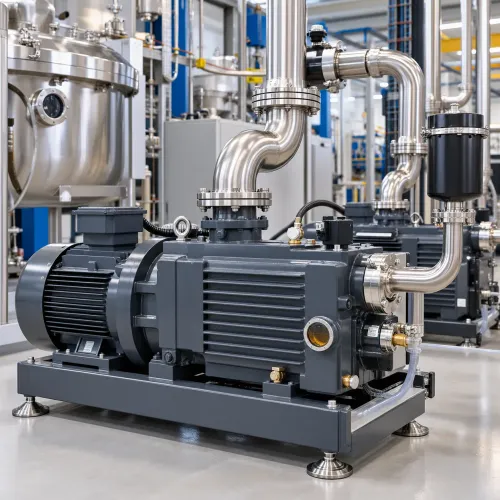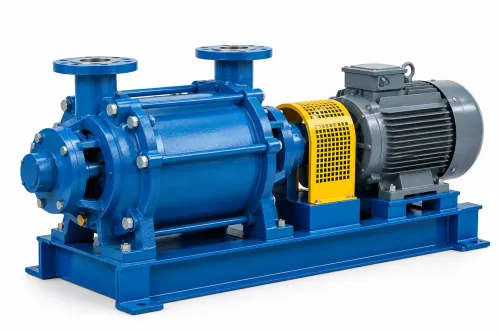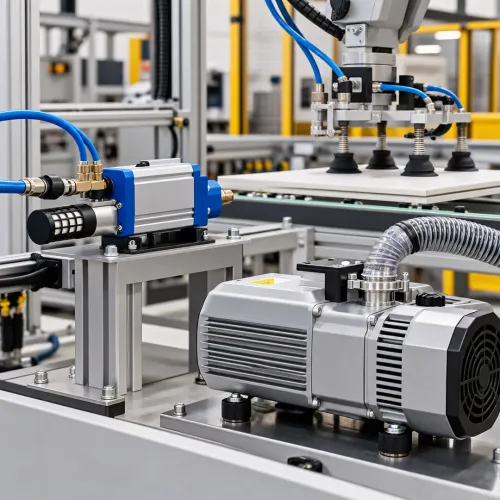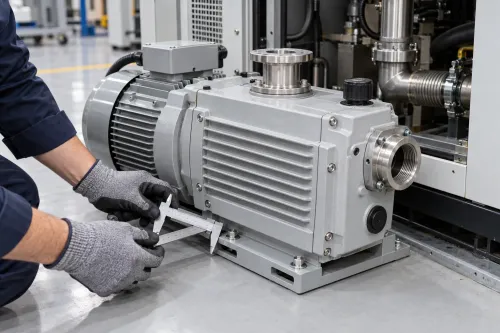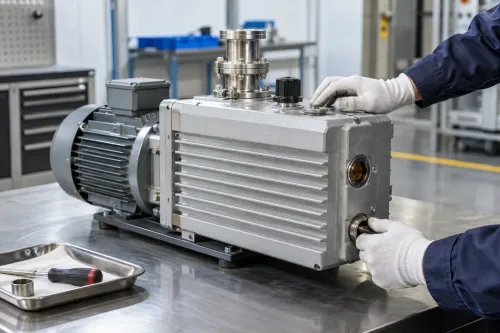
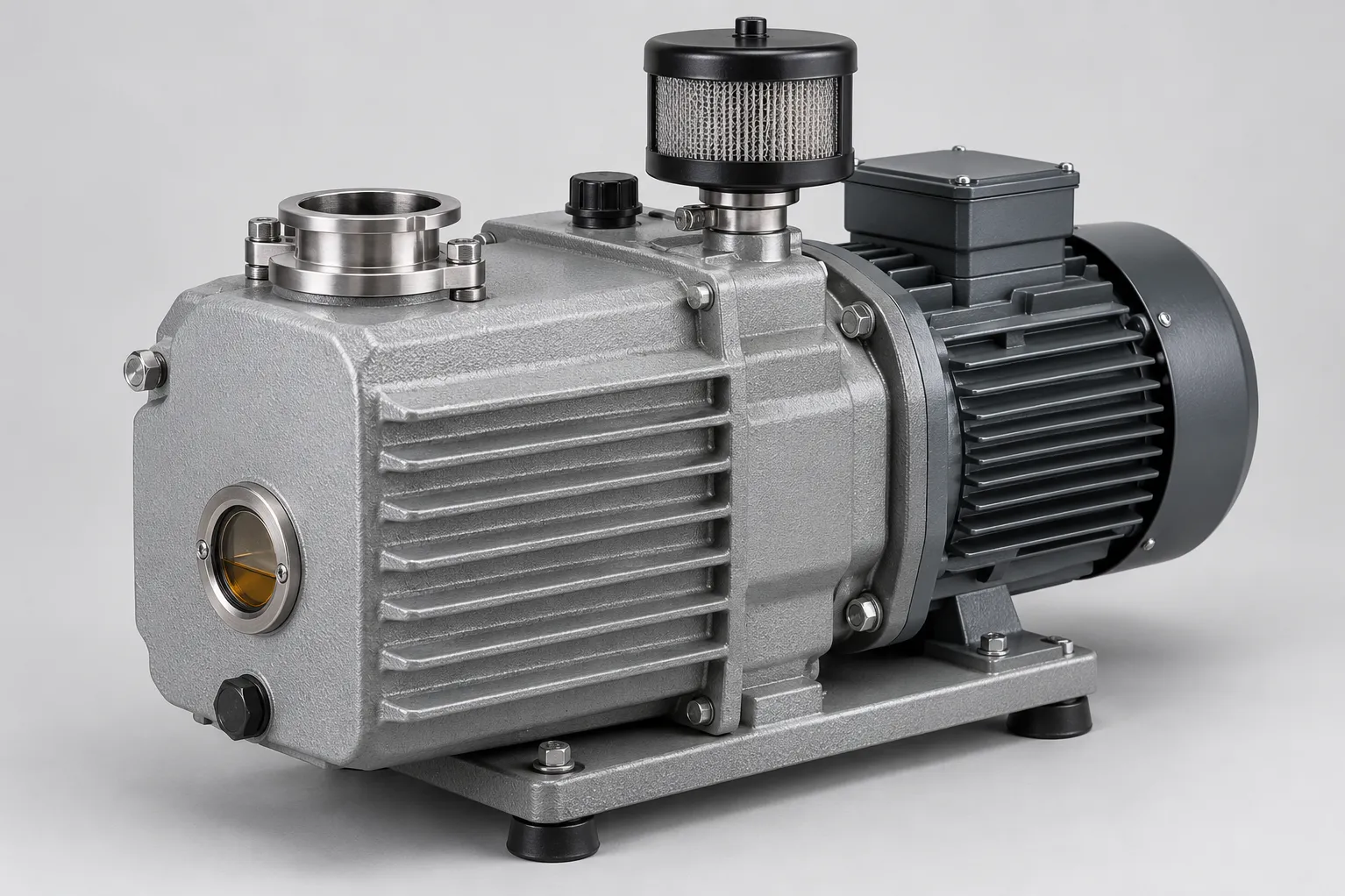
A rotary vane vacuum pump creates suction through an eccentrically mounted rotor fitted with sliding vanes. As the rotor turns, the volume between the vanes changes. Gas enters through the inlet, becomes trapped in an expanding chamber, is compressed as the chamber volume decreases, and is discharged through the outlet.
This compact operating principle has made rotary vane technology common in industrial machines throughout Faridabad and the wider Haryana manufacturing region.
The Main Components
Although configurations vary, a typical rotary vane pump includes:
- Cylindrical pumping chamber
- Offset or eccentric rotor
- Sliding vanes
- Inlet and exhaust ports
- Motor and coupling arrangement
- Cooling system
- Filters and separators
- Lubrication system in oil-lubricated models
Centrifugal force, springs, or another mechanism helps keep the vanes in contact with the chamber surface. This contact forms separate volumes that move gas through the pump.
Rotary vane pumps may be dry-running or oil-lubricated. The appropriate version depends on vacuum requirements, contamination sensitivity, operating hours, and process conditions.
Why the Technology Is Widely Used
Rotary vane designs can provide steady suction and relatively compact installation. They are suitable for continuous or intermittent operation when correctly sized and maintained.
Common applications include:
- Vacuum packaging
- Printing and paper handling
- CNC workholding
- Pick-and-place machinery
- Laboratory equipment
- Plastic processing
- Evacuation systems
- Suction lifting
- Centralised vacuum arrangements
For OEM manufacturers, the compact format can simplify machine integration. Plant operators also benefit from established maintenance procedures and broadly understood operating behaviour.
Dry and Oil-Lubricated Designs
A dry rotary vane pump avoids oil in the compression chamber. It may be preferred where clean operation and reduced oil-related maintenance are priorities. Dry vanes are wear components, so service planning should account for their expected working conditions.
An oil-lubricated design uses oil for sealing, lubrication, and heat management. It can often reach a deeper vacuum, but requires oil monitoring, exhaust separation, and suitable maintenance.
Neither design is universally superior. A dry pump selected for a dusty application without filtration may wear prematurely. An oil-lubricated pump used where oil contamination is unacceptable may create process concerns.
What Determines Actual Performance
The nameplate pumping speed is not the only factor that determines machine performance. Effective flow at the application can be reduced by small pipes, long suction runs, blocked filters, narrow valves, leaks, and poorly sized fittings.
The target pressure also matters. Pumping capacity changes across the pressure range, so engineers should examine performance at the intended operating vacuum rather than relying only on a maximum figure.
Signs That Require Attention
A rotary vane vacuum pump commonly provides warning signs before failure. Maintenance teams should investigate:
- Longer evacuation time
- Reduced holding force
- Increasing motor current
- Excessive exhaust mist
- Irregular operating sound
- Rising temperature
- Vibration
- Frequent filter blockage
- Oil leakage in lubricated models
These symptoms may relate to worn vanes, contaminated oil, inlet restrictions, exhaust problems, internal deposits, or leakage elsewhere in the system.
Supporting Reliable Operation
Good installation practices include short and correctly sized suction piping, effective filtration, unrestricted cooling airflow, suitable electrical protection, and convenient service access. The pump should also be protected from liquid slugs and excessive dust.
Rotary vane vacuum pump performance is most dependable when the machine designer and pump supplier exchange complete operating information. In Faridabad’s varied manufacturing environment, that includes the required vacuum, flow demand, contaminants, cycle frequency, ambient temperature, and expected daily operating hours. Understanding the working principle makes it easier to select, operate, and troubleshoot the pump throughout its service life.
Keywords