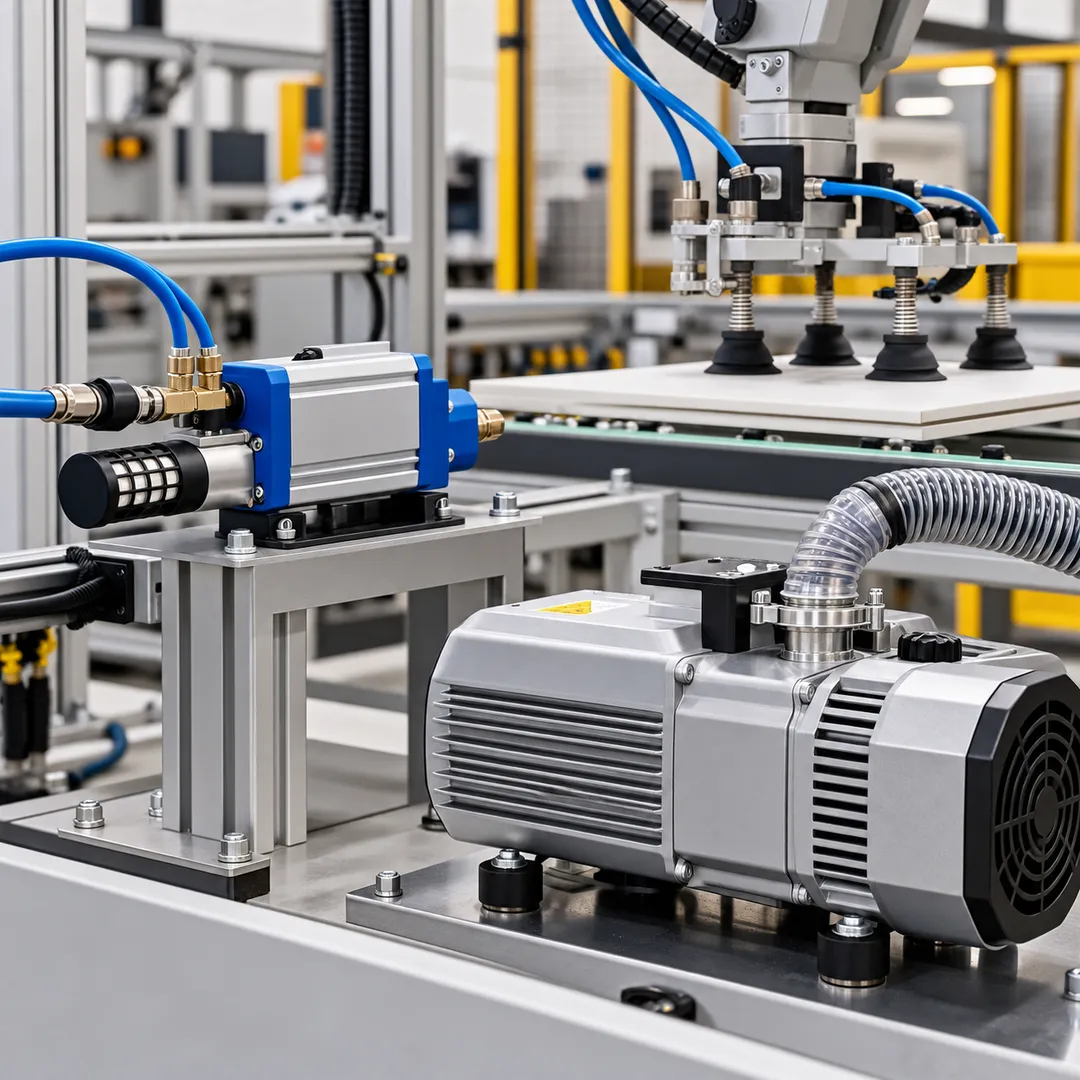
Compressed air driven vacuum pumps use compressed air to generate vacuum, commonly through an ejector or venturi-based principle. They have no separate electric drive motor at the point of suction and can be installed close to grippers, suction cups, or machine tooling.
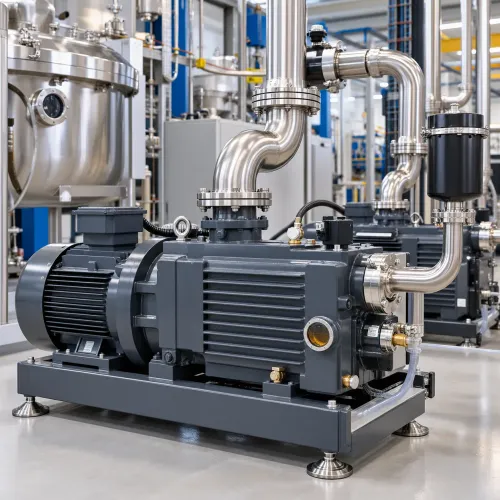
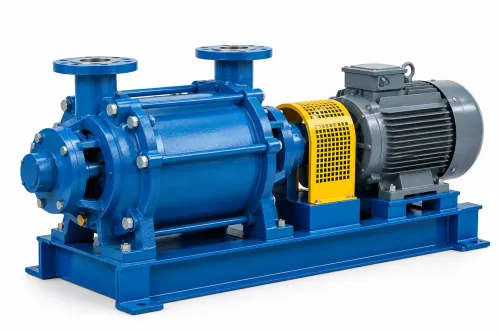
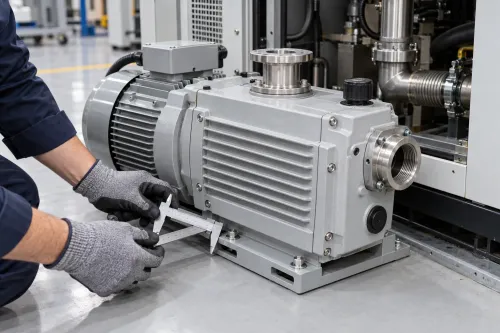
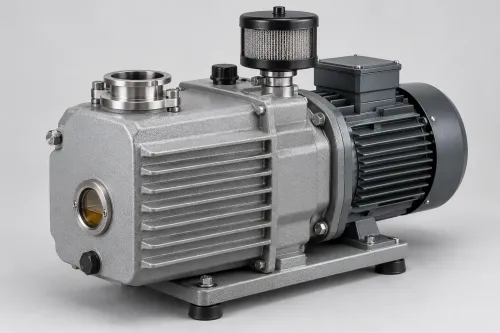
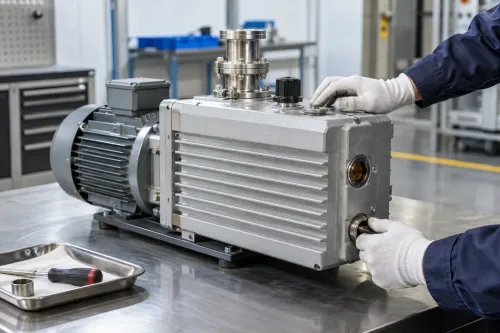
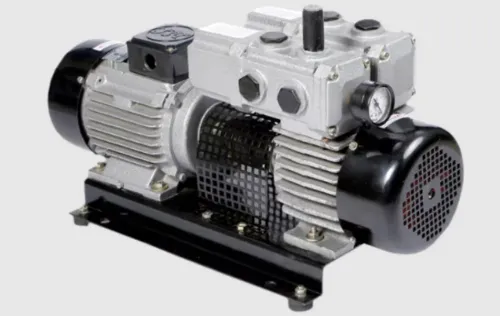
Motor-driven pumps generate vacuum mechanically and may serve one machine, several suction points, or a central vacuum network. Choosing between the two requires an examination of cycle pattern, energy use, available space, noise, maintenance, and required vacuum flow.
When Compressed-Air Vacuum Is Practical
Air-driven units are particularly useful in fast, intermittent automation. Their compact size allows them to be mounted close to the point of use, reducing the volume of tubing that must be evacuated.
Typical applications include:
- Robotic pick-and-place systems
- Packaging machinery
- Component transfer
- Sheet handling
- Assembly fixtures
- Vacuum gripping
- Short-cycle pneumatic automation
Rapid switching is another advantage. Vacuum can be created only when needed, and a blow-off function may release the component quickly.
Where Motor-Driven Pumps Have an Advantage
A motor-driven pump is often more appropriate for sustained demand, multiple suction points, larger flow requirements, or long operating periods. Although it introduces a dedicated motor and maintenance requirements, it may use energy more efficiently than continuously consuming compressed air.
Factory compressed air is not a free utility. Electricity is used to compress it, distribution losses occur, and pressure drops may force compressors to operate at higher settings. Therefore, an air-driven pump that appears mechanically simple can have a high operating cost if it runs continuously.
Compare the Duty Cycle
Duty cycle is one of the clearest decision factors.
Compressed air driven vacuum pumps are often effective when suction is required for brief, repetitive periods and the unit can switch off between cycles. A motor-driven pump may offer better economics when vacuum demand remains present for extended shifts.
Buyers should measure:
- Seconds of vacuum use per cycle
- Cycles per minute
- Number of simultaneous suction points
- Required flow during pickup
- Holding vacuum
- Leakage through the product
- Daily production hours
Porous products such as cardboard, fabric, or unfinished wood can create continuous leakage and require considerably more flow than smooth metal or glass.
Evaluate Reliability and Failure Behaviour
An air-driven unit depends on the factory compressed-air system. If pressure falls because several machines operate simultaneously, gripping performance may weaken. Regulators, filters, tubing, and valves must be sized to maintain stable supply pressure.
Motor-driven systems depend on electrical power and the mechanical condition of the pump. A receiver, standby pump, or vacuum monitoring arrangement may be used where loss of suction could drop a component or stop a critical process.
Noise, Heat, and Installation
Ejector exhaust can create noticeable noise unless fitted with an appropriate silencer. Silencers must be maintained because blockage can impair performance.
Motor-driven pumps produce heat and require ventilation. They may also need exhaust routing, oil-mist control, or a separate equipment area depending on the technology.
Manufacturers in Faridabad should consider the working environment around operators as well as the pump’s rated sound level.
Make the Decision Through Measured Cost
A useful comparison converts compressed-air consumption and motor electricity into cost per production hour. Add maintenance, filters, downtime exposure, and initial installation expense.
For a small gripper operating intermittently, compressed-air vacuum may be compact and responsive. For many suction points running continuously, a motor-driven system may provide stronger lifecycle economics.
Kalbro Vacumatics can support application reviews involving compressed air driven vacuum pumps and motor-driven alternatives. The most defensible choice is the one based on measured demand and operating time, not simply the utility already available on the factory floor.
Keywords