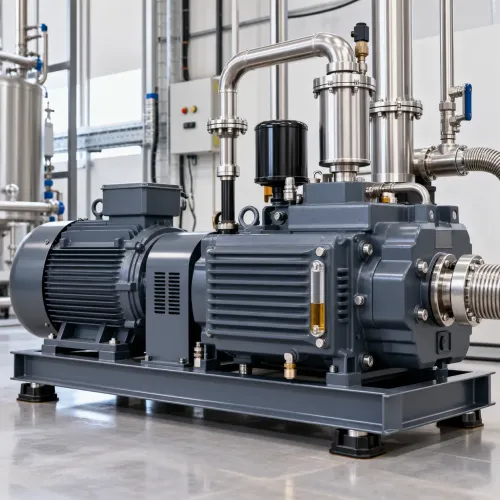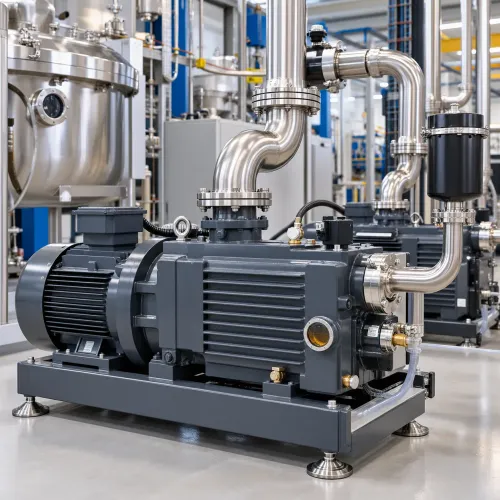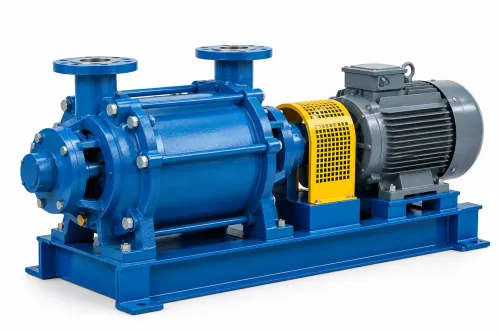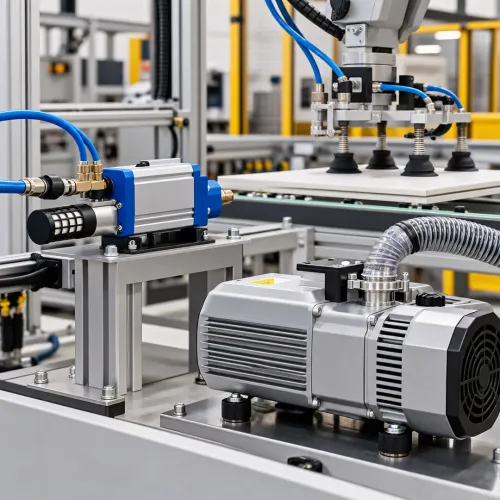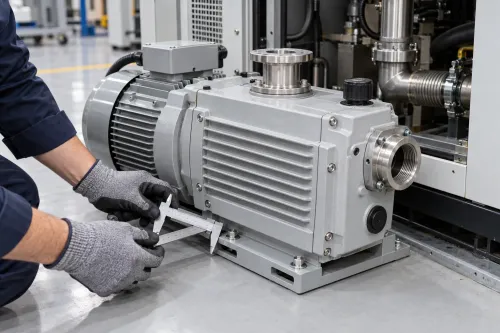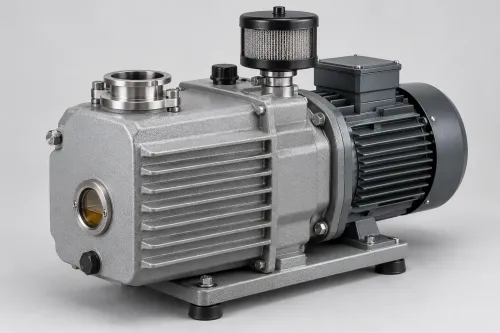
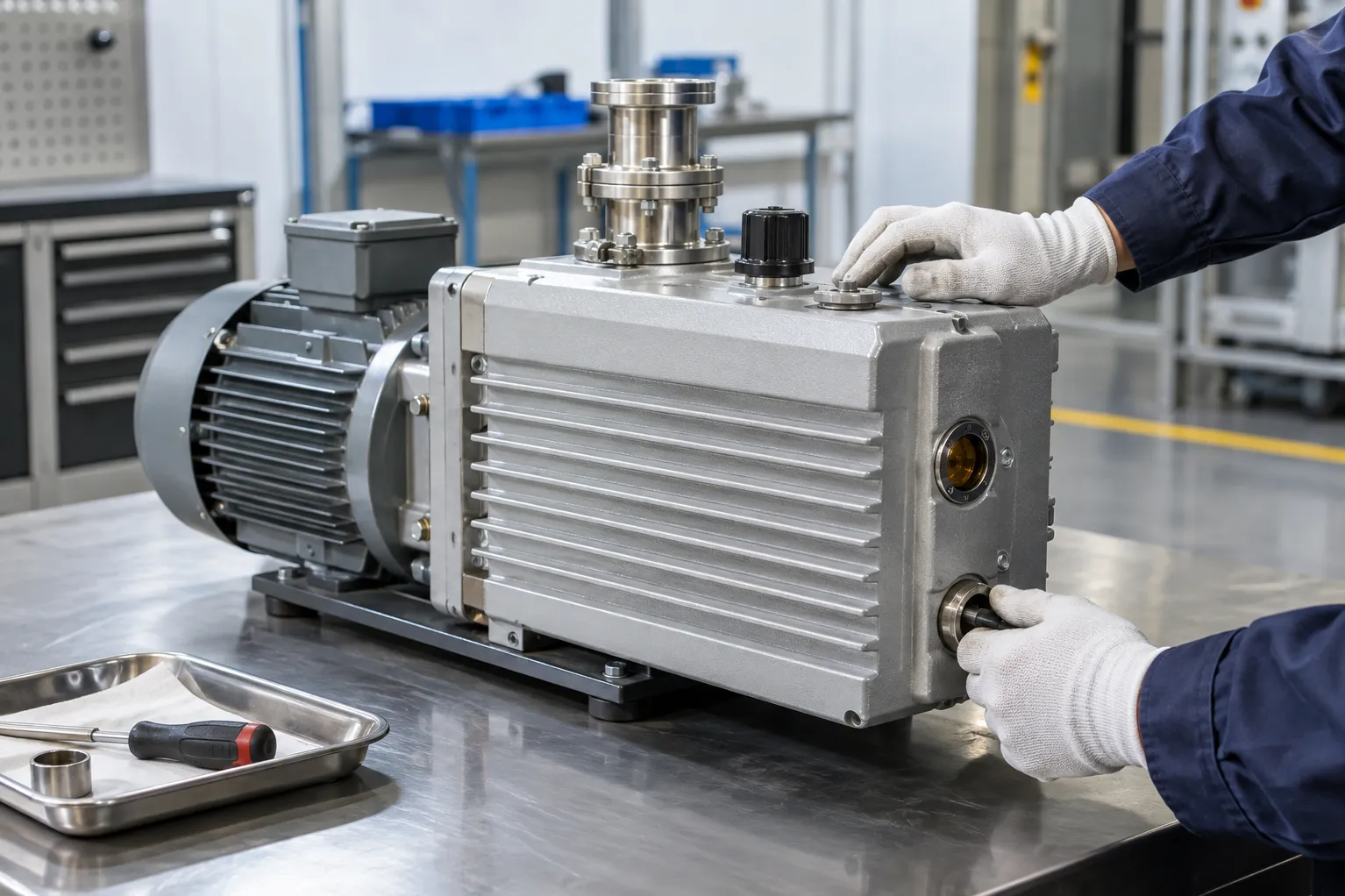
An oil lubricated vacuum pump can provide dependable vacuum performance across packaging, machine tooling, material handling, evacuation, printing, and general manufacturing. Its reliability, however, depends heavily on oil condition, filtration, operating temperature, and routine inspection.
Maintenance teams in Faridabad factories often work in environments involving airborne dust, high seasonal temperatures, and extended production shifts. These conditions can shorten service intervals when compared with a clean, temperature-controlled installation.
Why Vacuum Pump Oil Is Important
Vacuum oil may perform several functions within a pump. It can lubricate moving components, help create an internal seal, carry heat away from the compression area, and protect metal surfaces.
As the oil ages, it may become contaminated by dust, moisture, process vapours, or degraded material. Contaminated oil can reduce attainable vacuum, increase operating temperature, accelerate wear, and create deposits inside the pump.
Oil colour alone is not always a complete condition indicator, but a sudden change in colour, consistency, smell, or level deserves investigation.
Establish Routine Operating Checks
Daily or shift-based checks do not need to be complicated. Operators can record a few visible and measurable indicators:
- Oil level while the pump is in the specified condition
- Vacuum achieved during a normal cycle
- Time taken to reach operating pressure
- Abnormal sound or vibration
- Leakage around seals and connections
- Exhaust smoke or unusual odour
- Pump and motor temperature
A simple log makes trends easier to recognise. If evacuation time gradually increases over several weeks, the problem can be investigated before it develops into a complete loss of production.
Keep the Inlet System Clean
A pump should not become the factory’s primary dust collector. An appropriate inlet filter or separator protects internal components from particles and liquid droplets.
Filters require inspection at intervals suited to the environment. A filter used near machining, woodworking, powder handling, or dusty packaging operations may block much faster than one handling clean air.
When a clogged filter restricts flow, the pump may still produce vacuum but take significantly longer to evacuate the system. Operators sometimes compensate by extending the machine cycle, masking the actual cause while reducing productivity.
Change Oil According to Actual Conditions
A fixed calendar schedule is a useful starting point, but service intervals should reflect operating hours and contamination exposure. Continuous-duty pumps or units handling vapours may require more frequent oil changes.
During an oil change, maintenance personnel should use the correct lubricant grade recommended for the pump. Mixing incompatible oils or selecting a general-purpose lubricant can affect vacuum performance and internal sealing.
Used oil should be collected and disposed of through an appropriate authorised process.
Control Heat and Ventilation
High operating temperature accelerates oil degradation. Pumps need adequate space around cooling surfaces and fans. Dust deposits on cooling passages should be removed safely, and the surrounding area should not trap discharged hot air.
An increase in temperature may result from low oil, unsuitable oil, blocked filters, exhaust restriction, cooling problems, excessive operating pressure, or internal wear. Repeated overheating should be diagnosed rather than treated as normal.
Investigate Performance Loss Systematically
Poor vacuum is not always caused by the pump. Before arranging an overhaul, check the chamber, piping, valves, flexible hoses, seals, gauges, and process connections for leakage.
A practical sequence is to:
- Verify the vacuum gauge
- Isolate the pump from the process
- Test vacuum directly at the inlet
- Inspect filters and suction restrictions
- Confirm oil level and condition
- Examine the exhaust system
- Review operating temperature and noise
If the pump performs correctly when isolated, the fault is likely within the connected system.
For businesses using an oil lubricated vacuum pump in Haryana’s industrial belt, preventive maintenance protects more than the equipment itself. It helps preserve cycle time, product consistency, energy efficiency, and production availability. Technical support from an experienced manufacturer such as Kalbro Vacumatics can also help teams align service practices with the pump model and its real operating conditions.
Keywords