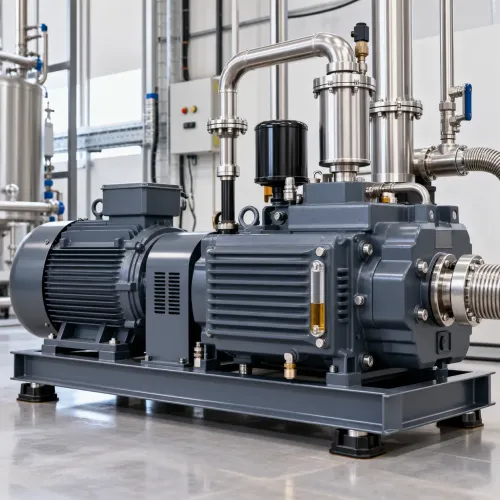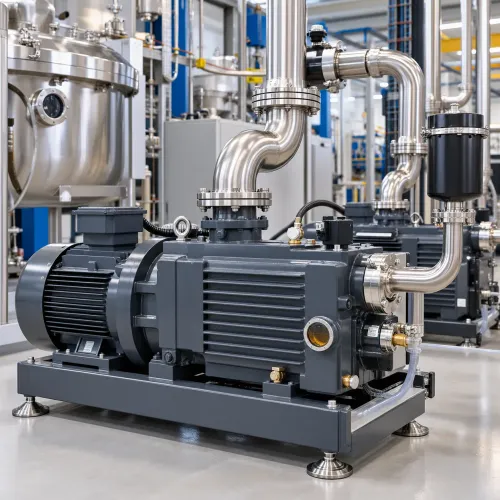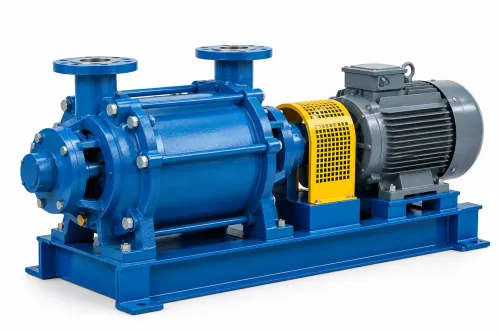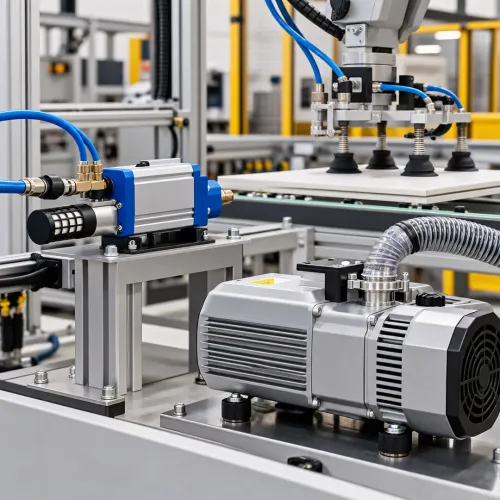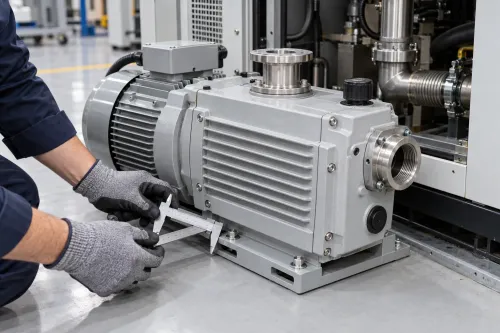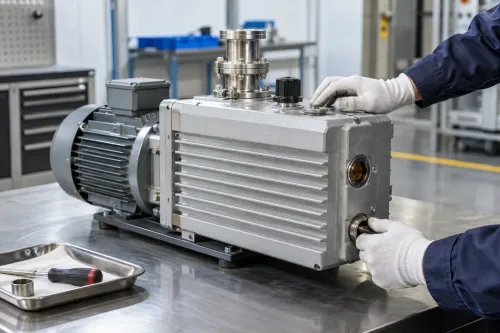
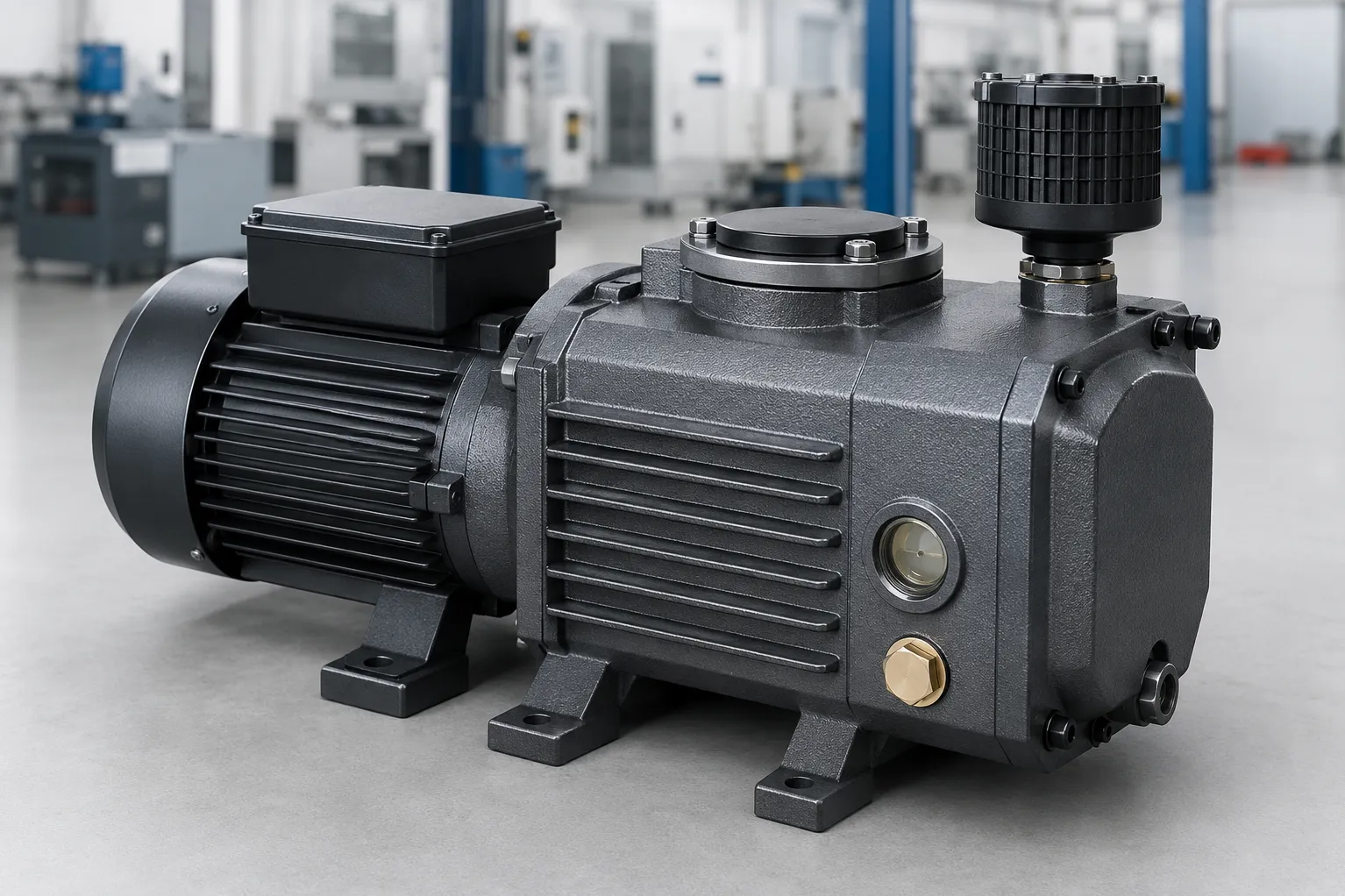
A production line may use vacuum to hold a component securely, move a sheet of material, evacuate a chamber, or support a packaging cycle. Although these tasks look very different, many can be served by established vacuum technologies such as the rotary vane vacuum pump.
Understanding its operating principle and application range helps machine builders and plant engineers decide whether rotary vane technology belongs in a particular system.
How Rotary Vane Technology Works
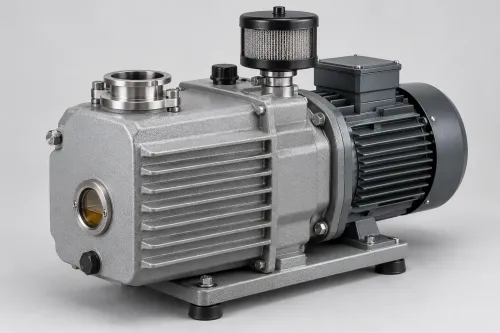
At a basic level, a rotary vane pump contains a rotor positioned inside a pump chamber. Vanes move within the rotor and create changing volumes as it rotates.
Gas enters through the inlet, becomes trapped within these spaces, and is progressively moved toward the outlet.
Different rotary vane pump designs may have different lubrication arrangements and performance characteristics. Buyers should therefore evaluate the specific pump rather than treating every rotary vane unit as interchangeable.
Packaging Machinery
Vacuum is fundamental to many packaging processes.
Depending on machine design, it may be used for chamber evacuation, product handling, sealing-related operations, or positioning packaging material.
Cycle time becomes particularly important.
A pump may eventually reach the required vacuum but still be unsuitable if it takes too long to evacuate the system. Machine manufacturers therefore need to consider both vacuum level and pumping speed.
CNC and Woodworking Equipment
Vacuum holding is widely used to secure workpieces during machining.
A stable vacuum supply helps maintain holding force while cutting or processing takes place. However, porous workpieces and leakage through fixtures can create substantial airflow demand.
This means the pump needs to be selected around the complete holding system rather than merely the nominal vacuum rating.
Printing and Paper Handling
Printing, converting, and paper-handling machines may use vacuum for sheet feeding, separation, transport, or positioning.
These applications can involve rapid operating cycles.
Stable airflow and suitable system response may therefore matter as much as ultimate vacuum.
Dust generated from paper or surrounding processes should also be considered when planning filtration and maintenance.
Plastics and Forming Processes
Vacuum can assist the forming of heated plastic against a mould or support other plastics-processing operations.
Here, evacuation time and the required vacuum level influence process performance.
Pipework, receiver volume, and pump capacity can all affect how quickly the system responds during each production cycle.
Automated Material Handling
Industrial automation increasingly relies on vacuum grippers and suction systems to pick and position products.
Typical items can range from cartons and panels to components and packaging materials.
The surface characteristics of the object matter. Smooth, non-porous products generally behave differently from porous or irregular materials that allow more leakage.
Selecting the pump without considering the workpiece can therefore result in unstable gripping.
What Affects Rotary Vane Pump Performance?
Several system conditions can change real-world performance:
- Blocked inlet filters
- Air leakage
- Incorrect piping diameter
- Contamination
- Poor ventilation
- Excessive operating temperature
- Inappropriate maintenance
- Unexpected process vapours
Plant teams should investigate the entire vacuum circuit when performance deteriorates rather than immediately assuming that the pump itself has failed.
Match the Pump to Production Reality
OEMs sometimes design equipment around theoretical vacuum demand and discover during commissioning that actual requirements are different.
Production variables can include leakage, fixture design, chamber size, pipe length, cycle frequency, and changing product formats.
Testing the expected operating conditions during equipment development can reduce these surprises.
Manufacturing Requirements in Faridabad
Faridabad's industrial base includes machine builders, component manufacturers, packaging businesses, engineering units, and other production facilities serving Haryana and the wider NCR market.
For these operations, vacuum equipment often becomes an integrated part of the machine rather than a standalone utility.
Kalbro Vacumatics works with industrial vacuum technology for such applications. When evaluating a rotary vane vacuum pump, engineers should define the required operating pressure, airflow, duty cycle, process conditions, and maintenance expectations before deciding on capacity.
The right pump is not necessarily the unit with the largest motor or deepest stated vacuum. It is the one that operates efficiently and reliably at the conditions the machine actually experiences.
Keywords