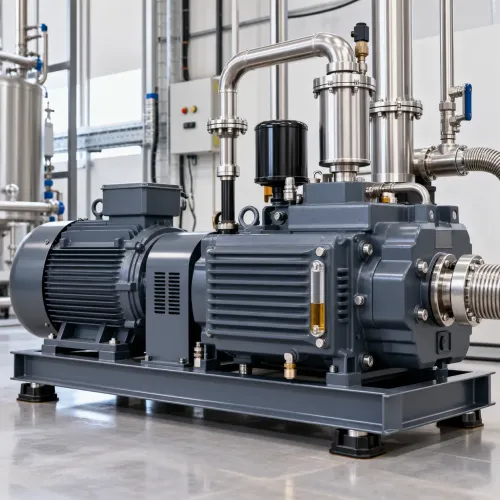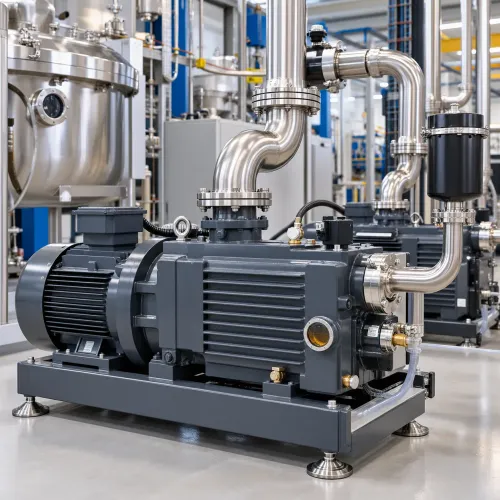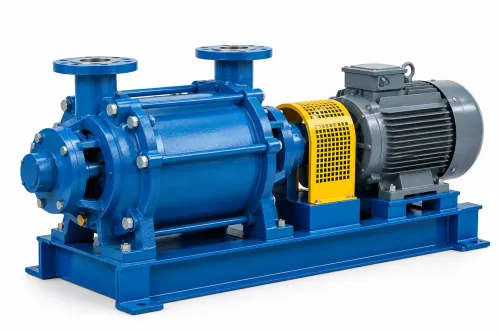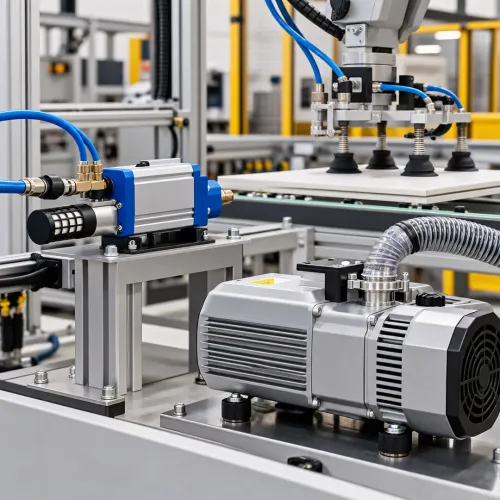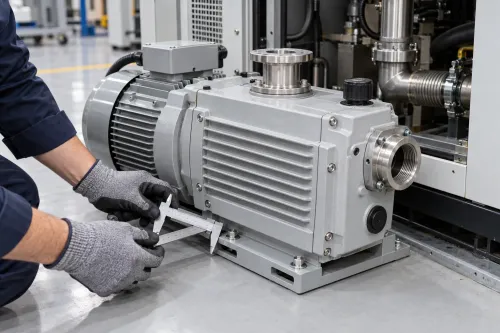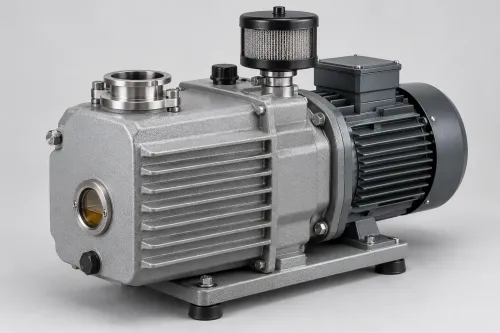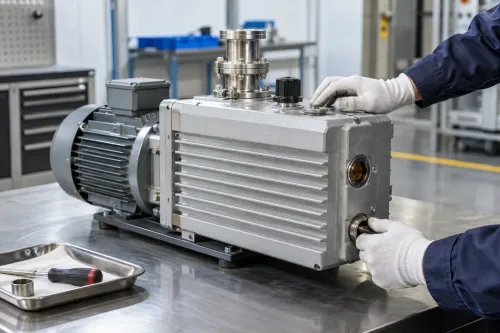
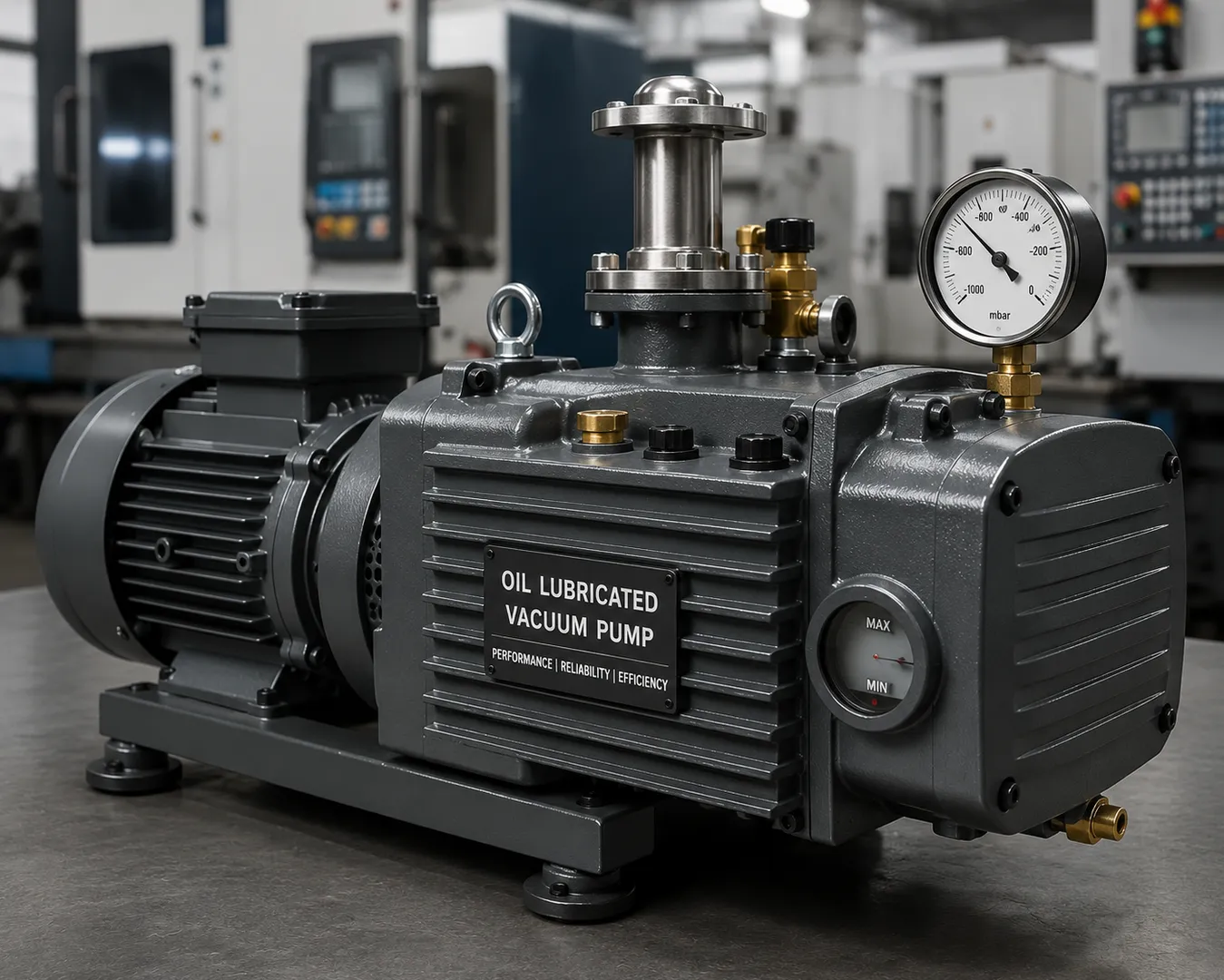
Some industrial machines require vacuum during one part of their cycle and positive pressure during another. Installing completely separate systems is not always necessary. Depending on the application, oil lubricated vacuum pressure pumps can provide both vacuum and pressure capability within an appropriately designed system.
For OEMs and plant engineers, the key is understanding whether combined functionality genuinely matches the machine's operating requirements.
Why Would a Machine Need Vacuum and Pressure?
Vacuum and pressure perform different jobs.
Vacuum can be used to hold, lift, evacuate, or draw material. Positive pressure can be used for blowing, separating, conveying, or releasing.
Machines in printing, paper handling, packaging, woodworking, and other automated processes may need both functions.
For example, vacuum may hold a sheet while pressure assists separation or movement elsewhere in the machine.
Combined Equipment Can Simplify Machine Design
Where operating requirements align, using vacuum-pressure technology can reduce the need for separate pieces of equipment.
Potential advantages include:
- More compact installation
- Simplified machine integration
- Reduced equipment count
- Coordinated vacuum and pressure supply
- Easier OEM packaging
These advantages should not be assumed in every application.
If vacuum and pressure demands are very different or occur continuously at high loads, separate systems may provide greater flexibility.
Define Both Operating Points
A common specification mistake is providing detailed vacuum requirements but only saying that 'some pressure' is also needed.
Both sides need engineering data.
For vacuum, determine:
- Required vacuum level
- Required airflow
- Duration of demand
For pressure, determine:
- Required discharge pressure
- Required airflow
- Duration of demand
Also establish whether vacuum and pressure are needed simultaneously.
This information significantly changes equipment selection.
Oil Management Requires Attention
Because the equipment is oil lubricated, routine oil-related maintenance becomes part of ownership.
Operators should follow appropriate inspection and replacement schedules while watching for contamination or abnormal consumption.
The process itself should also be assessed for dust and moisture that could affect pump condition.
Inlet filtration and other protective measures may be needed depending on the application.
Avoid Restrictive Pipework
Both vacuum and pressure performance can be affected by poor piping design.
Small diameter tubing, unnecessary bends, long pipe runs, blocked filters, and poorly selected fittings create losses.
OEM designers should consider piping during machine development instead of leaving it until the final assembly stage.
Keeping vacuum generation close to the process can sometimes help reduce avoidable system losses.
Check Heat and Ventilation
Vacuum-pressure equipment generates heat during operation.
A pump installed inside a compact machine enclosure needs sufficient ventilation.
This becomes particularly relevant for machinery operating in Faridabad, where high seasonal ambient temperatures can add to the thermal load.
Machine builders should provide adequate airflow around equipment and avoid positioning heat-sensitive components directly beside hot-running machinery without considering temperature effects.
Assess the Duty Cycle
A printing machine operating continuously for an entire shift has different requirements from equipment activated occasionally.
When requesting a pump, provide:
- Daily operating hours
- Number of shifts
- Start-stop frequency
- Average load
- Peak load
- Simultaneous vacuum-pressure requirement
These details help prevent inappropriate sizing.
When Separate Systems May Be Better
Combined equipment should not be selected merely to reduce component count.
Separate vacuum and pressure systems may be preferable where:
- Demands differ substantially
- Independent control is important
- One side operates continuously while the other rarely runs
- Required capacities are very different
- Redundancy is necessary
Lifecycle cost and maintenance should be considered alongside installation convenience.
Choosing Equipment for OEM Machinery in Faridabad
Faridabad has a substantial machine-building and engineering ecosystem serving industries throughout Haryana, Delhi NCR, and other Indian manufacturing regions.
For OEMs, vacuum equipment needs to work not just during factory testing but under the customer's actual operating conditions.
Kalbro Vacumatics supplies industrial vacuum equipment, including solutions for applications requiring vacuum and pressure functions.
Before selecting oil lubricated vacuum pressure pumps, machine builders should document both sides of the requirement and examine airflow, pressure, vacuum, operating duration, contamination, installation space, and maintenance access.
When these details are defined during the design stage, the vacuum-pressure system can be integrated into the machine more effectively and with fewer commissioning surprises.
Keywords