Vacuum technology is used across manufacturing environments where air, gas, moisture, or unwanted vapours need to be removed from a process. From packaging and material handling to printing, plastics, woodworking, pharmaceuticals, food processing, and machine automation, vacuum pumps perform an important behind-the-scenes role.
For industrial buyers in Faridabad and other manufacturing clusters across Haryana, understanding how vacuum pumps work can make equipment selection and maintenance decisions much easier.
What Does a Vacuum Pump Actually Do?
A vacuum pump removes gas molecules from an enclosed chamber or process line, reducing the pressure below atmospheric pressure. The resulting vacuum can then be used to hold, lift, evacuate, form, transfer, dry, or process materials.
The required vacuum level varies considerably between applications. A vacuum lifting system, for example, may have very different requirements from a process that needs deeper vacuum conditions.
This is why selecting a pump simply according to motor power or inlet size can lead to poor results.
Where Are Vacuum Pumps Used?
Industrial vacuum systems have a broad range of applications. Common examples include:
- Vacuum packaging
- CNC and woodworking machinery
- Printing and paper handling
- Plastic forming and extrusion
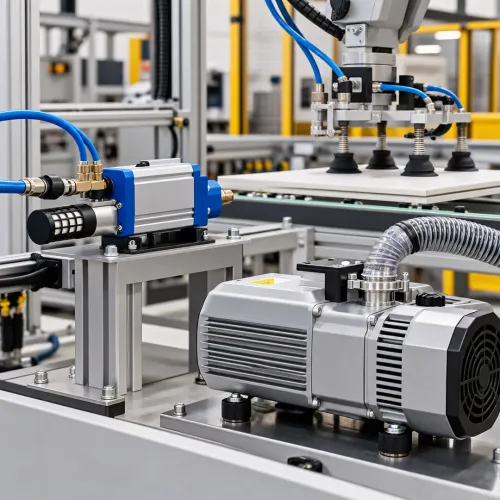
- Pick-and-place automation
- Pneumatic conveying
- Vacuum lifting
- Degassing
- Drying processes
- Filtration equipment
- Process evacuation
- Medical and laboratory equipment
- Food processing machinery
OEM manufacturers may also integrate vacuum pumps directly into machines supplied to their customers.
Vacuum Level and Pumping Capacity Are Different
Two specifications frequently considered during pump selection are ultimate vacuum and pumping capacity.
Vacuum level indicates how low the pressure can be reduced.
Pumping capacity describes how much air or gas the pump can move within a given period.
A process may require high airflow without particularly deep vacuum. Another application may need relatively low airflow but a much deeper vacuum.
Understanding this distinction prevents oversizing and undersizing.
Different Pump Technologies Serve Different Processes
There is no single vacuum pump design suitable for every industrial application.
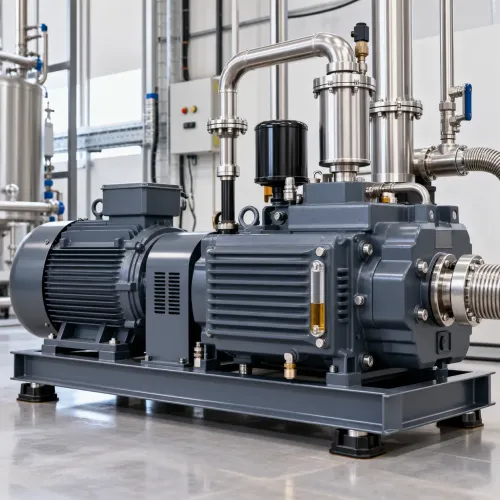
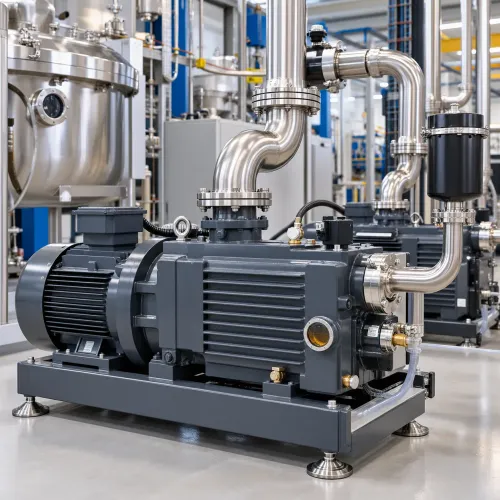
Dry vacuum pumps can be useful where operators want to avoid oil within the pumping chamber. Oil-lubricated pumps are widely used where their operating characteristics suit the required vacuum level and duty cycle.
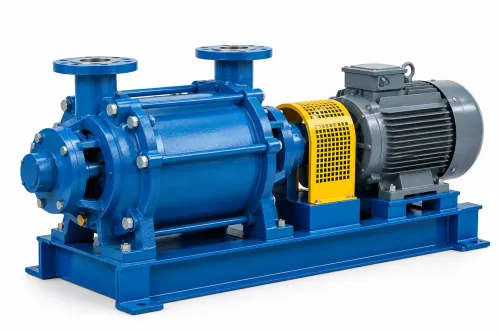
Water ring systems are commonly considered for applications involving wet gases or vapours, subject to process conditions. Rotary vane technology is another established option used across numerous industrial machines.
Some operations require both vacuum and pressure capability, while others may be better served by blowers.
The process should therefore determine the technology not the other way around.
What Should Plant Engineers Evaluate?
Before specifying a pump, collect basic process information.
Important factors include:
- Required operating vacuum
- Required pumping capacity
- Nature of the gas being handled
- Presence of moisture, dust, or contaminants
- Operating hours per day
- Ambient temperature
- Available electrical supply
- Installation space
- Noise considerations
- Maintenance accessibility
It is also useful to distinguish between the maximum requirement and the normal operating point. Selecting equipment only around an occasional peak condition can result in unnecessary energy consumption.
Why Installation Conditions Matter
Even a correctly selected vacuum pump can underperform when the surrounding system is poorly designed.
Undersized piping creates pressure losses. Excessive bends can restrict flow. Air leakage makes the pump work harder, while blocked filters can gradually reduce performance.
Factories in Faridabad may operate in environments where airborne dust and elevated summer temperatures deserve particular attention. Ventilation, filtration, piping layout, and routine inspection therefore become part of vacuum system reliability.
Maintenance Should Be Based on the Pump Type
Maintenance requirements vary according to technology.
Oil-lubricated units may require oil monitoring and scheduled replacement. Filters and separators may need inspection. Dry pumps have different maintenance considerations, while water ring installations require attention to sealing liquid conditions and associated components.
Rather than following one generic maintenance routine, factories should maintain each system according to its technology and actual operating environment.
Making Vacuum Technology Part of Process Planning
Vacuum pumps should not be treated as isolated accessories. Their performance affects cycle time, product handling, energy consumption, machine uptime, and sometimes final product quality.
For OEMs and manufacturing plants across Faridabad, Haryana, early consideration of vacuum requirements can help avoid expensive modifications after equipment has already been commissioned.
Kalbro Vacumatics works within the industrial vacuum equipment segment, where application conditions are central to selecting an appropriate solution. For procurement teams and engineers, the most useful starting point remains a clear definition of what the process actually requires.
When vacuum level, airflow, operating conditions, contamination, and duty cycle are evaluated together, selecting suitable vacuum equipment becomes a far more informed engineering decision.
Keywords