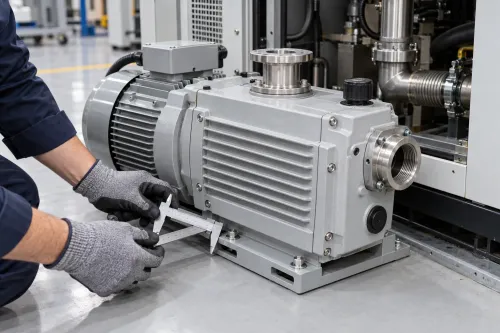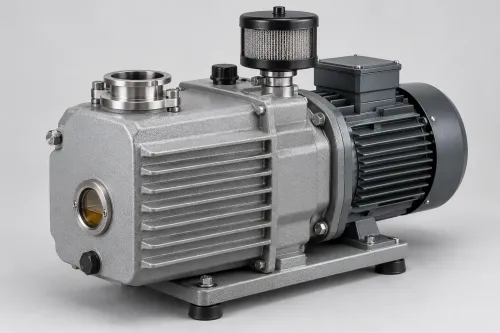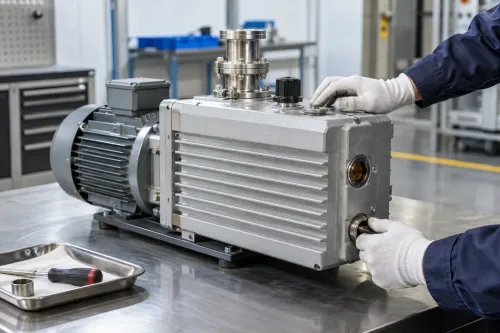
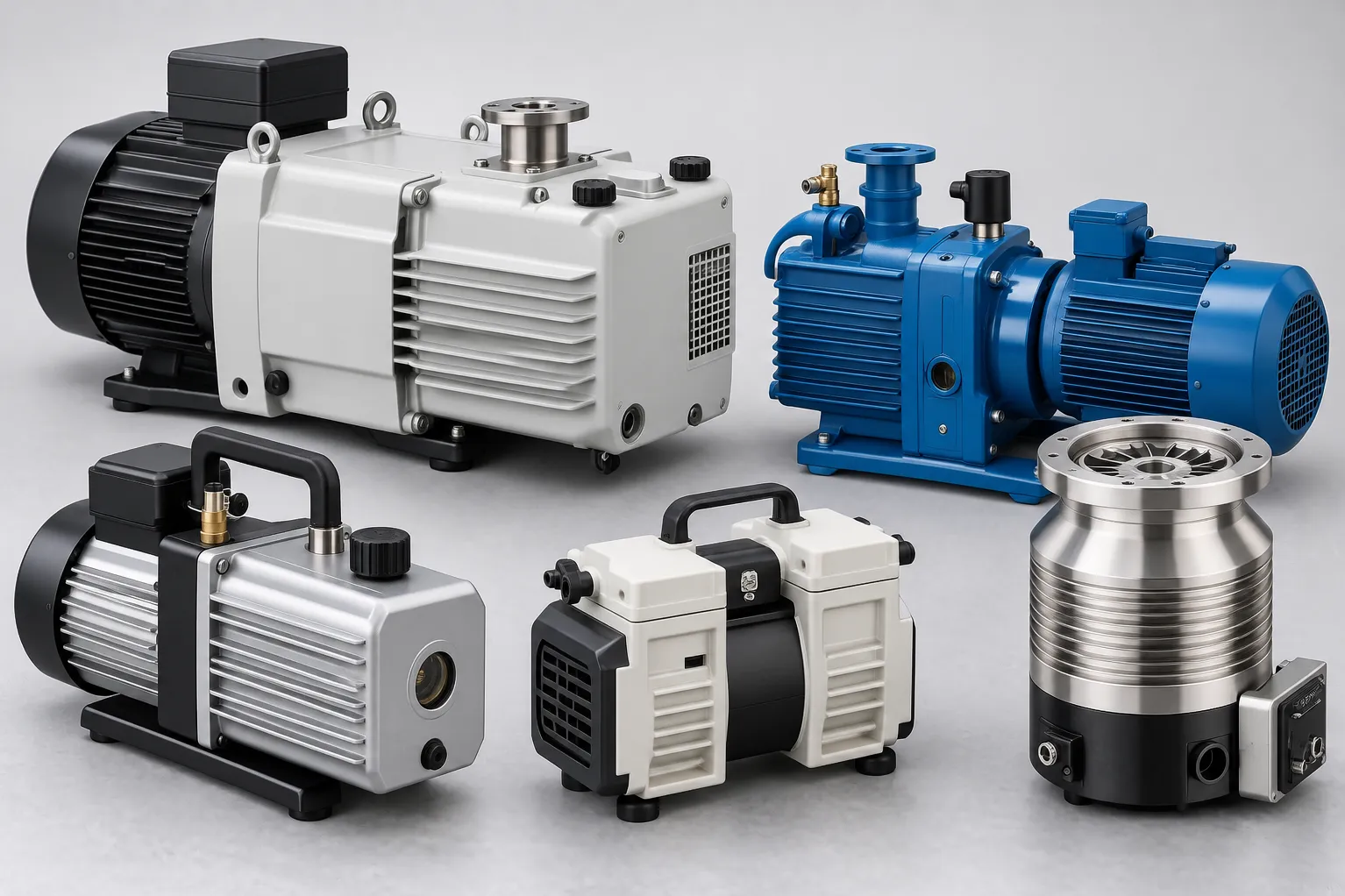
Vacuum pumps are used across manufacturing processes to remove air or gases from a sealed space, generate suction, hold components, transfer materials, support packaging, and operate pneumatic equipment. The correct pump depends on far more than its motor rating or inlet size.
For industries in Faridabad and other manufacturing centres across Haryana, pump selection should begin with the operating process. A pump that performs reliably in a clean, intermittent application may not be suitable for continuous duty involving moisture, dust, chemicals, or elevated temperatures.
Define the Required Vacuum Level
Vacuum level describes how far the pressure must be reduced below atmospheric pressure. Some material-handling applications require only moderate suction, while processes such as evacuation, degassing, laboratory equipment, or specialised manufacturing may need a deeper vacuum.
Buyers should establish:
- Required operating vacuum
- Maximum achievable vacuum
- Normal working pressure
- Acceptable evacuation time
- Expected pressure fluctuations
Selecting a pump only by its maximum vacuum can be misleading. The unit must deliver adequate pumping capacity at the actual operating pressure.
Calculate the Required Flow Capacity
Flow capacity determines how quickly the pump can remove gas from a system. It may be expressed in cubic metres per hour, litres per minute, or another unit.
A suitable capacity depends on the chamber volume, required evacuation time, process leakage, gas generation, and duty cycle. An undersized pump may take too long to reach the target pressure. An excessively large pump may increase energy use and capital cost without improving production meaningfully.
Pipe diameter, bends, filters, valves, and long suction lines can also reduce effective performance at the machine.
Understand the Process Gas
The material passing through a pump strongly affects technology selection. Buyers should determine whether the gas stream contains:
- Water vapour
- Oil mist
- Fine powder or dust
- Corrosive vapours
- Condensable substances
- Flammable material
- Product particles
Dry pumps are often considered where oil contamination must be avoided. Oil-lubricated designs may be appropriate for clean industrial duties requiring dependable vacuum performance. Water ring pumps can suit wet or vapour-rich processes when selected with proper material compatibility.
Consider the Operating Pattern
A pump used for ten minutes every hour has different requirements from one operating continuously across multiple shifts. Frequent starting, high ambient temperature, restricted ventilation, and changing vacuum demand can influence motor loading and service life.
Factories in Faridabad should account for summer operating conditions and the temperature around production equipment. A pump installed inside a poorly ventilated enclosure may run considerably hotter than expected.
Review Installation Requirements
Even a correctly selected pump can perform poorly if the installation creates unnecessary restrictions. Suction piping should be appropriately sized, as short as practical, and free from avoidable bends. Filters must suit the expected contaminants without causing excessive pressure loss.
The installation review should also cover:
- Electrical supply and motor protection
- Foundation or mounting arrangement
- Ventilation and heat dissipation
- Exhaust routing
- Noise expectations
- Access for oil changes and servicing
- Protection against liquid or particle carryover
Compare Total Ownership Cost
Purchase price is only one part of pump economics. Industrial buyers should also evaluate energy consumption, lubricant use, filter replacement, servicing frequency, spare-part availability, expected overhaul requirements, and downtime risk.
A lower-priced unit can become expensive if parts are difficult to obtain or maintenance repeatedly interrupts production. Conversely, the most technically advanced model may not produce a practical return in a straightforward application.
A structured application review helps procurement teams communicate their needs clearly to manufacturers such as Kalbro Vacumatics. When operating pressure, flow, contaminants, duty cycle, and installation conditions are documented, it becomes easier to identify vacuum pumps that support stable production without unnecessary capacity or cost.
Keywords