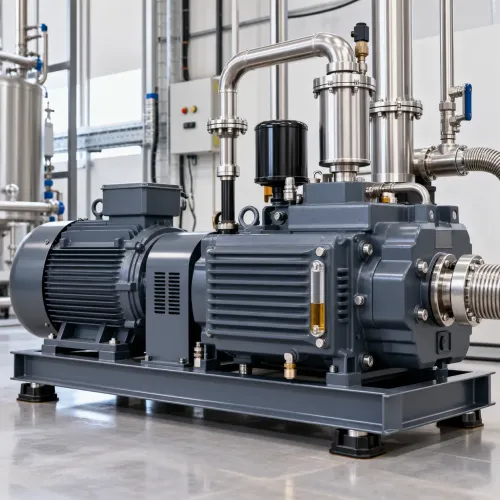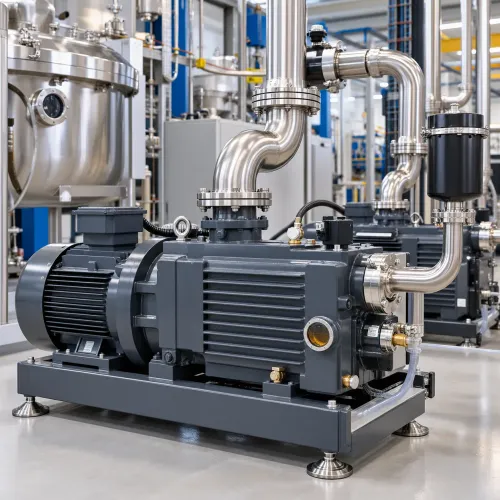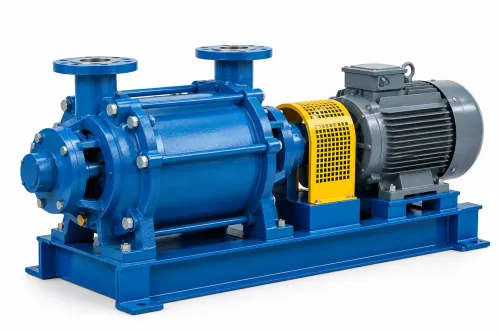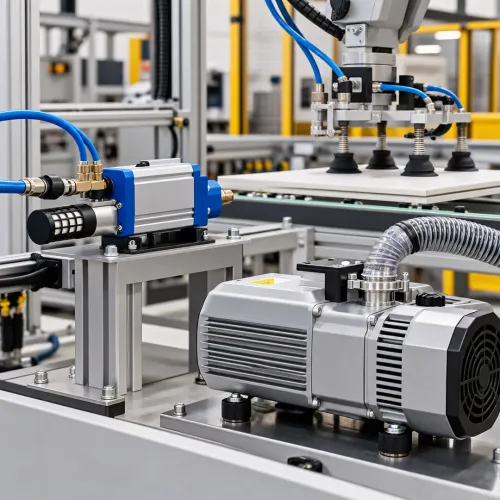
An oil lubricated vacuum pump remains an established choice across many industrial processes. Its widespread use is not accidental. When correctly matched to the application, oil lubrication supports sealing, lubrication, and reliable operation of the pumping mechanism.
However, buyers should understand what the oil actually does, where this technology fits, and what maintenance responsibilities come with it.
Why Is Oil Used in a Vacuum Pump?
Depending on the pump design, oil can perform several important functions.
It may lubricate moving components, help seal internal clearances, assist heat management, and contribute to the pump's ability to achieve its intended vacuum performance.
Because the oil plays an active role, its condition directly affects operation.
Dirty, degraded, contaminated, or incorrectly specified oil can contribute to reduced performance and increased wear.
Common Industrial Applications
Oil-lubricated vacuum technology is used across numerous manufacturing activities, including applications associated with:
- Packaging machinery
- Vacuum forming
- Printing equipment
- CNC machinery
- Material handling
- Industrial process evacuation
- Woodworking machines
- Vacuum holding
- General engineering equipment
- OEM machinery
Actual suitability depends on process conditions rather than industry name alone.
Two packaging machines, for instance, can have completely different vacuum requirements because their chamber size, cycle time, operating pressure, and production speed differ.
What Should Buyers Check Before Selection?
Start with operating vacuum.
The pump should be selected around the pressure range where the process normally operates, not simply according to the lowest pressure shown in a product specification.
Next comes capacity.
If a chamber must be evacuated within a defined cycle time, adequate pumping capacity is important. An undersized pump may extend production cycles, while unnecessary oversizing can increase capital and operating costs.
Other factors include:
- Gas composition
- Moisture content
- Dust or particles
- Operating temperature
- Daily running hours
- Installation environment
- Available power
- Required maintenance intervals
Oil Condition Can Reveal Process Problems
Maintenance personnel often treat oil changes as routine servicing. The condition of the oil, however, may provide useful clues about what is happening inside the system.
Unexpected contamination may indicate that process material is entering the pump. Excessive degradation may point toward operating temperature, service intervals, or unsuitable conditions.
Repeatedly changing contaminated oil without investigating the source may address the symptom rather than the cause.
Protect the Pump From Contamination
Industrial vacuum pumps frequently operate beside machines that generate dust, moisture, particles, or vapours.
Appropriate inlet protection can reduce the amount of contamination reaching sensitive pump components.
The exact arrangement depends on what the process generates. A generic filter should not automatically be assumed to solve every contamination problem.
Moisture, fine powder, and condensable vapours behave differently and may require different system considerations.
Avoid Ignoring Pipework
Vacuum performance is influenced by everything between the process and the pump.
Long pipelines, small pipe diameters, unnecessary restrictions, clogged filters, and excessive fittings can reduce effective pumping performance at the machine.
Leaks are another common problem.
If outside air continuously enters the system, the pump must remove that additional air while also serving the process. A pump that appears undersized may actually be connected to a leaking system.
Maintenance Planning Is Part of Ownership
Oil-lubricated equipment should have a planned maintenance routine rather than receiving attention only after vacuum performance declines.
A practical programme may include checks for:
- Oil level and condition
- Filters
- Leakage
- Unusual vibration
- Operating temperature
- Noise changes
- Connections and hoses
- Exhaust components where applicable
Service frequency should reflect actual operating conditions and the manufacturer's recommendations.
Industrial Relevance in Faridabad
Factories in Faridabad, Haryana, frequently operate machinery under demanding schedules. Automotive suppliers, packaging operations, machine builders, engineering plants, and other industrial businesses often need vacuum equipment that integrates reliably with existing production systems.
Environmental conditions should also be considered. Dust and high ambient temperatures can influence ventilation, filtration, and maintenance planning.
Kalbro Vacumatics operates in the vacuum pump manufacturing sector and supplies solutions intended for industrial applications. For procurement managers evaluating oil-lubricated equipment, the decision should go beyond initial pump price.
A suitable pump is one whose vacuum capability, capacity, construction, installation requirements, and maintenance needs align with the actual production process.
Understanding those variables before purchase can make vacuum system performance far more predictable over its operating life.
Keywords