A safe restart depends on more than energising the motor: the casing needs the correct service liquid, the connected pipework must be open and clear, and the motor must be proven ready. By following the checks and sequence below, you can restart the pump after a short stop or an extended shutdown and identify whether poor vacuum comes from the pump, water system or process.
Key takeaways
- Isolate, depressurise and cool the pump before inspection.
- Open the liquid supply and establish the water ring before motor startup.
- Increase load gradually while checking vacuum, pressure, current and water flow.
- Trace lost prime, blocked lines and air leaks before repeated restarts.
Make the pump safe and inspect every restart condition
Confirm the pump is isolated, depressurised and safe to touch before applying power. Inspect the water ring pump after shutdown for the condition that caused the stop, not just visible damage.
- Lock out and tag out the electrical supply. Close and identify process isolation valves, release trapped vacuum or pressure, and verify zero energy with the site’s approved test.
- With the motor isolated, turn the shaft or coupling by hand. Stiffness, seizure or grinding requires investigation for corrosion, scale, bearing damage or stuck seal faces; do not overcome it with repeated starts.
- Check the suction and discharge lines, separator, non-return valves, vacuum breaker, flexible connections and strainers for blockage, water accumulation, leaks or a closed valve. A blocked discharge creates backpressure, while a stuck check valve can prevent vacuum recovery.
- Confirm the service-liquid level, specified flow and pressure, separator level, recirculation path and drain path. Check the strainer and water quality, and record actual water temperature; hot water changes the vacuum and capacity you can expect.
- Verify that the pump cannot start dry. Dry running rapidly overheats the casing and damages the mechanical seal.
- Examine the seal area for leakage after the stop. Do not tighten or disturb a seal while the shaft rotates unless its design permits adjustment; persistent leakage needs isolation and seal inspection.
Remove tools, rags and loose guards from the coupling area, refit protective guards, and investigate every alarm or emergency-trip cause before energising the motor.
Establish the liquid ring before starting the motor
A blocked discharge path can create backpressure before the pump produces useful vacuum, while insufficient liquid prevents the ring from sealing. Establish the liquid circuit and a free discharge before connecting the pump to the process.
1. Open the discharge isolation valve first. Confirm that the separator outlet, drain, non-return valve and recirculation line are open and free of pooled water or blockage.
2. Open the service-liquid valve, followed by cooling-water valves where fitted. Set the inlet pressure and flow to the pump manual, then verify the separator level, strainer condition, water temperature and visible flow. Do not fill the casing completely unless the manufacturer specifies pre-filling; excess liquid can increase starting torque.
3. Open the suction isolation valve after the discharge and liquid circuits are ready. Check that the vacuum breaker is closed and that flexible connections are not collapsing or leaking air.
4. Start the motor without delay once the specified liquid flow is established. Leaving the pump dry while waiting for the suction system to respond can damage the mechanical seal and overheat the casing.
Some installations use once-through water; others use a separator and recirculation circuit. Follow the equipment manual for that water ring pump restart because the valve order and required liquid level can differ. Record actual water pressure and temperature: water ring pump operation loses sealing with too little liquid and draws excess current with too much.
Start gradually and judge recovery by measured performance
Motor rotation proves almost nothing: a water ring vacuum pump can turn while the liquid ring is unstable, the discharge is restricted, or the pump is drawing excessive current.
Bring the pump up under a light, controlled load, then increase the process demand gradually while watching the instruments rather than opening the system fully at once.
Accept water ring vacuum pump recovery only when these readings remain steady at the specified operating point:
- Vacuum holds at the specified gas flow, rather than appearing briefly during evacuation.
- Service-water temperature and pressure match the recorded restart conditions.
- Motor current remains within the nameplate rating and does not climb as vacuum develops.
- Vibration and sound remain normal, without rattling, grinding or cavitation-like noise.
- Seal leakage stays within the equipment’s permitted limit.
- The discharge separator does not flood or carry liquid into downstream equipment.
Record the actual water temperature and pressure. Hot utility water can reduce achievable vacuum, so comparing an uncorrected reading with the original performance-test result can wrongly suggest pump damage or lost capacity.
Adjust service-water flow to the specified range; maximum flow is not a shortcut to deeper vacuum. Too little water weakens sealing and increases heating, while too much raises power demand and liquid carryover. If vacuum, current or noise remains unstable after gradual loading, stop treating rotation as recovery and hold the pump for fault investigation.
Separate lost prime, water shortage, blockage and air leakage
After a water ring vacuum pump restart, poor vacuum points to four different faults: lost prime, insufficient service water, restricted flow, or air entering the system. Match the symptom before opening the pump.
- Lost prime: The casing has no continuous liquid ring, so the pump rotates without developing vacuum. Check separator level, water entry and recirculation. Do not continue running dry; the mechanical seal can overheat quickly.
- Water shortage: Low flow, an empty separator, a blocked strainer or excessively hot service liquid can collapse the ring during operation. Restore the specified flow and temperature, then retest.
- Blockage: A blocked suction or discharge line, closed isolation valve, stuck non-return valve or scaled cone port raises backpressure and prevents recovery. Inspect the strainer, valve movement, separator and drain path.
- Air leakage: If the pump performs during a permitted blank-off or isolation test, the leak is in the system. Check valves, instrument connections, flexible hoses, shaft seals and the process vessel.
Call the restart successful only when vacuum remains stable at the specified gas flow and liquid temperature, motor current stays within its rating, vibration and noise are normal, and the separator is not flooding. Persistent seal leakage needs isolation and inspection; never tighten or disturb a rotating seal unless its design expressly permits adjustment.
Flushing will not remove hard scale that needs approved chemical cleaning.
Use downtime records to decide when the pump needs service
Record each restart failure before deciding that the pump needs an overhaul. For anyone planning to restart a water ring vacuum pump after downtime in Faridabad, log downtime length, service-water temperature and pressure, liquid flow, separator level, achieved vacuum, motor current, discharge pressure and visible seal leakage.
Hot water changes vacuum capacity, so compare readings with the manufacturer’s performance data at the recorded temperature rather than assuming utility water matches the test condition.
Use the pattern in the record to choose the response:
- Clean the strainer, separator, casing and recirculation circuit when flow falls, solids are visible, water quality has deteriorated, or performance returns after flushing.
- Repair the pump or its connected hardware when the same valve, hose, non-return valve, drain or seal leaks repeatedly; isolate the process and perform a blank-off test before blaming the pump.
- Stop restarting and arrange a seal inspection when leakage persists after startup. Do not tighten or disturb a rotating seal unless its design specifically allows adjustment.
- Request a manufacturer-supported inspection when vacuum remains below the documented duty after confirmed water temperature, pressure, flow and isolation-test results, or when motor current, vibration, noise or discharge pressure rises repeatedly.
Give Kalbro Vacumatics the complete downtime log when its inspection is needed; those measurements let the service team separate fouling, installation faults and pump damage.
Related product
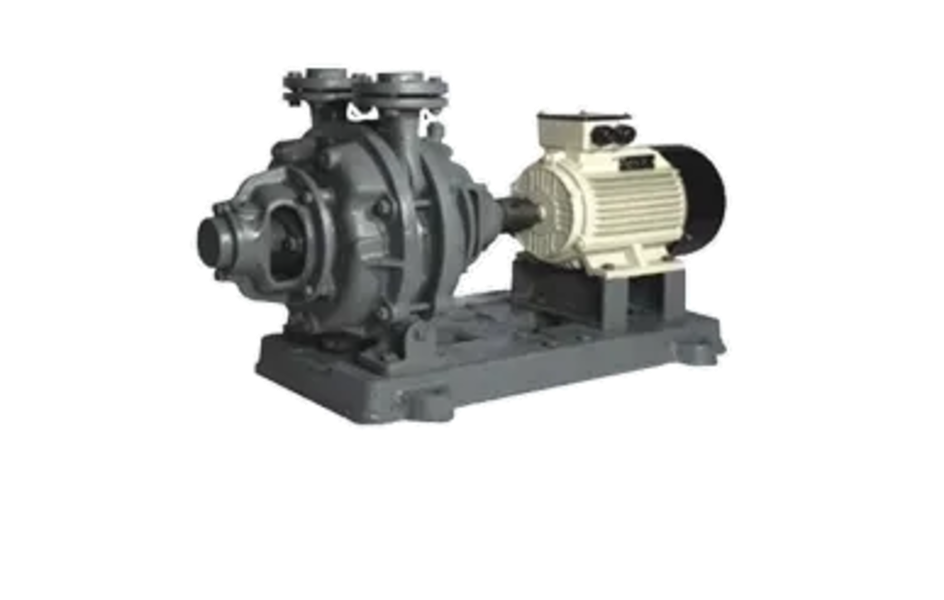
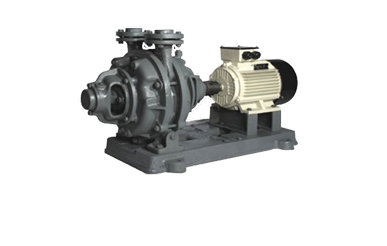 | Water Ring Vacuum Pumps Kalbro Manufacturing Co. is a pioneer Water Ring Vacuum Pumps manufacturer, supplier & exporter based in India. View product → |
Frequently asked questions
What must you check before restarting a water ring vacuum pump after downtime?
Confirm the pump is isolated, depressurised and safe to touch. Inspect for the original shutdown condition, blocked lines, damaged parts, abnormal wear and adequate liquid supply before applying power.
How do you establish the liquid ring before starting the motor?
Open the specified liquid supply, confirm flow through the seal or separator circuit and fill the pump as required by its operating arrangement. Start the motor only after the liquid ring has formed.
How should you judge water ring vacuum pump recovery after startup?
Start gradually and compare vacuum, discharge pressure, water flow, motor current, sound and vibration with the pump's normal operating records. Do not judge recovery from motor operation alone.
How can you distinguish lost prime, water shortage, blockage and air leakage?
Lost prime leaves the pump without its liquid ring; water shortage shows inadequate supply or flow; a blockage restricts suction, discharge or liquid lines; air leakage prevents the system from holding vacuum. Isolate each possibility with flow checks, line inspections and leak testing.
When does downtime indicate that a water ring pump needs service?
Review the downtime cause and restart records. Escalate for service when the pump repeatedly loses prime, fails to reach its recorded vacuum, draws abnormal current, overheats, vibrates, leaks or requires repeated manual intervention.
Keywords