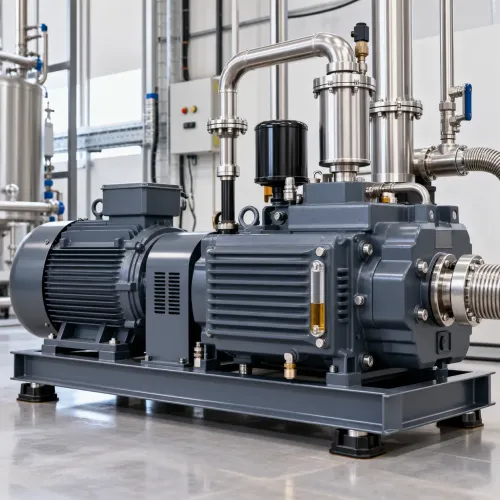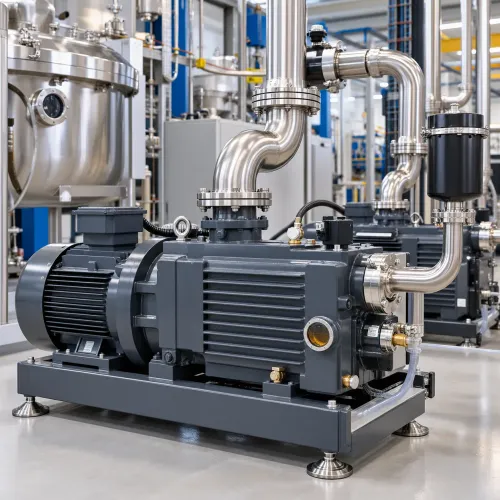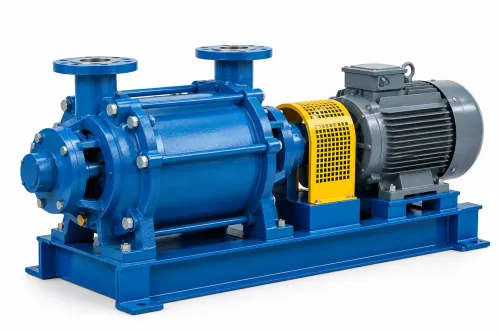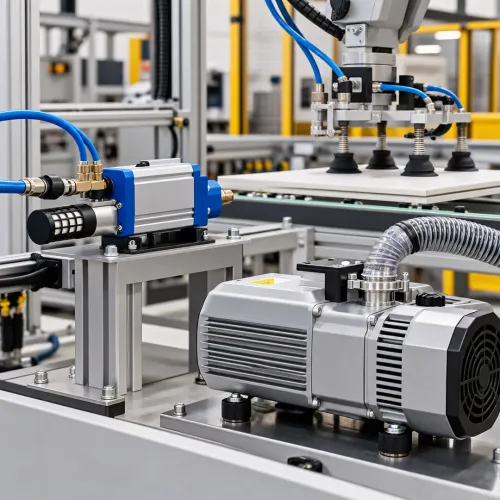
OEM machine builders need vacuum equipment that does more than meet a laboratory performance figure. The pump must fit within the machine, operate predictably across repeated cycles, tolerate the expected environment, and remain serviceable after the equipment reaches the customer.
Dry vacuum pressure pumps can provide both suction and positive-pressure air without oil in the pumping chamber. They are especially relevant to machines where clean operation, straightforward routine maintenance, and compact integration are priorities.
Confirm the Complete Machine Duty
Selection should start with the machine sequence. Vacuum and pressure demand may occur at different stages or at the same time.
The OEM should define:
- Vacuum required at the suction point
- Positive pressure required at the outlet
- Flow needed for each function
- Cycle time and cycles per minute
- Number of operating shifts
- Product leakage or porosity
- Ambient temperature
- Expected airborne contamination
Testing with the actual product is valuable. Cardboard, fabric, rough wood, foam, and other porous materials may require far more flow than smooth components.
Plan the Pump Position Early
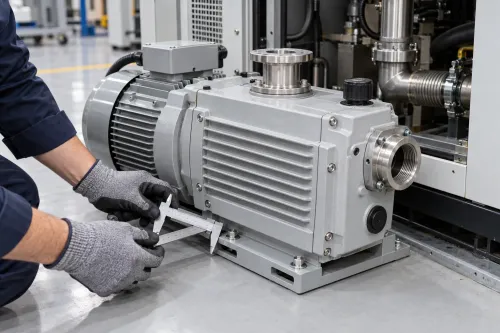
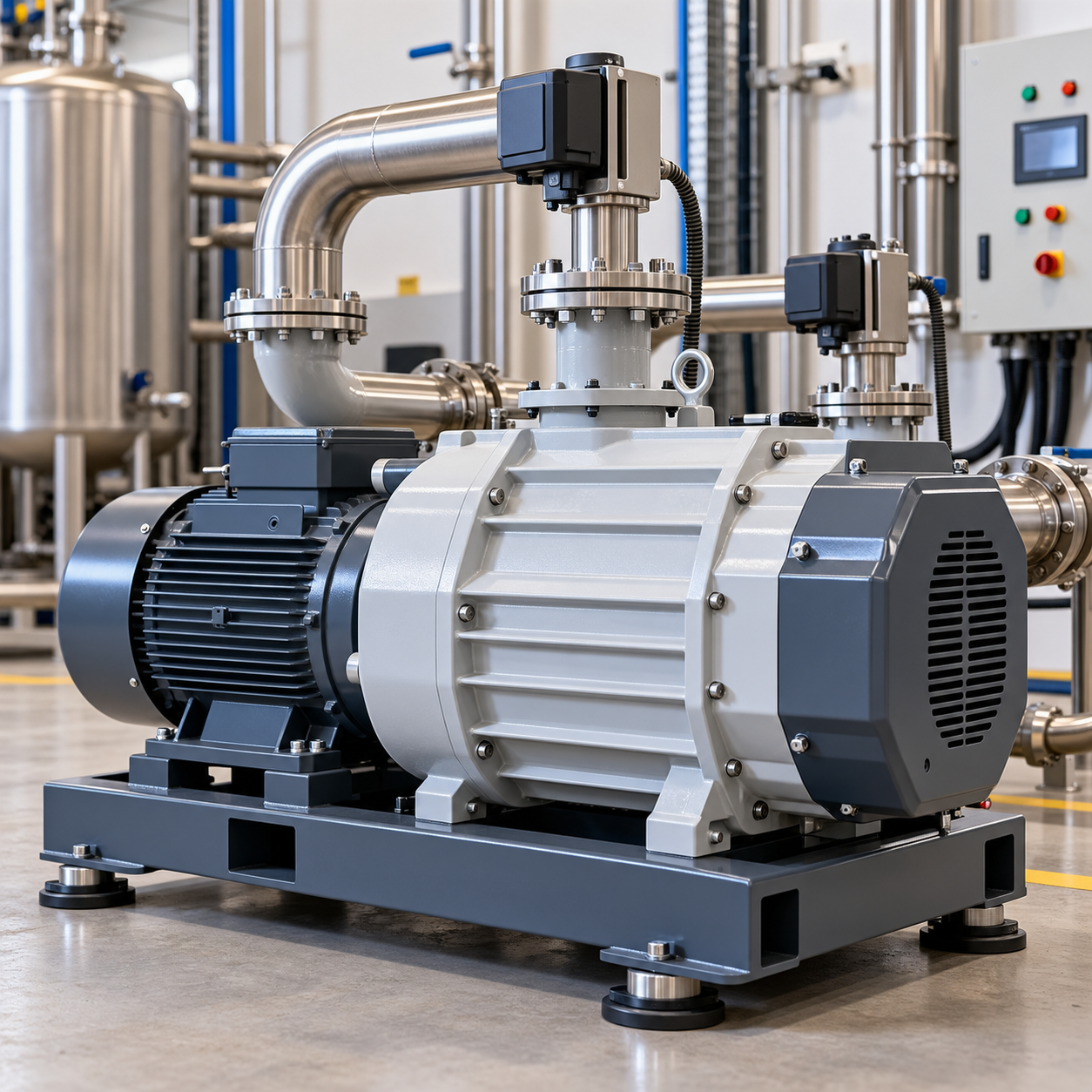
Treating the pump as a final-stage accessory can create integration problems. Space should be reserved for cooling airflow, filter removal, vane inspection where applicable, electrical connections, and piping.
A compact enclosure may amplify noise and trap heat. The machine layout should allow discharged air to leave the cabinet instead of returning to the cooling inlet.
For OEMs serving customers across Haryana and India, the design must remain reliable in different factory environments, not only on the assembly floor in Faridabad.
Reduce Pressure Losses
Small tubing, narrow fittings, long pipe runs, and restrictive valves can reduce effective flow. This may cause slow pickup, unstable holding, or weak pressure performance even when the pump is correctly sized.
Locating the pump close to the point of demand can improve response. Where several stations share one pump, engineers should calculate simultaneous consumption and consider a receiver or zoned control arrangement.
Vacuum and pressure gauges installed near the machine process make commissioning and troubleshooting easier.
Protect the Pump From the Product
Dry operation does not mean the pump can safely ingest production debris. Paper dust, textile fibre, powder, and machining particles can block filters or accelerate internal wear.
An inlet filter should be accessible and visibly included in the maintenance plan. If the process may draw in liquid droplets, a separator or alternative pump technology may be required.
Pressure-side air quality should also be reviewed. Although no oil is used in the pumping chamber, filters or silencers may still be needed depending on the end use.
Design for Maintenance Readiness
An OEM should provide customers with clear inspection intervals and replacement-part information. The manual can specify checks for filters, wear components, operating temperature, noise, vacuum, and pressure.
Useful design features include:
- Tool-accessible service panels
- Clearly labelled inlet and outlet ports
- Replaceable filters without pump removal
- Motor overload protection
- Vacuum and pressure monitoring
- Maintenance-hour tracking
- Safe isolation provisions
These details can reduce service calls and prevent accidental misuse.
Evaluate Supplier Support
A machine builder needs dimensional drawings, operating limits, electrical data, accessory recommendations, and stable product availability. Sample testing may be appropriate before the model is standardised across a machine series.
Kalbro Vacumatics supplies industrial vacuum equipment from Faridabad and can be considered when evaluating dry vacuum pressure pumps for OEM integration. A well-prepared enquiry should include the machine cycle and actual airflow requirements.
The best integration outcome is a pump that operates comfortably within its range, remains cool, receives clean air, and can be serviced without dismantling major machine sections. That approach improves both initial commissioning and the end customer’s long-term experience.
Keywords