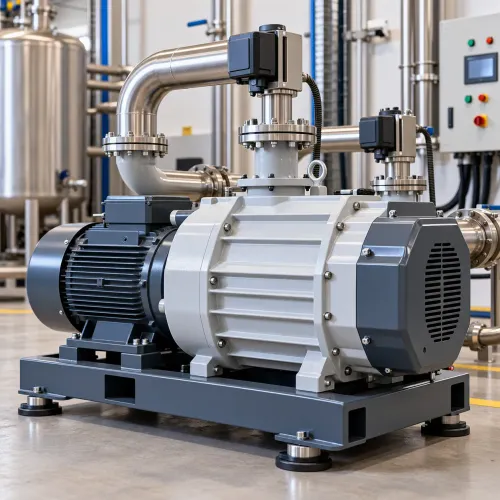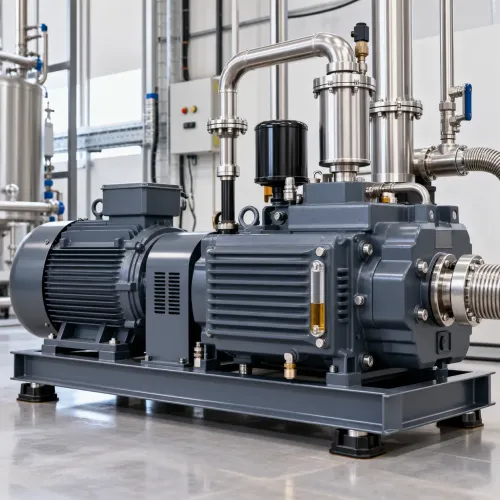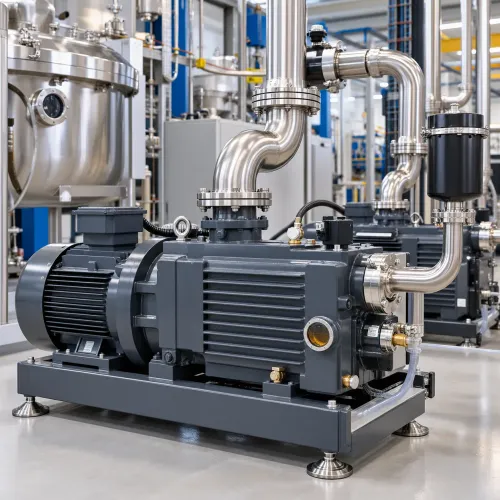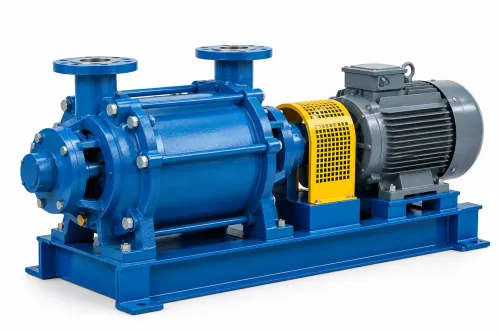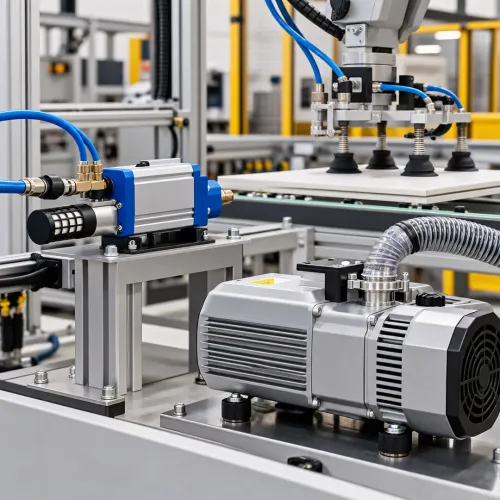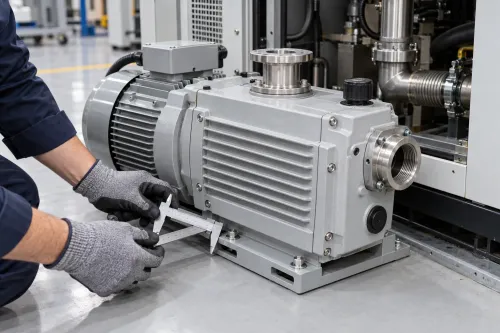
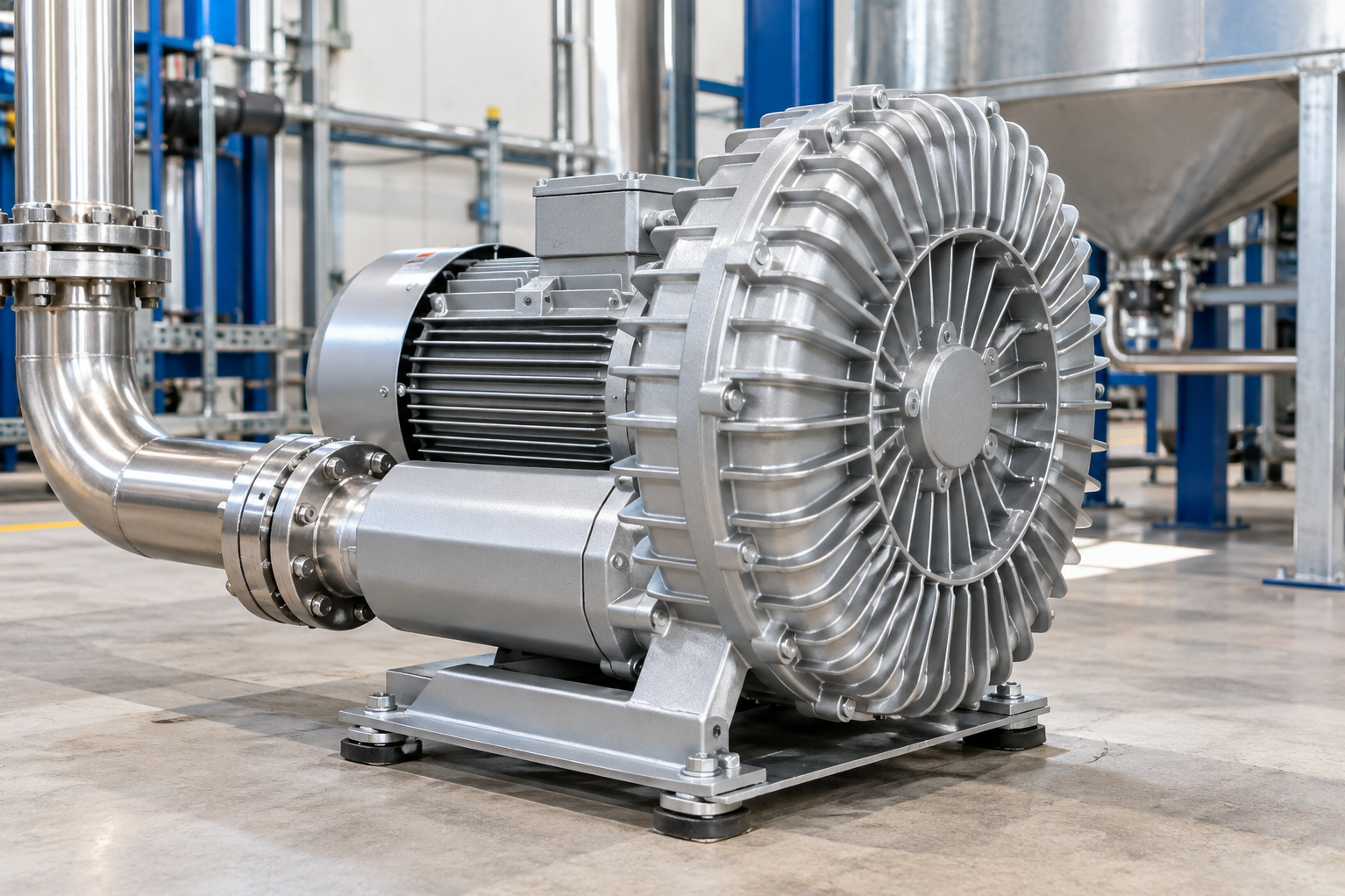
Side channel blowers produce relatively high-volume airflow at vacuum or positive pressure levels below those normally associated with compressed-air systems. They are widely used for aeration, drying, conveying assistance, suction tables, printing, packaging, material handling, and wastewater-related applications.
Their oil-free airflow, non-contact operating arrangement in the compression area, and suitability for continuous duty make them valuable industrial utilities. Correct sizing remains essential because airflow changes significantly as system resistance increases.
Identify Whether the Application Needs Airflow or Deep Vacuum
A side channel blower is not a direct replacement for every vacuum pump or air compressor. It is strongest in applications requiring substantial airflow at low-to-moderate differential pressure.
Suitable duties may include:
- Tank aeration
- Air knives and drying
- Vacuum lifting with high leakage
- Printing and paper handling
- Pneumatic conveying assistance
- Packaging machinery
- Suction tables
- Fume or gas movement in compatible conditions
- Central airflow systems
Applications requiring deep vacuum or high compressed-air pressure generally need another technology.
Determine the Real Operating Point
Blower performance should be evaluated where required airflow intersects with system resistance. Resistance comes from piping, diffusers, filters, valves, bends, nozzles, elevation, and the process itself.
For an aeration system, resistance may increase with water depth and diffuser condition. For a suction table, open holes and product porosity affect leakage. In a conveying application, pipe length and material loading alter demand.
A supplier needs both required flow and pressure or vacuum. Providing only motor power does not define the duty.
Prevent Overheating
When airflow is heavily restricted, differential pressure and operating temperature may rise. A relief valve can help protect the blower from operating beyond its permitted range.
The installation should include:
- Adequate cooling ventilation
- Clean inlet filtration
- Pressure or vacuum relief
- Correctly sized piping
- Flexible connectors where appropriate
- Secure mounting
- Suitable electrical overload protection
Blowers should not be throttled casually without checking the performance curve and temperature implications.
Consider Noise and Workplace Position
High-velocity air and motor operation can create noise. Silencers, acoustic enclosures, flexible connections, and appropriate placement may help, but enclosures must not restrict cooling.
Factories in Faridabad should review the blower’s location relative to operators, offices, and heat-producing equipment. Measured site conditions are more useful than assuming an enclosure will solve every noise concern.
Compare Lifecycle Cost
Side channel blowers do not normally require oil within the compression chamber, reducing routine lubricant-related work. Maintenance may involve inlet filters, bearings, motor checks, cooling passages, electrical connections, and operating-condition monitoring.
Energy consumption depends on motor load and running time. Variable-speed control can be beneficial where demand changes, provided the blower and system are engineered for that control method.
Procurement teams should compare:
- Efficiency at the duty point
- Expected annual running hours
- Filter and bearing maintenance
- Noise-control requirements
- Spare-part availability
- Service access
- Downtime implications
Indicators of a Suitable Supplier
A dependable provider should request application data, offer a performance curve, explain operating limits, identify protective accessories, and disclose assumptions behind the selection.
Kalbro Vacumatics can be considered by industrial buyers seeking side channel blowers and application support in Faridabad. A quotation becomes more meaningful when it identifies the proposed operating point instead of listing capacity alone.
The correct blower should provide the necessary airflow against actual system resistance while maintaining acceptable temperature, noise, and power consumption. Careful selection at the beginning prevents weak aeration, insufficient suction, repeated overheating, and unnecessary electricity use after commissioning.
Keywords