
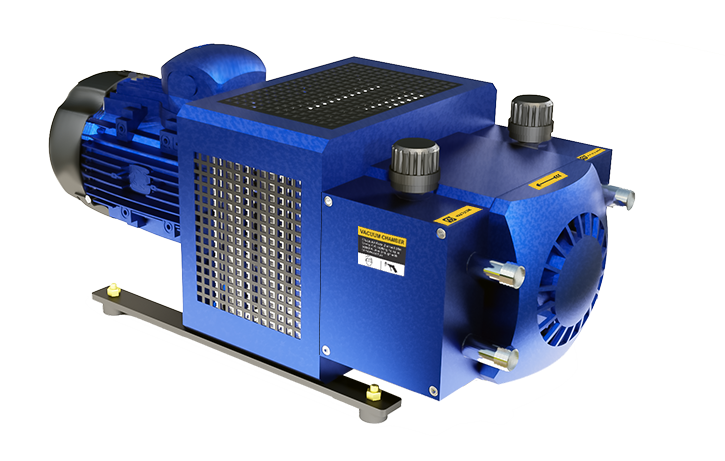
Dry Vacuum Pressure Pumps Buying Checklist for OEMs and Industrial Plants
Buying a pump for a new machine is easier when procurement teams receive a complete specification. Problems arise when the requirement arrives as little more than 'vacuum pressure pump required.'
Dry vacuum pressure pumps need to be selected around the actual operating conditions of the machine. A structured buying checklist helps OEMs and industrial plants compare options more accurately.
Confirm Why Dry Operation Is Required
Start by asking why the application requires dry technology.
Possible reasons include avoiding oil within the pumping chamber, machine design preferences, process cleanliness considerations, or maintenance objectives.
Knowing the reason prevents dry technology from becoming an arbitrary specification copied from an older machine.
Define the Vacuum Requirement
Do not simply specify 'maximum vacuum.'
Record the normal operating vacuum as well as any peak requirement.
If the machine evacuates a chamber, include chamber volume and desired evacuation time. If vacuum is used for gripping or holding, describe the workpiece and expected leakage.
Porous materials can create much greater airflow demand than sealed surfaces.
Define the Pressure Requirement Separately
The pressure side deserves equal attention.
Specify:
- Required operating pressure
- Required airflow
- Whether flow is continuous
- Duration of pressure demand
- Whether pressure and vacuum occur simultaneously
Without this information, two apparently similar pumps can behave very differently on the actual machine.
Check Capacity at the Operating Point
Catalogue maximum values do not always describe real production conditions.
Ask how the pump performs around the pressure or vacuum level where your machine normally operates.
This is particularly important for OEMs trying to maintain a defined machine cycle time.
Document the Process Gas
What will the pump handle?
Clean ambient air is relatively straightforward. Dust, moisture, fibres, vapours, or process gases require additional consideration.
Create a basic process description covering:
- Gas type
- Temperature
- Moisture
- Dust
- Particle size where known
- Vapours
- Potential contamination
This information helps determine whether filtration or other protection is required.
Review the Installation Space
Machine builders often discover pump-space problems late in assembly.
Before ordering, confirm:
- Available footprint
- Height restrictions
- Inlet and outlet access
- Electrical connection
- Maintenance clearance
- Cooling airflow
- Pipe routing
Do not position the pump where routine servicing requires dismantling major parts of the machine.
Evaluate Noise Requirements
Noise can matter when machinery is installed near operators or within enclosed production areas.
Rather than considering pump noise in isolation, think about the complete machine environment.
Enclosures can reduce perceived noise but may also restrict cooling if poorly designed.
Consider Faridabad's Operating Environment
Manufacturing units in Faridabad, Haryana, may operate under dusty conditions and high summer temperatures.
If equipment is installed in a non-air-conditioned production area, ambient conditions should be included in the technical discussion.
Adequate ventilation and filtration can have a direct influence on long-term reliability.
Compare Maintenance Requirements
Dry pumping technology avoids oil in the pumping chamber, but that does not remove all maintenance.
Ask what routine inspections are expected and which components require periodic attention.
Maintenance teams should understand:
- Filter requirements
- Bearing or drive inspection
- Cooling requirements
- Recommended service intervals
- Replacement component accessibility
A pump that is difficult to service can increase downtime even if its basic specification is suitable.
Evaluate Supplier Support Alongside Hardware
Industrial buyers are purchasing more than a catalogue specification.
Application understanding is important, especially for new OEM designs where the vacuum requirement may still be evolving.
Kalbro Vacumatics manufactures industrial vacuum equipment for different machine and process requirements. Faridabad-based OEMs can make technical discussions more productive by preparing operating data before requesting a recommendation.
A useful enquiry for dry vacuum pressure pumps should include vacuum level, pressure, airflow, operating hours, process conditions, installation limitations, and available electrical supply.
The clearer the requirement, the easier it becomes to compare equipment on meaningful engineering criteria rather than price or motor rating alone.